

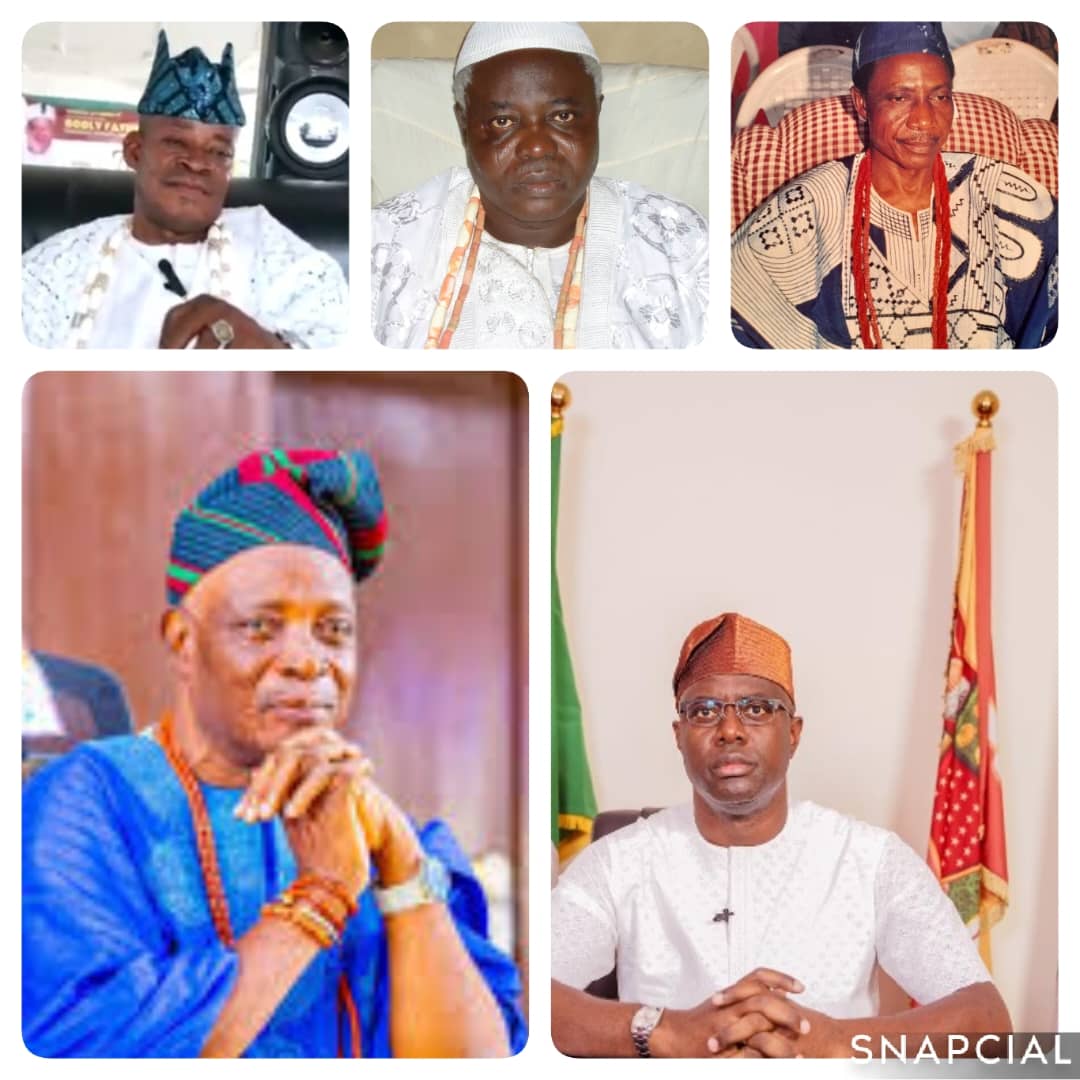
Ido, a major town within the Ibadan metropolitan area, has remained trapped in a long-running traditional leadership crisis that many residents say has slowed its development and deepened internal divisions.
For nearly two decades, a dispute over the rightful occupant of the stool of the Onido of Ido has left the town with three individuals laying claim, directly or indirectly, to the revered position.
Concerned citizens warn that unless the matter is decisively resolved, the crisis could degenerate into wider communal unrest.
Speaking with journalists recently, community stakeholders appealed to the Oyo State Government and traditional authorities to intervene and bring the protracted dispute to a close.
They argued that the absence of a clear and universally recognised traditional ruler has cost Ido several government projects and discouraged private investment, despite the town’s strategic location and vast agrarian and commercial potential.
Ido serves as a border town between Ibadan and the Ibarapa zone and is one of the 11 local government areas that make up the greater Ibadan city. Residents, however, insist that prolonged internal instability has left the town lagging behind neighbouring communities.
Historically, Ido was headed by a Baale, with the Agura family tree recognised as the ruling lineage. The four acknowledged ruling houses are Akinyemi, Alalade, Dada-Pero and Okanlawon.
During the agitation for the creation of Ibadan State, it was agreed that Ibadanland should have more than one crowned monarch, leading to the elevation of several Baales to Oba status.
In line with this development, Oba Benjamin Ademola Ishola Orobiyi II, then Baale of Ido and Chairman of Baales of communities surrounding Ibadan, was crowned Onido of Ido on December 15, 1997, by the late Olubadan of Ibadanland, Oba Emmanuel Adegboyega Operinde I.
The crisis took a dramatic turn in 2007 when Oba Benjamin was preparing to mark his 10th anniversary on the throne. The then Olubadan, Oba Samuel Odulana Odugade I, suspended and later deposed him over allegations of parading himself as a traditional king and not being a member of the Agura royal family.
Following his removal, Tajudeen Adeosun, also known as Tajudeen Akinola Agura, was installed as Onido. Although the state government initially reversed the decision, the late Governor Abiola Ajimobi formally confirmed Oba Benjamin’s suspension in August 2011.
Oba Benjamin challenged the action in court, maintaining that he was a Type Two monarch under the Ibadan Chieftaincy System and held valid instruments of office issued by the state government. In 2012, an Oyo State High Court ruled in his favour.
The judgment was, however, appealed, and the case has remained pending before the Supreme Court since 2018.
Chief Tajudeen Akinola Agura, who emerged as Onido in 2011, spent less than two years on the throne before facing several petitions alleging abuse of office, forgery and land grabbing.
In January 2013, the then Olubadan, Oba Saliu Adetunji, suspended him and seized his royal beads.
He was accused of forging the Olubadan’s letterhead to overturn his suspension and authorise the payment of salaries and allowances.
The Olubadan-in-Council unanimously upheld the suspension and warned him to stop parading himself as the Onido of Ido.
The deposed Oba Tajudeen Adeosun Agura hails from the Dada-Pero ruling house of the Agura family, the sole ruling family of the town. Oba Benjamin Ishola, on the other hand, is a direct descendant of the Akinyemi ruling house within the same Agura lineage.
The most recent occupant of the stool is Oba Gbolagade Muritala Babalola, also known as Gbadewolu I. He was formerly the Asipa Onido of Idoland during the reign of Oba Benjamin Ademola.
On February 2, 2024, Governor Seyi Makinde suspended Oba Babalola following intelligence reports allegedly linking him to illegal mining and other criminal activities, particularly in the aftermath of the Bodija explosion.
The State Commissioner for Information, Dotun Oyelade, said the action was meant to send a strong warning to traditional rulers collaborating with criminal elements.
Six months later, the state government reinstated Oba Babalola. The Chairman of Ido Local Government, Mr Sheriff Adeojo, formally presented his reinstatement letter at the council headquarters.
Despite this development, confusion persists. As things stand, Oba Benjamin Ademola Ishola Orobiyi II, Tajudeen Akinola Agura and Oba Gbolagade Muritala Babalola are all regarded by different factions as the legitimate Onido of Idoland.
Stakeholders and indigenes are now calling on Governor Makinde, the Olubadan of Ibadanland, Oba Senator Rasidi Adewolu Ladoja, and other relevant traditional institutions to thoroughly review the matter and deliver a just and final resolution.
They expressed confidence in the leadership and integrity of Oba Ladoja, describing him as a forthright monarch capable of restoring peace to the troubled town.
“We believe his intervention will bring a lasting and reasonable solution to this crisis that has affected our growth since 2007,” one stakeholder said.