

By every measure, tragedy has a way of testing not only the strength of a nation’s institutions but also the consistency of its politics.
In Africa, there is a popular proverb that says, “The child who says his mother will not sleep will also stay awake.” It is a reminder that actions taken in one season often return in another.
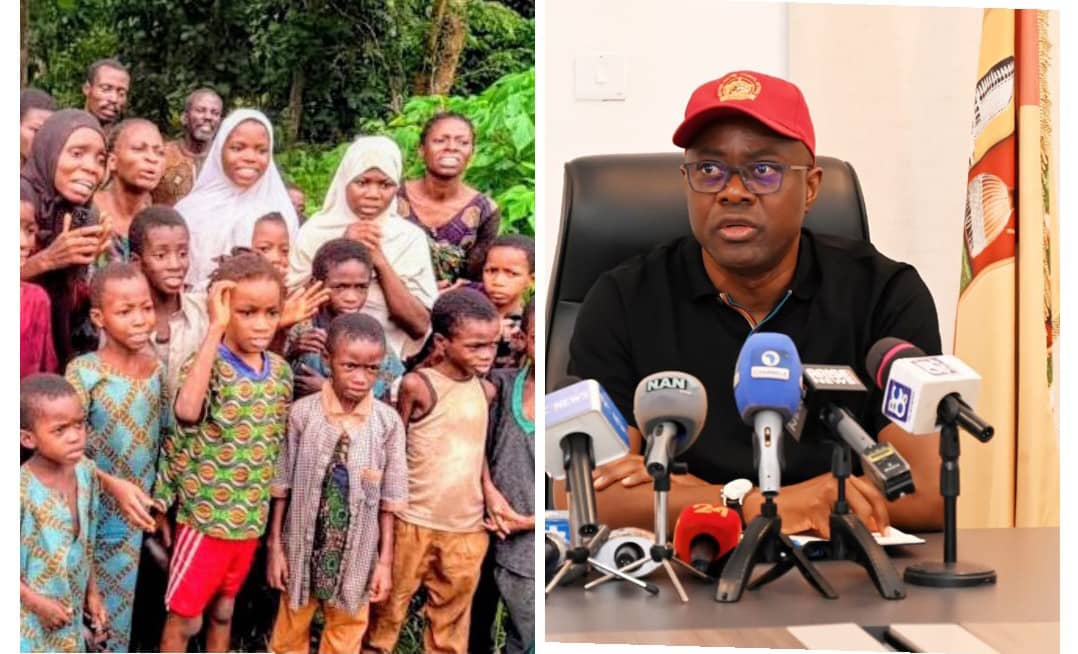
That proverb aptly captures the controversy surrounding Governor Seyi Makinde’s call for a United Nations-backed investigation into the abduction of teachers and pupils in Oriire Local Government Area of Oyo State.
The Presidency, through the President’s Special Adviser on Information and Strategy, Bayo Onanuga, has dismissed Makinde’s request as unnecessary, politically motivated and a vote of no confidence in Nigeria’s security agencies.
But history, they say, has a stubborn memory. A careful look into Nigeria’s recent political past reveals that the party now criticising the governor once championed far stronger international intervention when it occupied the opposition benches during the 2014 Chibok schoolgirls’ abduction under former President Goodluck Jonathan.
Politics, like a masquerade, may change its costume, but the footprints often remain the same.
Governor Makinde’s appeal came shortly after the successful rescue of the 45 victims abducted from schools in Oriire Local Government.
The governor openly commended the Nigerian Army, the Department of State Services, the Nigeria Police Force and every security operative involved in the painstaking operation that eventually secured the freedom of the pupils and teachers after 56 agonising days in captivity.
Yet, while expressing gratitude, Makinde insisted that Nigerians deserved answers. How could armed men invade schools, abduct innocent children and teachers, and keep them in captivity for nearly two months? Were there intelligence failures? Could the attack have been prevented? What lessons should be learnt to stop a recurrence?
These are legitimate questions in any democratic society. Asking them is not an act of rebellion; it is an act of responsibility.
As the African proverb goes, “The one who asks questions never misses the road.” Seeking the truth should never be mistaken for seeking trouble.
What makes the Presidency’s criticism particularly striking is the glaring contradiction with the position the All Progressives Congress (APC) adopted during the Chibok crisis in 2014.
When over 270 schoolgirls were abducted by Boko Haram in Chibok, Borno State, the APC did not argue that the matter should remain strictly within Nigeria’s domestic institutions. Quite the contrary, the party actively internationalised the crisis.
Its leaders engaged foreign governments, international media, diplomats and global human rights organisations.
The issue quickly transcended Nigeria’s borders, evolving into the globally recognised #BringBackOurGirls campaign that drew support from world leaders, celebrities and international institutions.
At the time, no one within the APC suggested that taking the matter before the international community amounted to undermining Nigeria’s sovereignty. Rather, it was portrayed as patriotic and necessary to save innocent lives.
Indeed, prominent opposition figures of that era travelled abroad and held discussions with officials in Washington and other Western capitals.
They urged the international community to pressure the Jonathan administration into taking more decisive action. They appealed for intelligence support, military cooperation, surveillance technology and greater international involvement.
If seeking international attention was regarded as statesmanship then, why should a similar appeal now be described as an affront to Nigeria?
One cannot help but recall another African saying: “The teeth and the tongue may quarrel, but they belong to the same mouth.” Nations grow stronger when differing opinions are accommodated, not suppressed.
The APC’s criticism of the Jonathan administration in 2014 extended beyond calls for foreign assistance. Party leaders repeatedly accused the then Federal Government of withholding vital information from Nigerians.
They questioned official accounts, challenged contradictory statements from security agencies and demanded transparency regarding the circumstances surrounding the abduction. They insisted that Nigerians deserved to know the whole truth.
Governor Makinde’s position today mirrors that same principle. At no point did he accuse the military or other security agencies of complicity.
Neither did he disparage the sacrifices made by soldiers and intelligence personnel, some of whom reportedly paid the ultimate price during the rescue operation.
Instead, he simply argued that the country owes the victims, their families and the public a comprehensive explanation of how the incident occurred and what institutional failures, if any, allowed it to happen.
There is a world of difference between questioning a system and condemning those who serve within it.
In mature democracies, investigations are not reserved for failed operations alone. Even successful security missions are subjected to rigorous reviews.
Countries such as the United States, the United Kingdom and Israel routinely conduct detailed post-operation assessments, not because they distrust their armed forces, but because they understand that every crisis presents an opportunity to strengthen institutions, after all, asuccessful rescue does not erase the questions that preceded it.
How did heavily armed criminals penetrate vulnerable communities? Why were three schools simultaneously targeted? Could earlier intelligence have prevented the attack? Were there lapses in surveillance or response coordination? What reforms are necessary to safeguard schools and rural communities in the future?
These are not political questions; they are governance questions.
As another African proverb wisely teaches, “The hunter who escapes the lion’s claws still examines the scars.”
Critics have argued that requesting a United Nations-backed investigation signals a lack of confidence in Nigeria’s security architecture. Such an interpretation stretches the governor’s words beyond their natural meaning.
International inquiries into attacks on schools, terrorism and human rights violations are not unusual. The United Nations has participated in similar investigations across Africa, the Middle East and other conflict-affected regions.
Nigeria itself has, over the years, cooperated with several international bodies on security and humanitarian matters.
More importantly, Governor Makinde did not call for sanctions against Nigeria. He did not seek foreign occupation or external control of Nigeria’s security agencies.
Neither did he advocate international prosecution of Nigerian officials. His request was limited to an independent investigation capable of uncovering facts, identifying lessons and strengthening institutional responses.
That distinction is too important to ignore.
Ironically, the language employed by many APC leaders against the Jonathan administration during the Chibok saga was considerably harsher than anything Governor Makinde has said.
The opposition at the time accused the Federal Government of incompetence, negligence, deception, lack of political will and failure to fulfil its constitutional responsibilities.
Those criticisms were direct and often uncompromising. Against that backdrop, Makinde’s appeal appears measured rather than confrontational.
The greatest beneficiaries of an independent investigation would not be politicians but the victims themselves. The rescued pupils and teachers endured unimaginable trauma.
Their parents lived through weeks of fear, uncertainty and anguish. Entire communities were paralysed by anxiety.
Healing is not achieved merely by celebrating a rescue. Healing also requires understanding what happened and ensuring that the same mistakes are never repeated.
After all, “until the roots of a tree begin to decay, it spreads death to the branches.” Addressing only the symptoms while ignoring the root causes leaves future generations exposed to the same dangers.
Professional security institutions themselves recognise this reality. Around the world, militaries routinely conduct after-action reviews following major operations.
These assessments examine intelligence gathering, logistics, communication, operational planning and inter-agency coordination. Such reviews strengthen rather than weaken security institutions.
An independent investigation could therefore complement the military’s internal assessments instead of contradicting them.
Ultimately, the Oriire tragedy should rise above partisan calculations. This is not about APC versus PDP or APM as the case may be, nor about Abuja versus Ibadan. It is about innocent children whose classrooms became crime scenes and teachers whose only offence was educating the next generation.
As the saying goes, “When a child falls into a river, the entire village searches for dry clothes.” National tragedies demand collective introspection, not political point-scoring.
History teaches that political parties often change their language once they exchange opposition benches for the seats of power. Yet principles should not be seasonal.
If international engagement, independent scrutiny and demands for transparency were considered patriotic during the Chibok crisis, consistency demands that similar calls today should not suddenly be dismissed as acts of disloyalty.
The true measure of democracy lies not in how loudly governments celebrate their successes but in how courageously they confront difficult questions.
Governor Makinde’s call should therefore be viewed for what it is: not a vote of no confidence in Nigeria’s security agencies, but a call for transparency, accountability and institutional learning. Nations that refuse to learn from painful experiences are often condemned to relive them.
The rescue of the Oriire pupils and teachers deserves celebration. The bravery of the military, the DSS, the police and every security operative involved deserves honour but as every wise elder knows, the river that nearly drowned a child must still be studied, no matter how safely the child reaches the shore.
Only then can tomorrow’s children walk to school without fear, and only then can the nation truly say it has learnt from yesterday’s wounds.
Ibrahim Adekola writes from Ibadan.