

There is something Nigerians should begin to watch closely as the 2027 general elections fast approach, and that is the politics of outrage.
It is one of the oldest weapons in Nigerian politics, and it becomes particularly powerful whenever an election is around the corner.
An incident happens. A video emerges. A photograph goes viral. A government is accused of wrongdoing. Political actors seize the moment. Statements are issued. Press conferences follow. Social media explodes. Activists suddenly find themselves at the centre of political mobilisation.
Before anyone has had the opportunity to establish the facts, a simple incident can become a national political crisis.
That is the terrain Oyo State is gradually entering as Governor Seyi Makinde’s presidential ambition gathers momentum.
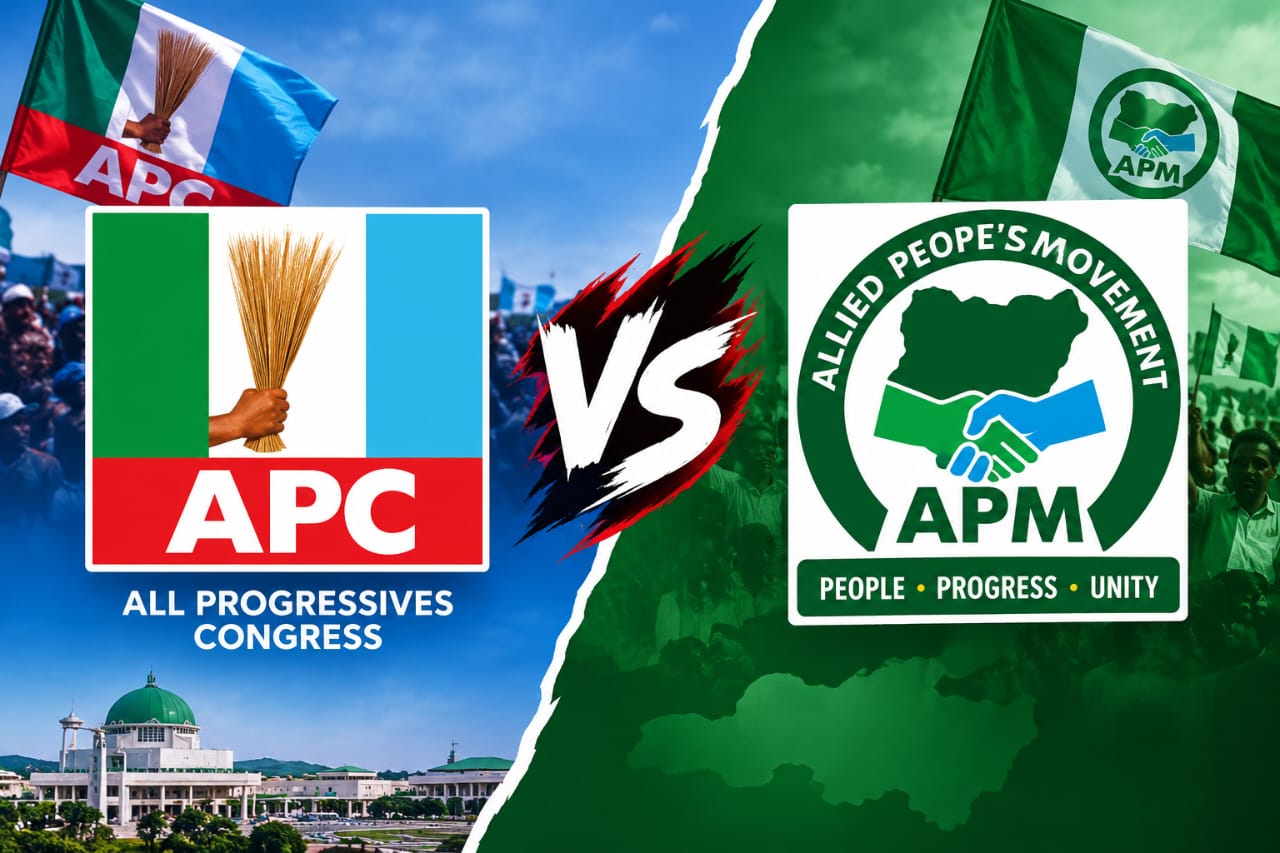
Makinde’s decision to pursue the presidency on the platform of the Allied Peoples Movement (APM) has changed the political calculation around him. The governor’s record in Oyo State is no longer merely a matter for the state’s electorate to assess. It has become part of a much larger national argument over whether the man who has governed Oyo for two terms is fit to lead Nigeria.
And naturally, his political opponents are going to come after him. That is politics. That is democracy, and as such, it should be expected or he would be caught unaware.
But Nigerians should be able to tell the difference between genuine scrutiny and a deliberate campaign to destroy a political opponent by every available means. That distinction will matter greatly before 2027.
We have seen this movie before, it is not new to Nigerians, the only problem is many easily forget contemporary history on the alter tribal and religious bigotry and so, ignorantly end up with a bandwagon.
There is a reason the political atmosphere developing around Makinde reminds some us of what happened to former President Goodluck Jonathan in the run-up to the 2015 election.
By 2014, Jonathan was facing one of the most aggressive political campaigns Nigeria had witnessed since the return to democratic rule.
The opposition had found its message.
Jonathan was presented not merely as a president with weaknesses, but increasingly as the embodiment of everything that was wrong with Nigeria.
Every major national problem became part of the indictment.
Insecurity? Jonathan was blamed.
Corruption? Jonathan was blamed.
Unemployment? Jonathan was blamed.
Power? Jonathan was blamed.
Economic difficulties? Jonathan was blamed.
Even where there were complicated institutional, historical or structural explanations for a problem, the political conversation increasingly reduced everything to one question: Is Jonathan competent enough to remain president?
The then ruling PDP accused the opposition APC of relying heavily on propaganda, blackmail and character assassination. The APC, naturally, rejected that description and maintained that it was simply exposing the failures of the government.
Both sides were playing politics but one thing became clear: the opposition had succeeded in setting the emotional tone of the election.
The 2015 election eventually produced a historic transfer of power. Jonathan lost and the rest they say, is history.
The point here is not to reopen the 2015 election or suggest that Jonathan should not have been criticised. He should have been scrutinised, just like every elected president.
The lesson is something else. Once a political narrative becomes sufficiently powerful, facts can sometimes struggle to catch up with perception.
That is why the 2027 contest in Oyo deserves careful attention as opposition continues to mount its usual campaign based on the politics of “failed governor”
The APC has already begun defining Makinde in its own political language.
Recently, the Oyo APC described the governor as a “failed governor” and argued that Nigerians would not replace what it considers a performing President Bola Tinubu with Makinde.
There is nothing unusual about an opposition party attacking an incumbent governor but there is a question that should accompany every such declaration: Failed in what sense?
If Makinde has failed, Nigerians deserve the evidence. If his administration has mismanaged public resources, show the verifiable figures. If projects have been abandoned, name them. If roads have not been constructed, identify them.
If the state’s finances are in poor condition, publish the numbers. If his economic policies have failed, demonstrate it through measurable outcomes, and if his administration’s claims of achievement are exaggerated, expose the exaggeration.
That is how political arguments should be won. Calling somebody a “failed governor” may excite party supporters, but it does not tell a hungry young graduate how the opposition intends to create a job for him.
It does not tell a farmer how agricultural productivity will improve. It does not tell a teacher how schools will become better. It does not tell a pensioner when his or her entitlement will be paid.
And it certainly does not amount to a presidential economic blueprint.
One of the striking features of the 2014 political campaign was how the opposition was able to turn a complex national conversation into a relatively simple political choice.
It was no longer about evaluating individual policies one after another.
It became about whether Nigerians wanted to continue with Jonathan or make a change.
That is the brilliance, and danger of political framing. A politician does not necessarily have to convince everyone that every single allegation against an opponent is true.
Sometimes, all that is required is to create a general feeling that the opponent has failed.
Once that feeling becomes widespread enough, every new controversy reinforces it. That is why political blackmail, when deployed persistently, can be such an effective political weapon.
And it is precisely why the people of Oyo State should be careful about the political narratives that will dominate the coming campaign.
Not every criticism of Makinde is blackmail but not every allegation against him should automatically be accepted as fact either.
The same rule applies to the APC.
Not every criticism of the Tinubu administration is an attempt to destabilise the government. Sometimes, government simply needs to answer the hard questions without trying to evade or transfer them.
Against that background, consider what has happened in Lagos recently. Reports emerged recently that pensioners protesting over their pensions and other retirement entitlements were dispersed during a protest in Alausa, with allegations that security personnel used tear gas.
The images and reports generated anger across the country, and understandably so. There is something deeply uncomfortable about seeing elderly Nigerians, many of whom spent decades serving the public, standing in the streets demanding what they believe government owes them.
And then there is the allegation that security forces responded with tear gas.
Human rights lawyer Femi Falana condemned the reported incident and called for those responsible to be prosecuted.
Other civil society groups also demanded an investigation but the Lagos State Police Command subsequently denied firing tear gas at the pensioners and challenged some of the claims circulating online.
That means the matter should not be settled by social media outrage. It should be investigated. Let the facts simply come out.
If officers used tear gas, Nigerians should know, if they did not, Nigerians should also know. If the pensioners were peacefully protesting, that should be established. If there was provocation or a security threat, that too should be established, and If excessive force was used, whoever authorised it should answer for it.
That is what accountability means in any sane society, but there is another issue that should not be lost in the argument over what exactly happened, and that is why were pensioners protesting in the first place?
That question deserves as much attention as the confrontation itself. Now, change the political colour
Let us conduct a simple political experiment.
Imagine Lagos was governed by the APM. Imagine an APM governor was sitting in Alausa. Imagine pensioners gathered at the Lagos State House demanding pension adjustments, arrears and other benefits. Imagine videos circulated showing elderly men and women being pushed away by security personnel. Imagine, further, that the videos showed or appeared to show tear gas being fired.
What would happen? Would the APC simply say, “Let us wait for the investigation”? Perhaps.
But Nigerians who understand the mechanics of opposition politics would probably expect something much bigger. The APC would likely condemn the government in very strong terms.
Its leaders would visit the pensioners. Its lawmakers would hold press conferences. Its social media machinery would go into overdrive. Political commentators would spend days discussing the incident.
The opposition would likely describe it as evidence of the government’s insensitivity, and somewhere along the line, an idea of a one million-man march against government failure, could pop up on the table, just for political framing.
That is the point of this hypothetical.
It is not about claiming that every APC member would behave in precisely that manner. It is about exposing the selective outrage that often characterises Nigerian politics.
An incident can be described as an unforgivable government failure when your opponent is responsible but the moment your own party is responsible, the language changes. Suddenly there are “complexities.” Suddenly there is “context.” Suddenly people are asked to “wait for investigation.”
Suddenly the same politicians who demanded immediate accountability from their opponents become patient defenders of due process. That is the hypocrisy Nigerians should reject because pensioners for example, do not vote by party colours.
There is another reason the Lagos controversy deserves serious attention, and that is because the people involved are pensioners.
They are not political parties or campaign organisations. They are simply citizens. Some of them may support APC, some may support PDP. Some other may support APM.
Some may not even care about any political party at all.
Their stomachs do not recognise party colours. Their unpaid entitlements do not become less important because the governor belongs to one party rather than another.
If the political history of 2014 teaches anything, it is that opposition parties understand the power of “politics of outrage” strategy particularly well, and as the 2027 election approaches, Nigerians should expect more of it.
The APC should sell its own ideas rather than embarking on sheer political blackmail. There is nothing stopping the APC from defeating Makinde’s anointed candidate politically. That is if they’re able to sell their candidate on the premise of a more robust economic blueprints, transformative ideas with verifiable evidence, and political will to deliver on their blueprints.
If the party believes Makinde has performed badly, it should make that case with proof. If it believes Oyo has been badly governed, let it present a detailed alternative.
Tell Oyo voters what an APC government will do differently. How will it create jobs, attract investment, and improve healthcare?
What will it do about education, agricultural plan, with and about the state’s finances?
How will it address infrastructure, improve security, and what is its plan for local governments aside claims to give LG autonomy that is still shrouded in legal and constitutional controversies.
And if APC’s preferred candidate eventually seeks the governorship seat, Nigerians should ask exactly the same questions.
The politics of 2014 showed Nigerians how powerful a sustained campaign of negative narratives can become.
The politics of 2027 should show that Nigerians have learnt something from it otherwise the entire sense of contemporary political history would have been a waste.
The people should not be asked merely to choose who has the most powerful propaganda machine. They should be given the opportunity to choose who has the most convincing transformative plan.
Because, in the end, a one-million-man march can fill the streets for one day to blackmail a governor or his government. A bad government enthroned on the strength of false political propaganda can affect millions of lives for years to come.
And that is why the real battle in 2027 should not be over who can shout the loudest. It should be over who can govern the best, and if the electorate, seeing the truth, knowing the facts, and still chose to believe the lies and deception of false propaganda, it should be established that they brought upon themselves whatever befell them.