

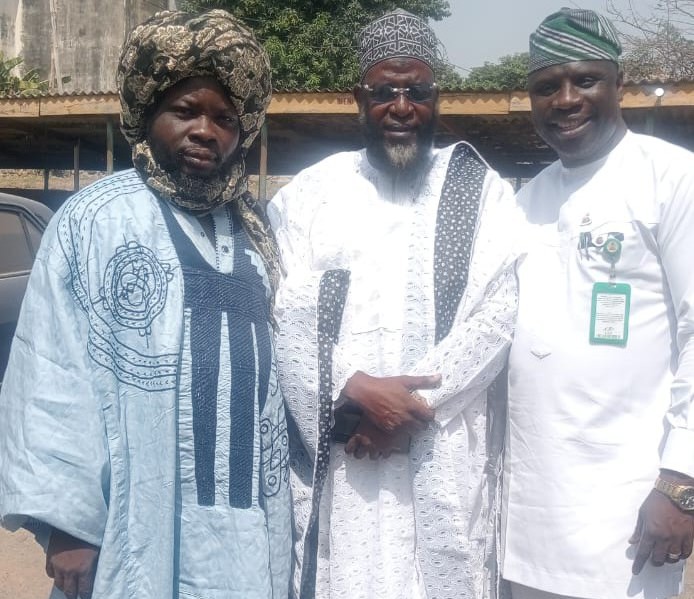
The Special Assistant to the Oyo State Governor on Interfaith Affairs, Rev. Femi Ibikunle, has called on Nigerians to be deliberate and intentional about peaceful coexistence, stressing that sustainable development cannot thrive in an atmosphere of violence, insecurity and social division.
Ibikunle made the call on Monday in Ibadan while delivering an address titled “Invest in Peace for Everyone, Everywhere and Everyday” at the 2026 International Day of Peace commemoration organised by the Aviary Association Worldwide, Oluyole Chapter.
The International Day of Peace, observed annually on September 21, provides an opportunity for individuals, communities and institutions to reflect on the importance of peaceful coexistence, dialogue and non-violence.
Speaking on the 2026 theme, “Invest in Peace – For Everyone, Everywhere, Every Day,” Ibikunle said peace should not be viewed merely as the absence of war, but as the presence of justice, security, dignity and opportunities for people to live meaningful lives.
He said: “Peace is not just the absence of war. It is the presence of justice, security, dignity, and opportunity. It is not something that happens by accident. It must be built, funded, taught, and defended every day.”
According to him, societies routinely invest in roads, technology, businesses and education because they recognise their importance to development, adding that peace deserves similar deliberate investment.
He said sustainable development would remain difficult to achieve where citizens were divided along ethnic, religious, political or socioeconomic lines.
Ibikunle stressed the need for peace to be inclusive, saying there could be no lasting peace where sections of society were marginalised, oppressed or left behind.
He identified equity, active listening and respect for human dignity as some of the ways through which individuals and institutions could promote peaceful coexistence.
“Peace cannot be selective. There is no lasting peace for the rich when the poor are in crisis. There is no peace for one tribe, one religion, one gender, while others are oppressed,” he said.
The governor’s aide urged leaders at all levels to listen to the people, while encouraging families to create an environment where members could communicate freely and resolve disagreements without violence.
He said peacebuilding should begin from the home and extend to schools, communities, workplaces and places of worship.
According to him, schools must confront bullying, cultism and discrimination, while communities should embrace dialogue in resolving land disputes, chieftaincy disagreements and religious tensions.
He also called for scale up investment in mediation and other non-violent mechanisms for conflict resolution at the national and international levels saying: “If peace is not everywhere, it is nowhere.”
He further emphasised that peace should not be treated as a one-day event marked only on September 21, but as a daily responsibility requiring consistent commitment from individuals and institutions.
He urged citizens to make what he described as “small daily investments” in peace by forgiving others, controlling anger, helping neighbours and refusing to spread fake news or inflammatory messages.
Ibikunle equally called on religious institutions to make peacebuilding part of their regular teachings, while urging stakeholders to equip young people with skills that would enable them to resolve conflicts constructively.
He identified good governance, effective justice systems and job creation as critical long-term investments in peace, noting that unemployed youths could be vulnerable to recruitment into violent activities.
On practical ways of investing in peace, the Special Assistant identified time, money, words and action as important resources that individuals could deploy.
He urged citizens to volunteer in resolving conflicts within their communities, support organisations working to educate children and assist victims of violence, and use their words to promote rather than undermine social cohesion.
“Choose to speak words that heal, not words that divide. Stop hate speech on WhatsApp and Facebook,” he said.
Ibikunle also warned citizens against allowing themselves to be used for political thuggery, ethnic conflicts or religious violence.
“Be the peace you want to see. Refuse to be used for thuggery, for tribal war, for religious crisis,” he added.
He noted that societies already bear enormous economic and human costs whenever peace breaks down, including loss of lives, destruction of property, displacement, insecurity and disruption of economic activities.
“War is expensive. Violence is expensive. Insecurity is expensive. We are already paying the price for lack of peace in Nigeria and around the world. Peace is cheaper, but it requires intentional investment,” Ibikunle said.
He therefore urged governments, religious bodies, civil society organisations, community leaders and individuals to take collective responsibility for building peaceful societies rather than leaving the task solely to government or international organisations.
“Let us not wait for the government or the UN alone. Let each of us become an investor in peace — for everyone, everywhere, and everyday,” he said.