

Something is quietly and discreetly breaking in plain sight but nobody is taking note. On paper the minimum wage was raised to seventy thousand naira a month by the federal government while implementation is taking place across all the 36 states and the FCT.
In practice the cost of keeping a roof over a family’s head in many Nigerian cities is racing far ahead, turning modest aspirations into harsh trade offs and if government continues to look away to evade responsibility, this may soon snowball into a social crisis far greater than strengthening regulations of the housing sector especially as affecting landlord and tenants relationship.
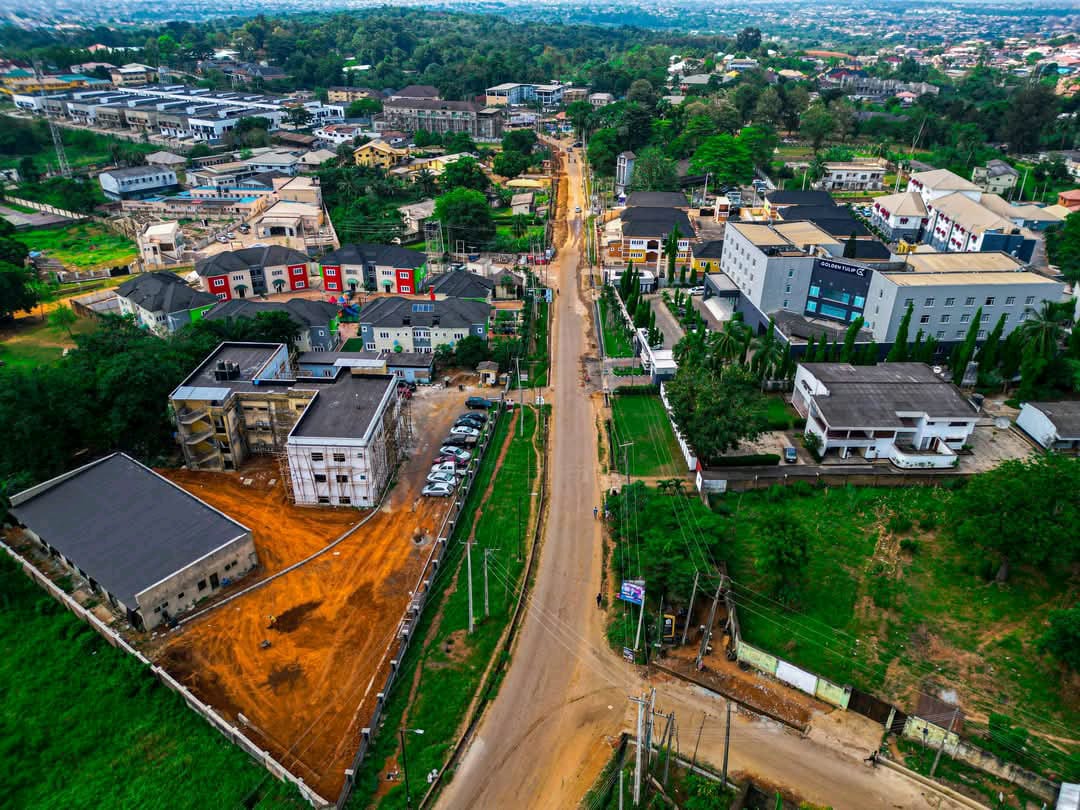
In Ibadan and across Oyo State a decent three-bedroom home apartment that once might have been within reach now carries an annual price tag approaching a million naira or more excluding service charge and other related agency fees, and that gap is not accidental. It is the product of unchecked overlapping forces such as macroeconomic, structural, speculative and regulatory, that together are converting a housing problem into a social emergency.
When food, fuel and imported inputs leap in price, building materials follow. Cement, steel, plumbing fixtures and even the cost of transporting those supplies all rose through the recent inflationary cycles.
Those pressures feed directly into developers’ and landlords’ calculations, and they rarely wait for wages or incomes to catch up. Even when inflation briefly slows, the cost of construction almost never reverses, and rents rise to match that new ceiling.
Local developers and even small landlords borrow in naira at painful interest rates. Many rely on imported items priced in dollars. Each time the naira stumbles, every building plan becomes more expensive, and whatever is finally built leans toward the high end.
Formal mortgages remain out of reach for civil servants and most residents engaged in private businesses or establishments, leaving the majority who fall below the poverty ladder to navigate a cash-based, high-cost market that pushes up rents simply because supply is too thin.
Ibadan as the state capital and other fast-growing towns in Oyo State continue to attract people looking for work, schooling and access to infrastructure. Yet housing supply has not kept up.
Vacancy rates for affordable apartment units are tight, and landlords with properties in high-demand corridors and areas use that leverage. Any new road or urban upgrade in an area tends to trigger rent spikes, which in turn spill into surrounding communities. Families are pushed farther out, and the cycle intensifies.
Anybody may want to feign ignorance to evade responsibility by attributing such unpleasant systemic structural deficiency to an open market or what may be termed capitalism. But in a society where majority of the population wallow below the poverty ladder and only few are privileged in the society, it becomes not only a matter of expediency but of necessity for government to step in and find a balance so that the less privileged don’t engage in acts that may jeopardize efforts to sanitize the system of corrupt practices in a bid to level up with others.
There is a behavioural side to this squeeze. Many landlords approach rent with a defensive mindset, using property as their hedge against inflation. Rents sometimes rise not only to reflect costs but to protect expected future value. The culture of demanding one or two years’ upfront payment magnifies the pain beyond measures.
Households who cannot produce such lump sums end up compromising on safety, hygiene, or proximity to work and school. As long as tenancy rules remain weak, landlords continue to dictate terms unfettered while government looks away feigning ignorance just to evade regulatory responsibility.
Nigeria’s housing sector still lacks a unified, enforceable framework that balances investor interests with tenant rights. Enforcement is often selective, slow or nonexistent. Political leaders understand the human costs but sometimes hesitate to take on real estate interests. The resulting vacuum has left tenants to fend for themselves however, they could.
And somewhere inside this pressure cooker, something more subtle is happening — something very disturbing.
When people are trapped between a stagnant income or wage that is not commensurate with economic value of such wage and rent that behaves like a runaway train, survival instincts begin to override social norms.
In offices, markets, ministries and even within small businesses, the temptation to cut corners grows stronger. A junior civil servant facing eviction may start rationalising why collecting “small tokens” from files or applicants feels justified. A private worker confronted with impossible rent demands may slip into inflating invoices, diverting supplies or taking kickbacks simply to keep a roof overhead.
It is not always malicious. Sometimes it is quiet desperation wearing a thin smile and this is a subject we must start to seriously talk about if we must avoid the social implosion waiting to happen.
This is how corruption becomes ordinary. Not because people suddenly abandon their values, but because the economic system keeps cornering them until compromise feels like the only available oxygen.
When rent gulps half or more of a household’s income, the line between integrity and survival starts blurring. Over time, society adjusts to these behaviors, and what was once shameful begins to feel like the norm. That kind of erosion rarely announces itself loudly. It grows in silence, one stressed household at a time.
When rent swallows a disproportionate share of earnings, families sacrifice essentials like healthcare, schooling, stable diets. Workers settle for exhausting commutes from distant outskirts, and informal settlements swell.
Middle-income households slip down the ladder, while low-income families hover dangerously close to homelessness. The emotional toll is heavy and mostly invisible. The quiet calculations of parents choosing between rent and a child’s medication slowly chip away at society’s moral fabric. Soon, a family who should ordinarily approach a hospital for quality medical care may resort to self medication out of lack.
This article is therefore, not a call for one magic solution. It demands a coordinated blueprint that moves on multiple fronts at once. The legislature has a critical role to play by setting the pace for a transformative reforms via strong legislative framework for the housing sector while the state government implements.
Some of the drastic and urgent approach to provide solutions to these challenges include but not limited to stabilise inputs and reduce construction costs, make housing finance work for ordinary people particularly the low and middle-class income earner, strengthen tenancy law and regulate exploitative practices such as imposing sanctions against any agent or landlord found flouting the provisions of the law.
Other measures include delivery of public and mixed-finance affordable housing at scale. State governments should accelerate partnerships with private developers and multilateral funding bodies to build mass affordable units. Offer land banks, fast-track approvals and density incentives to lower unit costs and speed up delivery.
Provide time-bound rental support for the most vulnerable, and consider temporary tax relief for small landlords who maintain stable rent prices. These short-term measures buy time while structural reforms pan out while maintaining data, transparency and monitoring via necessary filing of rental charges on tenants to relevant government authorities.
It is worthy of note that this measures are not impracticable, they are in fact achievable with an all inclusive approach to problem solving and measurable solutions. Lagos State for instance, has made some bold moves in this direction and this has in a way reduced the systemic exploitation of the vulnerables and less privileged.
Raising the minimum wage to seventy thousand naira acknowledged the economic strain. But without decisive action on housing which is the largest expense for most households, that increase risks dissolving before it reaches the pockets it was meant to protect. And if the imbalance is left unchecked, the cost will spill far beyond the rental market. It will quietly rewrite the country’s ethical landscape.
People will not always shout while they struggle. Sometimes they adjust, justify and adapt in ways that reshape society in the shadows but the overall impact may be too horrendous for government to grapple with.
This is why government intervention is urgent. Affordable housing is not just an economic issue. It is a moral firewall. When people can meet basic needs without resorting to desperate measures, societies stay stable. When they cannot, corruption, resentment and social tension take deep root.
Oyo state is not at that breaking point yet, but the signs are already visible and no longer subtle. The silent agony deserves attention now, before it matures into a crisis with consequences far costlier than any housing reform.
Editor’s Diary is a weekly column for sociopolitical views on westernmirror.com.ng
For enquiries, contact: 09023650171