

Political thinkers from great philosophers such as Aristotle, Machiavelli, and others have long argued that power rests on two fragile pillars: the consent of the governed and the ability of a leader to read the mood of the polis before it shifts.
This, I guess is one of the major logics that birthed the concept of ‘holding power in trust’ by elected officials.
Modern democracy hasn’t changed that logic. When the social contract begins to strain, even the most accomplished leader, either in public or private life, must pause and re-evaluate the balance between authority and legitimacy.
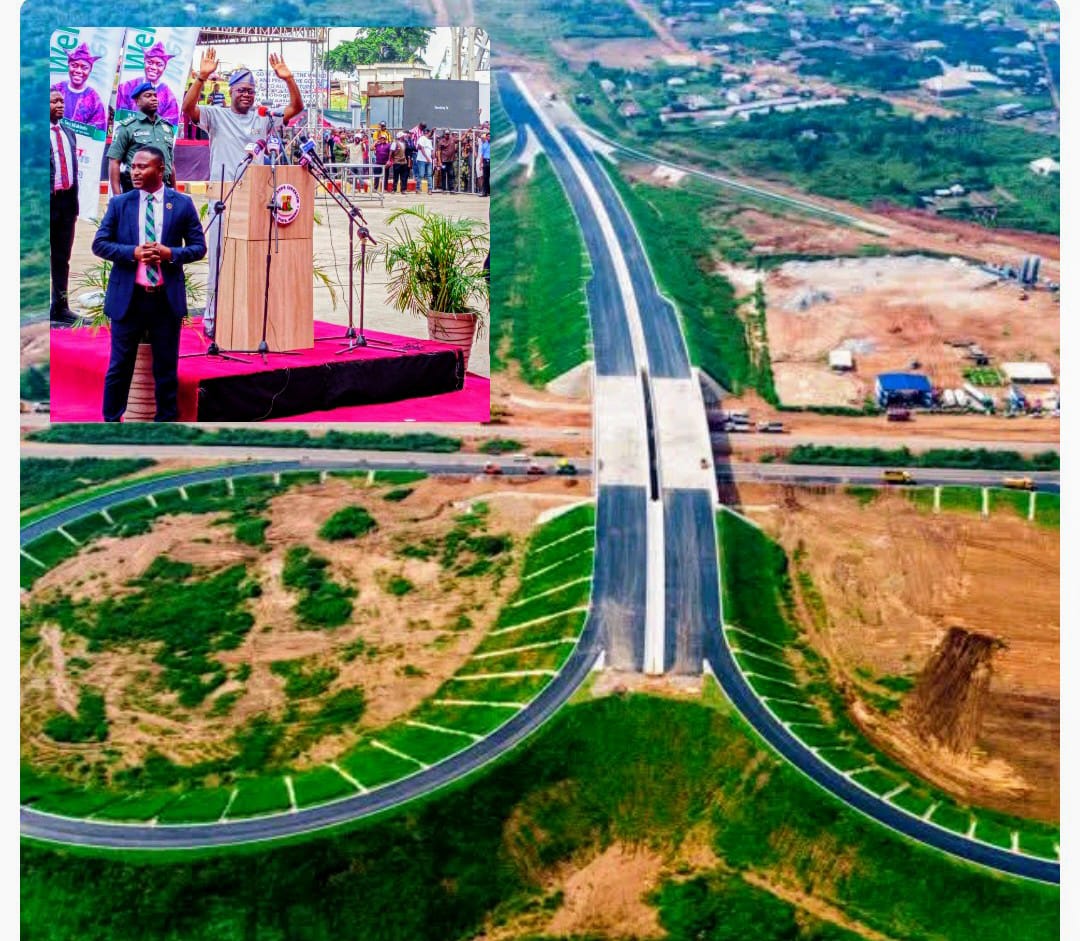
Oyo State is standing in one of those moments. The turbulence around the Peoples Democratic Party, the uneasy aftertaste from the Ibadan national convention, the open rejection from the Wike-led camp, and the emotionally charged protests over the 500-meter setback for the Circular Road have all converged into a single truth. Goodwill still surrounds Governor Seyi Makinde, but it is now wrapped inside a growing cloud of anxiety.
And that is where political philosophy meets the wisdom of old. The biblical account of King David and the Ark of the Covenant is one of the clearest illustrations of how even a good idea, a noble vision, or a divinely inspired initiative can fall outside the timing assigned to the leader who conceived it. David desired to build a permanent dwelling place for the Ark.
He had the passion, the foresight, and the resources. But God made it clear that although the vision was sound, the responsibility for implementation would pass to Solomon.
The message was unmistakable: a leader may carry the inspiration, but history decides who carries the execution. And in between both stands one silent force, and that is timing.
That ancient lesson speaks precisely and sharply to the present political climate in Oyo state. Because even when policies are conceived with the best intentions, the public mood can either open the door for smooth implementation or shut it firmly.
Leaders who push ahead without reading that mood often discover that political capital, no matter how deep, has its limits. Insensitivity, especially in moments of tension, can turn a laudable vision into a liability.
The affection expressed by some protesters during the Circular Road demonstrations, people who said they loved Makinde and support the ongoing project, even while lamenting their losses, reflects a rare kind of trust. But it also carries a warning note.
Communities were crying out not just about policy, but about timing, displacement, and emotional shock. Ideas may be progressive, but progress imposed without empathy can become politically suicidal.
That blend of pain and affection is rare in Nigerian politics. It is the sort of emotional capital that leaders spend slowly and replenish carefully. And it is a sign that despite the growing storms, Makinde still holds a unique place in the hearts of many. But at the same time governor Makinde must understand that no political account remains full unless deposits continue.
Meanwhile, the PDP’s factional crisis has been simmering for months, but what happened after the Ibadan convention raised the stakes. What should have been a unifying moment instead widened internal cracks. Wike’s rejection of the process unsettled the national structure further. And this is happening just as Oyo PDP itself is feeling internal fatigue.
Layered on top of this is the widening gap between national engagement and state-level realities. Makinde has become an influential figure in national PDP politics.
His rise has rebalanced forces within the party. But the fierce factionalization now unfolding means that national politics may begin demanding more than it gives. And while those battles absorb attention, the home front is clearly suffocating and signalling serious discomfort.
Oyo is a state where political infrastructure requires constant tending. Grassroots actors want to be reassured. Local structures must feel carried. And with 2027 approaching, any governor seeking to secure an easy path for his preferred successor must understand what David in the Bible learned centuries ago: vision alone is not enough. Sensitivity to timing, mood, and public emotion determines whether a legacy can be transferred smoothly.
The political moment in Oyo state is already reverberating that lesson. Makinde may conceive grand ideas or move to actualize an existing one for Oyo’s future, even engineer its implementation. He may see farther than many around him. But there are seasons when the soil is too unsettled for full implementation, and discerning mind must understand this.
Sometimes the wiser path is to refine, slow down, or hand over certain aspects for future execution. That doesn’t shrink a leader’s stature or threatened his or her pride, rather, it protects it.
Protesters who criticize policy yet express love for the governor are offering something rare, and that is a space to recalibrate. They are effectively saying, “We trust you, but don’t push us past our breaking point.”
Similarly, the same message resonates within the PDP, where members expect stabilizing leadership rather than distant engagement.
There is still time. The fire on the mountain is more smoke than flame, but smoke is a warning. It signals the need to re-anchor where legitimacy truly lives: among the people who feel the impact of every decision.
Goodwill remains a powerful currency. But goodwill that is not refreshed becomes sentimental rather than political. And for any leader hoping to hand over to an anointed successor, sentiment will not be enough.
What is needed now is renewed sensitivity, deliberate reconnection, and a strategic shift that places Oyo state, not Abuja, at the center of the governor Makinde’s political radar.
David had the vision, but Solomon carried the responsibility. The lesson is very simple and straight, even the best ideas can belong to tomorrow not necessarily today. And leaders who grasp this truth early often preserve both their legacy and their political house.
The moment is calling for that wisdom. The fire hasn’t consumed anything yet, but the heat is real and capable of causing unimaginable political damage to both hopes and hard earned legacy.