

There are moments when the past sits quietly in the corner, waiting for a chance to remind us that history only repeats itself when people stop paying attention. Oyo State is standing in one of those moments right now.
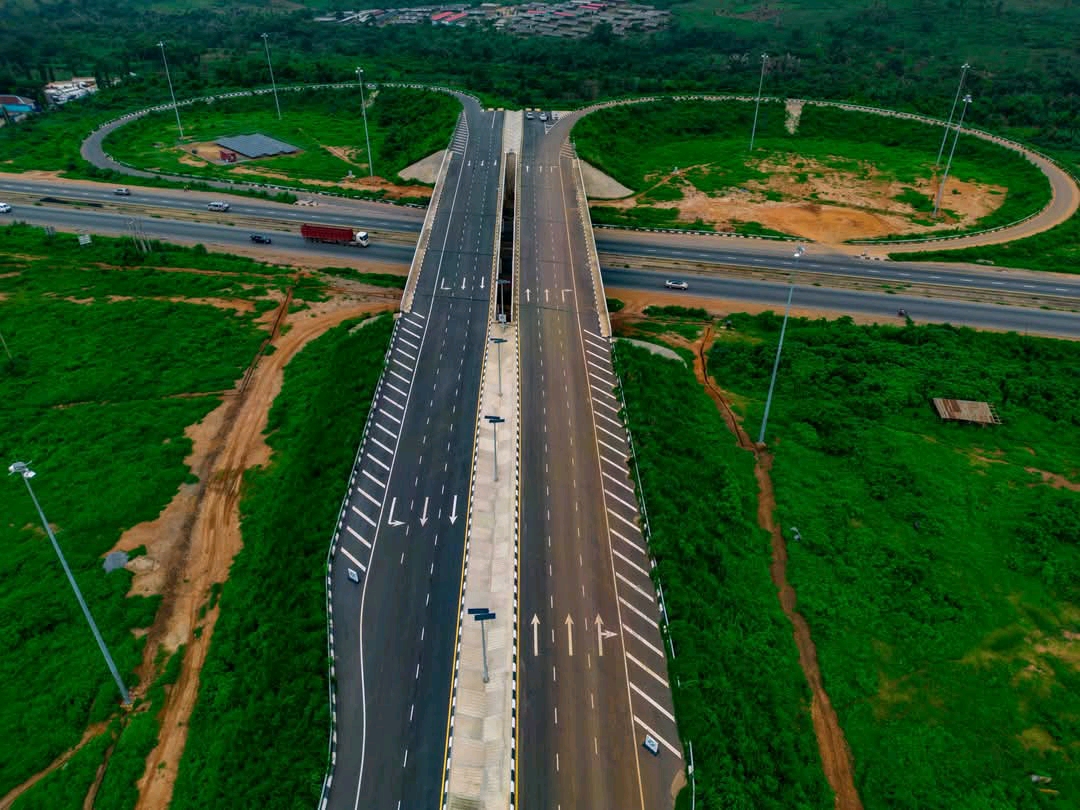
The debates around the 110 km Senator Rashidi Ladoja Circular Road project, even though already addressed, have still revived an old lesson Nigeria learned in a hard and painful way back in 2012, when the Jonathan administration attempted to remove petrol subsidy.
On paper, the policy seemed rational but in real life it ignited a nationwide storm and from West to the North, the protests became one of the largest civic upheavals in the country’s history.
Many of the loudest voices rejecting that policy are literally the same figures now championing or defending the subsidy removal at the centre today like it was a wrong move back then in 2012 when a litre of petrol sold for less than one hundred naira and naira to dollar exchange rates hover between 140 to 143 naira per dollar.
Yet, because it was the first time a government was bold and courageous enough to dare to achieve the impossible, the then opposition leaders leveraged on pervasive ignorance to launch what could best suffice for one of the fiercest nationwide protest against the subsidy removal.
The 2012 crisis didn’t erupt simply because of economics. The national dailies documented corruption, opaque transactions and the chaos inside the subsidy regime.
One House of Representatives investigation found that the subsidy bill had jumped from 384 billion to 2.587 trillion naira. There were payments made to unknown entities, including one suspicious sum paid 128 times in just 24 hours. It was described as a “regime of controversy,” a system where fuel scarcity and erratic pricing persisted even after deregulation talks.
People protested because they felt ambushed. They saw sudden hardship at the petrol pump, they doubted the government’s sincerity, they questioned whether promises of reforms would ever materialise.
At least two people died as reported in Lagos and Kano, dozens were injured, and police responded adequately in some locations to prevent breakdown of law and order. Reports portrayed the moment not just as an economic debate, but a revolt against perceived hypocrisy, failed promises and corruption that was left to fester.
That memory matters now. Because when people feel unheard or blindsided by their leaders, the reaction rarely stays calm.
This is the backdrop against which Governor Seyi Makinde stepped into the tense arena at Ologuneru a few days ago. In a very similar situation, property owners were anxious, agitated, and confused.
Many had built homes over years, never imagining that such an ambitious and bold development corridor would one day cut across their lives considering the sluggish pace of project execution by most governments.
Makinde didn’t send representatives. He practically drove himself to the venue. No podium. Just rough ground, open air and hours of back-and-forth. It felt like someone who really understood a simple truth, and that’s that even the best policy can collapse under the weight of public distrust.
He listened. He asked questions. He cut through the noise to hear the fear behind outcry. And then he made assurances people had been waiting for; no house would be demolished without adequate compensation, and that the 150 metre setback would not exceed what is already established in built-up areas.
One key factor the people must master its art to beat Nigerian politicians to their game is the art of knowing exactly how to separate emotions from logical reasoning. Politicians, especially opposition leaders thrive on whipping up unnecessary emotions, leveraging on the travails of the people seeking solutions to their challenges.
The governor went further to explain why the standards exist. The Circular Road is designed as a rapid transfer route, where vehicles will move at 80 to 100 kilometres per hour. Highways like that demand strict safety codes.
Even so, he insisted that technical markings must match reality. If any house had been wrongly marked beyond the approved setback, owners should ignore it. That single line softened the tension that had been building for days.
He broke the project down into three segments: the Technical University to Ibadan–Ife Road at Badeku — almost completed, Badeku to Moniya — ongoing, bridges and drainage rising, and this last Ologuneru stretch — which the next administration will inherit.
Yet he said he wanted the issues resolved now. He didn’t want to dump confusion on the next governor. He acknowledged that most leaders tend to slow down once they see their tenure’s last months approaching but he insisted he would not, rather, he would serve the people till the last moment of his tenure in office.
To deepen trust, he created a joint committee of ten community representatives working directly with the New Towns and Cities Development Authority. The ministry would step back.
A small shift on paper, but symbolically important. People want to engage those who understand their terrain, not distant bureaucrats with tracing paper and straight rulers.
Residents spoke with deep emotions. Just like in 2012 when most ignorant electorate couldn’t read between the lines of politicking and governance to understand the bold decision by the Jonathan government to end the subsidy regime at a very good time, some of the protesters pleaded for a review of lands acquired before Makinde took office, believing that reducing the project footprint could save more homes without sacrificing the vision.
The Asiwaju of Ido, Chief Niyi Akintola, even reminded the crowd that although land belongs to government, Makinde has shown the political will deserving of trust, and that he will not hide behind legal cover to ignore human realities.
Still, the truth is bigger than one dialogue session. Projects fail when leaders underestimate the power of human sentiment. And Oyo cannot afford a 2012-style eruption in 2027, not when the Circular Road is central to the state’s future.
The road, which spans across six local government areas comprising Akinyele, Lagelu, Egbeda, Ona-Ara, Ido, Oluyole already promises decongestion, economic expansion, faster movement of goods, better urban planning. But all of that can collapse if citizens feel trampled in the process.
And while this important conversation unfolds, the Oyo APC youth wing has decided that their contribution to the public discourse is to ask the governor to “start preparing his handover note.” A dramatic headline-grabber, sure. But the boldness sounds hollow when stacked against their own unresolved past.
Because for all the noise they are making now, the electorate hasn’t forgotten what life looked like the last time their political family controlled the state. Workers went several months without salaries, baseless demotion and in some cases, outright sacking of civil servants on flimsy excuses that are unconnected to politics of bitterness.
Pensioners waited endlessly for entitlements that never came on time. Gratuities became a test of endurance rather than a right. Families collapsed under debt. Retirees died waiting for what they had already earned. And all of this happened when the national economy was relatively stable during the subsidy regime, not in the distressed state the country faces today.
So when APC youths reshape themselves as a movement ready to rescue Oyo in 2027, it raises a brow. What exactly do we call unpaid salaries? What do we call the months of hardship quietly borne by civil servants? What do we call pensioners who were abandoned in lines that stretched like punishment?
If they want the people to trust them again, then honesty must come before ambition. A youth summit will not erase memories. Political unity among opposition leaders because of a perceived common enemy like Jonathan will not substitute for unity with the people. An alliance between Teslim Folarin and Bayo Adelabu may make for interesting headlines, but it will not wipe away years of poor human management.
You cannot demand a handover note without first accounting for where you once failed and publicly apologising to the same people you so desire to rule over again, at the very least, public admittance and apology for past failure in a civilized and democratic society may sound weakling but it is a show of strength and capacity for growth.
The people of Oyo are more politically conscious and discerning now, if Makinde did not give an excuse for a single month to pay workers salary, pension, and gratuity, despite the Covid-19 global pandemic that grounded global,continental, national and state economies, then the people will not accept any form of excuse from Makinde’s successor regardless of political affiliation.
What the electorate desire and duly so deserve is development that touches lives, not glossy slogans. They want leaders who remember the past, not those who rewrite it. They want firmness without arrogance, ambition without cruelty and progress without pain.
And they want leaders, whether on highways or in politics, who understand that legitimacy comes from listening, not lecturing and grandstanding because of the mentality of having federal might to manipulate the system or electoral process.
That is the shared lesson between the Circular Road debates and the memory of 2012. One teaches the importance of dialogue. The other warns what happens when government and citizens stop hearing each other.
So, for Oyo state, the road ahead leads to two possible futures. One where leaders and people move together, step by step, toward a project and a state that genuinely works under a sustainable framework and another, where distrust builds a wall no asphalt can break.
Makinde, for now, is choosing the first path. Whether institutions follow him is the real test. Whether the opposition learns from its own past is another. But if the state remembers the lessons of 2012, listens to its people and treats its own history honestly, then 2027 does not have to repeat any of the storms that have once shaken this country to its very core.