

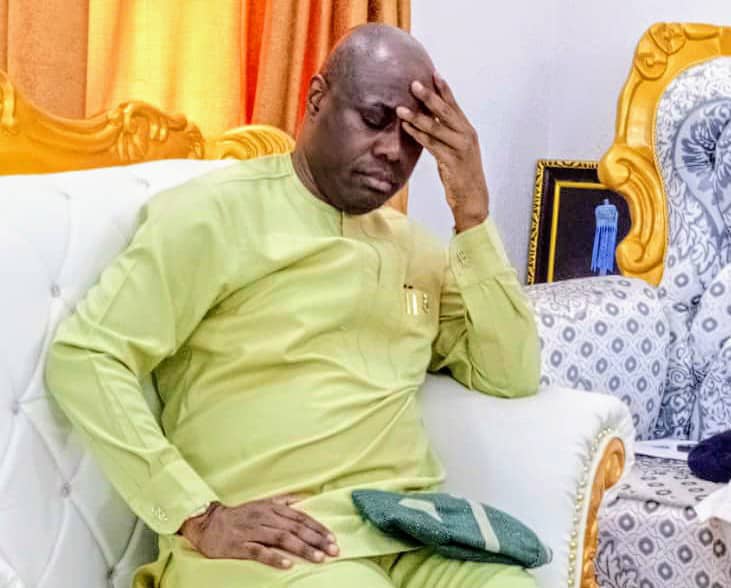
There’s no denying it anymore: Governor Seyi Makinde has grown into one of the most admired figures in Oyo State politics. His blend of quiet firmness, technocratic governance and consistent delivery has carved him a reputation that’s rare in today’s political climate.
Roads, schools, industrial projects, his imprint is visible. His popularity, even beyond party lines, is a political currency any sitting governor would envy.
Makinde’s ability to choose and successfully install a worthy successor come 2027 will decide whether his achievements survive him or dissolve in the usual tide of political turnover.
The question many are asking is simple yet layered: Can Makinde use his goodwill to enthrone a successor built around his popular appointees—but surrounded by politicians who lack the same broad appeal?
It’s a fascinating political puzzle—one that blends loyalty, merit, power and the unpredictable moods of democracy.
Makinde’s administration has been deliberate about appointments. He built a cabinet heavy with technocrats, professionals, and reform-minded thinkers.
That choice won him respect from non-partisan observers and ordinary citizens who had grown weary of patronage politics. But in making governance more technocratic, he inevitably created a new gap, one between government and the old party structure that thrives on familiarity, loyalty, and local deals.
So today, while Makinde himself enjoys remarkable goodwill, the political ecosystem under him is not equally loved. Many of his appointees command respect for their performance, but not necessarily affection within the rough-and-tumble grassroots politics that wins elections. After all, every politics is local, right?
First of all, a successor who emerges from Makinde’s inner circle or among his trusted appointees will understand his policies intimately. That kind of institutional memory is gold.
It means ongoing projects won’t stall, and the reforms of the past eight years can grow deeper roots rather than being uprooted by someone eager to “start afresh just to merely score political points.”
Secondly, in a state where political allegiances often shift, his name carries a kind of non-partisan weight. If the governor throws that influence behind a successor, it can tilt the narrative and even sway undecided blocs. People may not know the chosen candidate personally, but they may vote for Makinde’s track record.
Thirdly, rewarding competence over blind loyalty could reinforce a new culture of merit in Oyo politics—an idea that good governance, not political godfatherism, should determine who leads next. For a public increasingly alert to performance, that message matters.
But politics, as every realist knows, is not a clean equation. Competence doesn’t automatically translate into votes.
For all their brilliance, most technocrats lack the kind of emotional and cultural connection that seasoned politicians build over years of village meetings, burials, festivals, and party rounds, ‘Owambe’ as always being referred to in street parlance. These are the human links that turn applause into ballots.
A Makinde-backed candidate who leans heavily on his technocratic team but ignores the political class could face stiff resistance, not necessarily from the opposition, but from within.
Internal sabotage is often more dangerous than external competition. Disgruntled party figures who feel excluded from the succession plan or have been disgruntled over the years over failed expectations can quietly work against the system, starving it of ground-level energy.
Then there’s perception. In politics, optics sometimes outweigh facts. An “elite continuity” project can easily be painted by opponents as a handover among the privileged, a “government of Makinde’s friends.” That sort of framing can turn voters cold, even when the intent is noble.
And finally, there’s a simple truth: popularity is not transferrable. The goodwill that Makinde enjoys doesn’t automatically rub off on whoever he anoints. Nigerians, especially Oyo people, often times vote for personalities, not proxies, and this has shown in multiple previous elections.
The challenge before Makinde, therefore, is balance. He needs a trusted candidate with enough administrative intelligence that’s well grounded in first-hands on the job experience to sustain the policies of today, but also with enough political street sense to win tomorrow.
He’ll need to blend the old and new order keeping his popular appointees in the mix while re-engaging the traditional political base. That means more consultations, more outreach, and less centralization.
Grassroots politicians may not be technocrats, but they remain vital in building legitimacy at the polling unit level. The road to Agodi still runs through the dusty streets of Ibadan, Oke-ogun, Ogbomoso, Oyo, and Ibarapa.
If Makinde’s preferred successor can embody his values while also making peace with these structures, then the transition could be smooth and historic.
Groom early, not suddenly. If a successor is to come from within his team, they should be allowed to grow their own voice before 2027—not emerge at the last minute.
Share credit, share structure. The current government’s achievements should be projected as collective, not personal, so the transition feels organic rather than imposed.
Negotiate internally. The politicians who built the platform on which Makinde rose will expect inclusion. Ignore them, and resentment will find its way into the field.
Build a story people can own. Elections are as much about emotion as about record. A successor should not just inherit policies, but also inherit empathy.
Makinde’s greatest test may not be whether he leaves behind completed roads or working systems, but whether he can leave behind a culture of governance that outlives him.
If he succeeds in installing a competent successor despite party tensions, he will prove that good governance can be politically sustainable. If not, Oyo might risk reverting to the familiar cycle where every new administration begins by undoing the last.
The governor’s popularity gives him a chance to shape that outcome, but it won’t be enough on its own. To translate that goodwill into political continuity, Makinde must act as both statesman and strategist.
The legacy question, then, isn’t whether he can win another election. It’s whether he can make Oyo believe that the next government, even without him, will still feel like his promise kept.
And that in my opinion perhaps, is the most difficult victory of all even as 2027 gradually peaks up.