

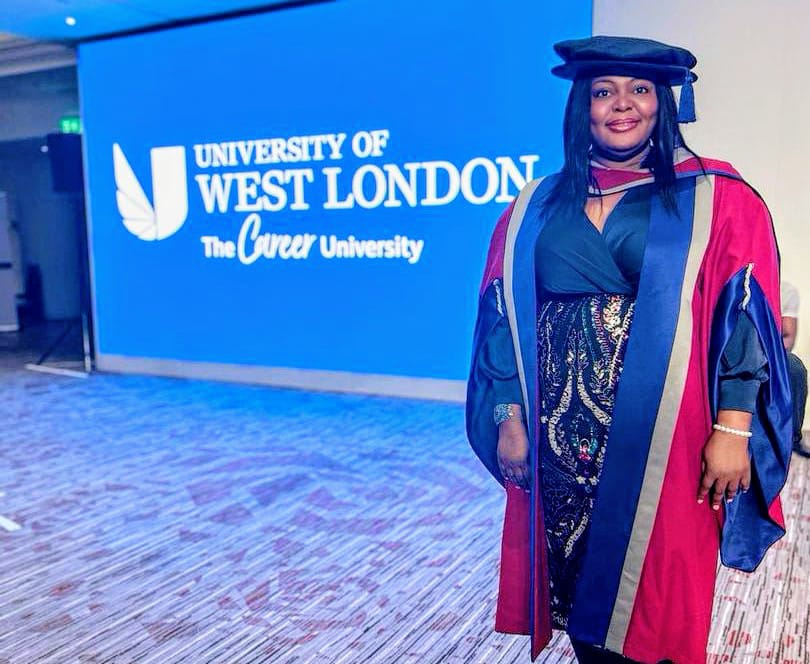
Dr. Timitope Farombi is a neurologist of over two decades and the Managing Director of Brain Center, Neurocritical and Rehabilitation Services, Ibadan. In this exclusive interview with westernmirror.com.ng, she speaks about the journey so far since the establishment of the first specialized brain center in Southwest Nigeria, the misconceptions about neurological care, the challenges in the health sector, and her vision for the future. Excerpt:
Q: Can you briefly take us through your experience since the establishment of the Brain Center?
Dr. Farombi: We opened officially on January 18, 2025. To the best of our knowledge, this is the first brain center in Southwest Nigeria that focuses on comprehensive neurological care and rehabilitation — a true one-stop shop. The name itself attracts a lot of attention, and people often compare us to institutions ‘Aro’ in Lagos.
Since inception, we’ve managed more than 30 admissions for different neurological conditions and attended to almost 100 patients. It’s a slow but steady takeover, and we’re expanding daily. Interestingly, we’ve even received referrals from as far as London.
Q: What is your working relationship with other medical experts and specialties?
Dr. Farombi: Teamwork is critical. At Brain Center, we have neurologists, psychiatrists, physiotherapists, occupational therapists, and nurses. We also collaborate with other specialists like cardiologists, neurosurgeons, and orthopedic surgeons. Although our focus is the brain, we are essentially a multi-specialty center.
Q: Many people confuse neurological services with mental health care. Can you explain the difference?
Dr. Farombi: The brain is the umbrella organ. Mental health is just one aspect of brain-related conditions.
For instance, stroke results from disrupted blood supply — a structural problem. Parkinson’s disease is caused by degeneration in a part of the brain that produces dopamine. Meningitis is inflammation of the brain coverings. Brain tumors, aneurysms, infections like encephalitis, and traumatic brain injuries are all neurological conditions.
Mental health issues, on the other hand, often involve non-structural changes, such as behavioral abnormalities. So while psychiatry is important, neurological care extends far beyond mental health.
Q: From your patient history, what is the most common neurological crisis you’ve treated?
Dr. Farombi: Stroke, unfortunately. It’s increasing in both young and older adults. The major risk factor we’ve observed is untreated hypertension. Many people walk around with dangerously high blood pressure without treatment, which eventually results in stroke.
Q: Do socio-economic factors and lifestyle play a role in this trend?
Dr. Farombi: Absolutely. Lifestyle is central. While socio-economic realities may limit access to resources, individuals must prioritize their health. Checking blood pressure regularly, eating well, sleeping adequately, and resting are non-negotiables. Stress and neglect have cumulative effects on the brain, heart, and kidneys.
Q: Are you in any collaboration with the state government or the Ministry of Health?
Dr. Farombi: Not at the moment. We see ourselves as partners in progress since we care for citizens, but there’s no formal partnership yet. Government can help by equipping their own facilities with human and material resources to reduce reliance on quacks.
We do, however, work closely with professional bodies like the Nigerian Medical Association (NMA) and also have a partnership with the University College Hospital (UCH), Ibadan. Beyond Brain Center, I also run an online health company that provides electronic health record systems, and UCH is one of our clients.
Q: What challenges have you encountered so far?
Dr. Farombi: Funding is the biggest challenge. Quality healthcare is expensive, and many patients struggle to afford it. For example, someone may not even have ₦70,000 to access critical care.
On the infrastructural side, we’ve had to provide our own electricity through solar power and boreholes for water supply. Sustaining operations without government support is demanding.
Q: Looking ahead, where do you see Brain Center in the next 3–5 years?
Dr. Farombi: We want to grow into a neurological hub for Southwest Nigeria and the country at large — a training institution for young doctors and allied health workers, a research hub, and a center of excellence in neurological care. We also plan to expand collaborations with international experts.
Q: Beyond treatment, are you involved in public awareness or sensitization campaigns?
Dr. Farombi: Yes, very actively. I often say “Brain is time, and time is brain.” Just as we say money is time, brain health is even more critical.
We run both online and offline campaigns to help people recognize early symptoms of stroke, dementia, and other conditions. Every minute counts when it comes to brain health. We also do radio jingles and community outreach. Statistics project that brain disorders will triple by 2030, and we’re already seeing the increase.
Final Word from Dr. Farombi
“Brain is time. Treat your brain like your life depends on it — because it does.”