

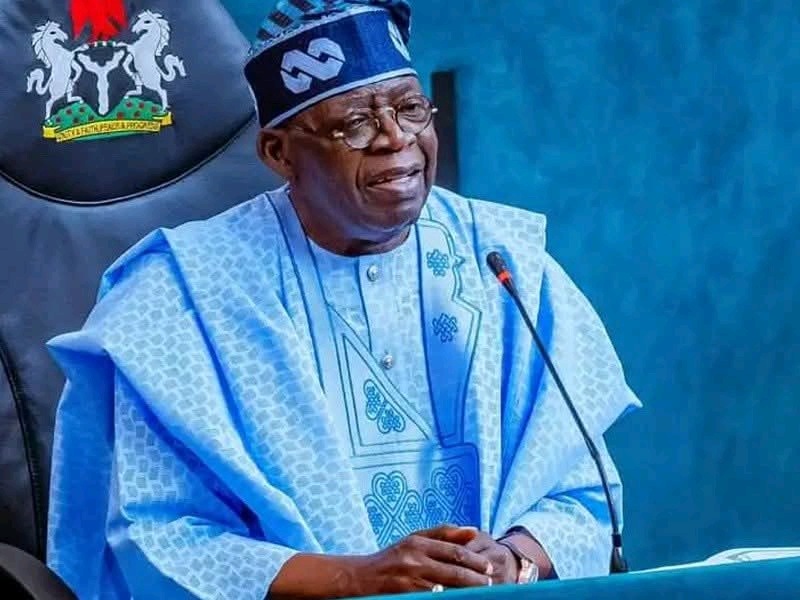
President Bola Ahmed Tinubu has asked the House of Representatives to approve a fresh external borrowing plan of $2.3 billion, alongside the issuance of a $500 million debut sovereign Sukuk in the international capital market.
The request, contained in a letter read by Speaker Tajudeen Abbas during Tuesday’s plenary, seeks the National Assembly’s approval in line with Sections 21(1) and 27(1) of the Debt Management Office (DMO) Establishment Act of 2003.
According to the President, the new borrowing will fund key provisions of the 2025 Appropriation Act, refinance maturing Eurobonds, and broaden Nigeria’s funding sources through Islamic finance instruments.
Tinubu explained that the 2025 budget provides for a total of $9.27 billion in new borrowings to cover the fiscal deficit, out of which $1.84 billion — roughly ₦1.23 trillion at an exchange rate of ₦1,500 to a dollar — is set aside for external loans.
He asked lawmakers to authorise the government to source funds through any of the following channels: Issuance of Eurobonds, Loan syndication, Bridge financing from bookrunners, and Direct borrowing from international financial institutions.
The President also highlighted the need to refinance Nigeria’s $1.118 billion Eurobond, issued in 2018 at 7.625% and maturing in November 2025. He said the move is necessary to maintain market confidence and avoid default.
“This is a standard practice in debt capital markets,” the President noted in his letter, adding that refinancing through Eurobonds or syndicated loans would help sustain the nation’s debt profile and reassure investors.
In what could mark a milestone in Nigeria’s foray into Islamic finance, Tinubu also sought approval to issue a standalone sovereign Sukuk of up to $500 million in the international market.
The issuance may be backed by a credit guarantee from the Islamic Corporation for the Insurance of Investment and Export Credit (ICIEC), a member of the Islamic Development Bank Group.
Tinubu explained that the decision was motivated by the government’s “considerable success” in domestic Sukuk issuances, which have mobilised ₦1.39 trillion since 2017 for critical infrastructure, especially road projects.
He noted that the proposed international Sukuk would help bridge Nigeria’s infrastructure funding gap while expanding its base of global investors.
“If the ICIEC credit guarantee is utilised, 25% of the proceeds will be used to repay relatively expensive debt obligations, while the balance will finance pre-identified infrastructure projects,” the President stated.
He assured lawmakers that the Federal Ministry of Finance and the DMO would collaborate with transaction advisers to secure the most favourable terms and pricing, guided by prevailing market conditions.
“Nigeria remains a regular and reputable issuer in the international capital markets,” Tinubu said, expressing confidence that the country could successfully raise the proposed funds.
The President also urged the House of Representatives to pass a resolution authorising the Federal Government to:
Raise $2.347 billion through Eurobonds, syndicated loans, or bridge financing, refinance the maturing $1.118 billion Eurobond due in November 2025; and Issue a $500 million sovereign Sukuk with potential ICIEC credit enhancement.
“I look forward to the timely issuance of the House’s resolution,” Tinubu wrote, while reaffirming his administration’s commitment to prudent fiscal management and sustainable debt practices.