

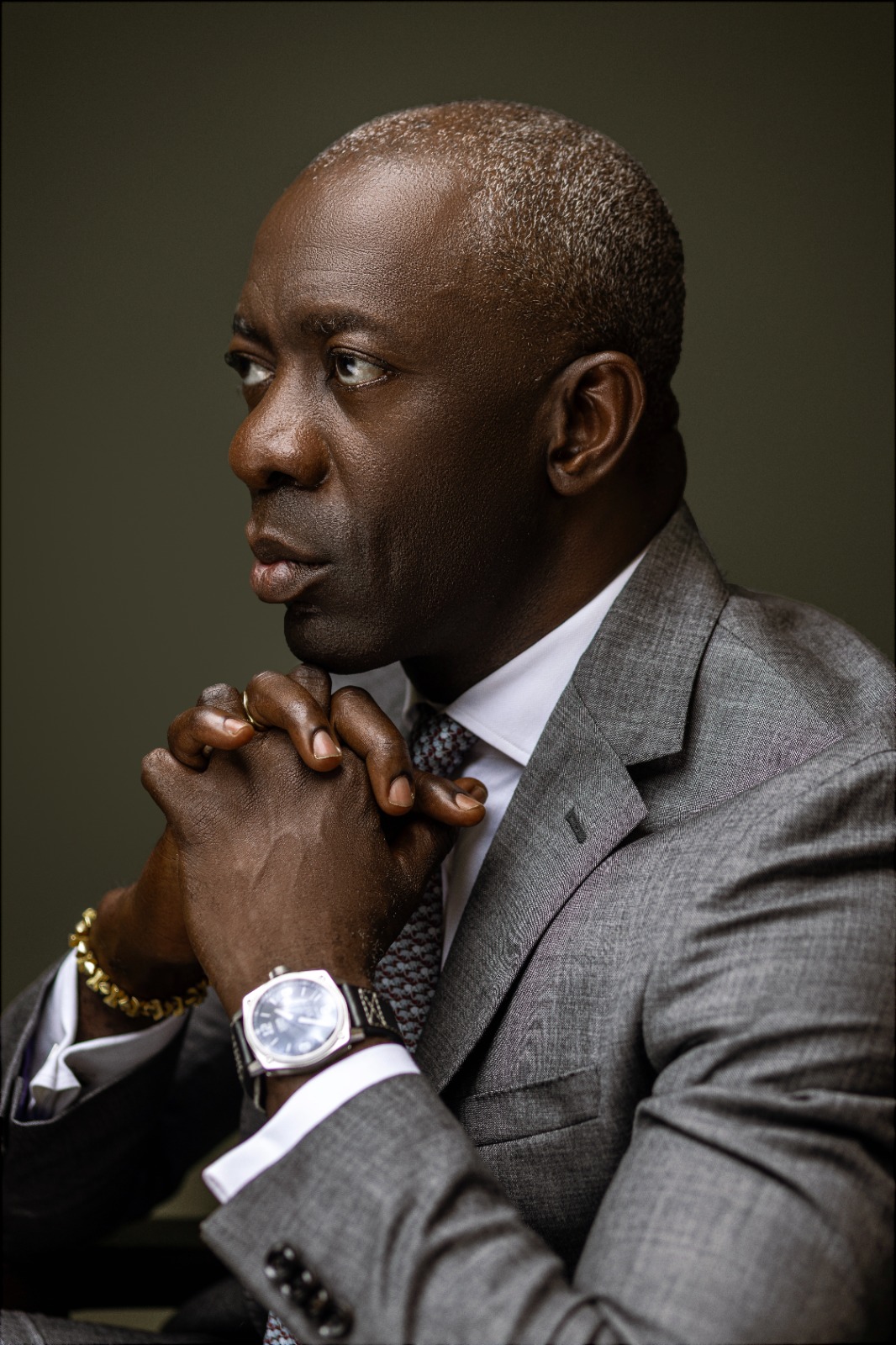
There is a difference between helping a younger politician find his feet in public life and insisting that the same politician must remain under the control of the person who helped him rise.
There is also a difference between supporting a successor and treating a state as though it were a family inheritance.
That difference lies at the heart of the controversy over political godfatherism in Nigeria, particularly the allegations being raised by critics and opposition parties in Oyo State against Governor Seyi Makinde over the emergence of Hon. Bimbo Adekanbi as the governorship candidate of the Allied Peoples’ Movement (APM) ahead of the 2027 election.
The opposition’s argument is that the governor’s influence over the political process could amount to an attempt to install a successor who would preserve his control beyond the constitutionally permitted two terms.
Some critics have gone further, describing the alleged arrangement as a third-term agenda.
The governor, however, has rejected the suggestion that he intends to become a godfather to the incoming administration.
The question, therefore, is not whether Makinde has the right to support a candidate. He clearly does. The question is whether political support amounts to political control, whether Adekanbi would be free to govern independently and whether the people of Oyo State would remain the ultimate authority in choosing their governor.
These are important questions, not only for Oyo State but for Nigeria’s understanding of leadership, succession and democracy.
The truth is that political mentorship is not a bad idea. What has damaged its reputation in Nigeria is the way politicians have turned it into a tool for controlling public office, rewarding loyalty and undermining the electorate.
Every society needs experienced leaders who are willing to guide those coming behind them. It is in fact a matter of common sense in any organized
A young politician entering public life may have energy, ambition and good intentions, but those qualities alone do not guarantee the ability to manage a ministry, lead a legislature or administer a state.
Knowing how to lobby, negotiate, manage competing interests, work with institutions and respond to public pressure matters very critically. These are skills that are often acquired through years of political involvement and practical experience.
An experienced politician who takes a younger person under his wing, teaches him the realities of public administration, introduces him to political networks and encourages him to develop the capacity to lead is performing a useful role. That is mentorship.
It is not fundamentally different from what happens in business, the civil service, academia, the military or other professional institutions. So, when I hear people screaming against political godfathers, my question is, what exactly is the grouse?
A senior lawyer mentors a junior colleague. An experienced doctor trains younger doctors. A business executive prepares a successor. A university professor guides a new generation of scholars.
Why should politics be different when this is actually the only field that produces leadership in governance that administers all the aforementioned?
The problem is not that a politician has a mentor. The problem is when the mentor begins to believe that the person he has helped must forever remain indebted to him.
At that point, the relationship changes from mentorship to dictatorship with all accompanying autocratic and undemocratic tendencies. The mentor becomes a master. The successor becomes a godson. Public office becomes the reward for personal loyalty.
That is the exact version of godfatherism that Nigerians have come to distrust and it is better contextualized to properly understand the concept of godfatherism itself within the framework of leadership, succession, and democracy.
The political debate in Oyo State has become increasingly focused on Governor Seyi Makinde’s influence and the emergence of Bimbo Adekanbi as the APM governorship candidate for 2027.
Adekanbi is not a newcomer to public service. He served as commissioner for finance under the late Governor Abiola Ajimobi and has participated in the political affairs of the state through different political platforms.
His political journey through the APC, PDP and APM is part of the background against which his current candidacy is being discussed.
Supporters of the proposed succession arrangement may see his experience as an advantage. They may argue that a candidate who understands government and has been involved in the state’s political development can provide continuity while bringing his own ideas to governance.
Opposition parties and critics, on the other hand, have questioned the extent of Makinde’s influence over the process.
Their concern is that the governor may be seeking to determine who succeeds him in a manner that would allow him to retain political control after leaving office.
That concern deserves to be examined.
But it is important to distinguish a political allegation from an established fact. The fact that a governor supports a candidate does not automatically establish that he is pursuing a third term.
Neither does the fact that a candidate has been politically associated with an incumbent prove that the candidate lacks independence.
The evidence must come from the process of candidate emergence, the statements and conduct of the political actors involved, and any concrete arrangements that could demonstrate an intention to control a future administration.
In a report published by the Nigerian Tribune on August 10, 2026, under the headline “I won’t be godfather to Adekanmbi, Open Salawu,” Makinde was reported to have said he would not play the role of a godfather to the incoming administration.
That is the governor’s stated position that he is accountable for,and until there is an otherwise conduct from him, opposition can not simply play politics of selective deception on the electorate.
It should also be considered in any fair discussion of the controversy. At the same time, a public declaration does not remove the need for scrutiny. The electorate is entitled to examine the actions of politicians, not just their words.
It important to question why the opposition has repeatedly tagged Makinde’s support for Adekanbi as a third term agenda but have clapped for continuity under the APC in Lagos State since 1999 till date. This criticism raises a question of bias, selective deception, inconsistency with political ideology and political mischief.
If A is politically good for X state, political consistency requires that same measure and standard of ideological integrity should apply in Y state. So clapping for the same thing that is being criticised in Oyo state reeks of political deception, and that is not healthy for any political development.
The important question remains whether the relationship is one of mentorship and political support or one of control and dependency.
Does supporting a successor amount to a third-term agenda? This is where political debate can easily become confused.
Nigeria’s Constitution limits the President and governors to two elected terms of four years each, subject to the relevant constitutional provisions. A governor who has completed two terms cannot simply remain in office by choosing a successor. The successor must be separately elected and must exercise the constitutional powers of the office.
Therefore, the allegation of a third-term agenda cannot be established merely by showing that an incumbent governor supports a preferred candidate. There would need to be evidence of an intention to circumvent the constitutional limits of tenure or to retain power through a successor in a manner inconsistent with the law. This is an important distinction in the Oyo debate.
Makinde may believe that Adekanbi is capable of continuing policies he considers beneficial to the state. He may also wish to preserve the political influence of his administration. Those possibilities are not necessarily the same thing as a third-term ambition.
But if a successor is expected to govern under the instructions of a former governor, then the public would have legitimate reasons to ask whether the proposed arrangement is about continuity or control. The electorate should not be expected to accept either the governor’s supporters’ claims or the opposition’s allegations without examining the evidence.
Opposition parties have a constitutional role in scrutinising the government and challenging its political conduct. In Oyo State, they are entitled to ask questions about the emergence of the APM candidate and the role played by the incumbent governor.
An allegation of godfatherism should be supported by identifiable actions, commitments or arrangements that demonstrate undue control. The mere existence of a political relationship is not enough and throwing this argument in the ring belittles the position of opposition and critics on the allegation.
A governor can support a successor without becoming a godfather in the destructive sense. A successor can also have been mentored by an influential politician and still be capable of independent leadership. The test is not the relationship itself. The test is how that relationship affects governance and the rights of the people.
The word “godfatherism” has become so unpopular in Nigeria that many people now treat every form of political mentorship with suspicion, which is very wrong and if care is not taken the political landscape would be eroded of mentorship in leadership and governance.
Nigeria’s political history has produced situations in which influential politicians helped younger people secure elective office and later expected to control them. In such cases, the godfather’s support was not given solely to develop leadership. It was often accompanied by expectations of political loyalty, access to public resources and influence over government decisions.
The result was a system in which the elected official became accountable to the person who helped him win rather than to the people who voted for him.
That is where the concept was bastardised.
The problem is not the presence of an experienced politician in a younger politician’s life. The problem is the conversion of political assistance into a claim of ownership.
A mentor should be able to say:
“I helped you become a leader. Now serve the people according to the law.”
A political master says: “I helped you get the office. Therefore, you must do what I say.” The difference is enormous. One produces leadership while the other produces dependency.
The destructive form of godfatherism usually begins when personal loyalty becomes more important than competence. This is where Makinde’s critics must take caution to avoid losing a man with competence and capacity because of his political association with the governor.
A political patron may prefer a candidate who is obedient rather than one who is capable of independent judgment. He may expect the successor to retain certain officials, protect certain interests or preserve arrangements made before the election.
In extreme cases, the successor may be treated as an occupant of an office that belongs, in effect, to the political patron.
This can affect and even bastardize the quality of governance like we have witnessed in Nigeria over the years.
A governor who feels obliged to obey a former political benefactor may find it difficult to make decisions in the public interest. Appointments may be influenced by loyalty rather than competence, contracts may be shaped by private interests, public resources may become tools for maintaining political networks, institutions may be weakened because officials understand that their real authority lies outside the constitutional structure.
A 2023 study published in the RUDN University journal examined godfatherism and its effects on Nigerian democracy, arguing that political godfathers and godsons can deny citizens the right to choose their preferred leaders.
A separate 2023 analysis published by BusinessDay discussed the dangers of political patronage, including the possibility of elected officials becoming beholden to godfathers and diverting public resources. These criticisms are relevant because they identify the institutional dangers of political patronage.
They do not, however, establish that every political mentor is corrupt or that every succession arrangement is undemocratic. The distinction must be maintained.
Nigeria’s presidential constitutional arrangements were influenced by the American model. The United States therefore provides a useful point of comparison, although the two countries have different political histories, institutions and political cultures.
Political mentorship is common in American politics.
Senior politicians endorse younger candidates, help them raise funds, introduce them to political networks and support their campaigns. Former presidents may also support candidates from their political parties.
These relationships can be influential but political influence is not the same thing as constitutional authority. Under the Twenty-Second Amendment to the United States Constitution, a person may not be elected President more than twice. A successor is elected separately and exercises the constitutional powers of the office.
The American political system also relies on party primaries, conventions, congressional leadership contests and other internal processes through which candidates and leaders emerge. These processes are not perfect but they are always evolving.
Political parties can be influenced by wealthy donors, powerful individuals and established political networks. The United States has also experienced political machines, including Tammany Hall in New York, which became associated with patronage and the control of political appointments.
The American example therefore does not prove that political patronage has disappeared from developed democracies.
What it demonstrates is that political influence can coexist with institutions that constrain the exercise of power. A former president may remain influential without possessing the legal authority to direct the administration of his successor.
… To be continued.