

Oyo State government has said it remains firmly on course as it prepares to implement the proposed 2026 budget, urging residents to keep expectations measured while the real work begins.
The budget, valued at ₦891.98 billion, has generated considerable public interest, while the government maintained that its impact will become visible when execution starts.
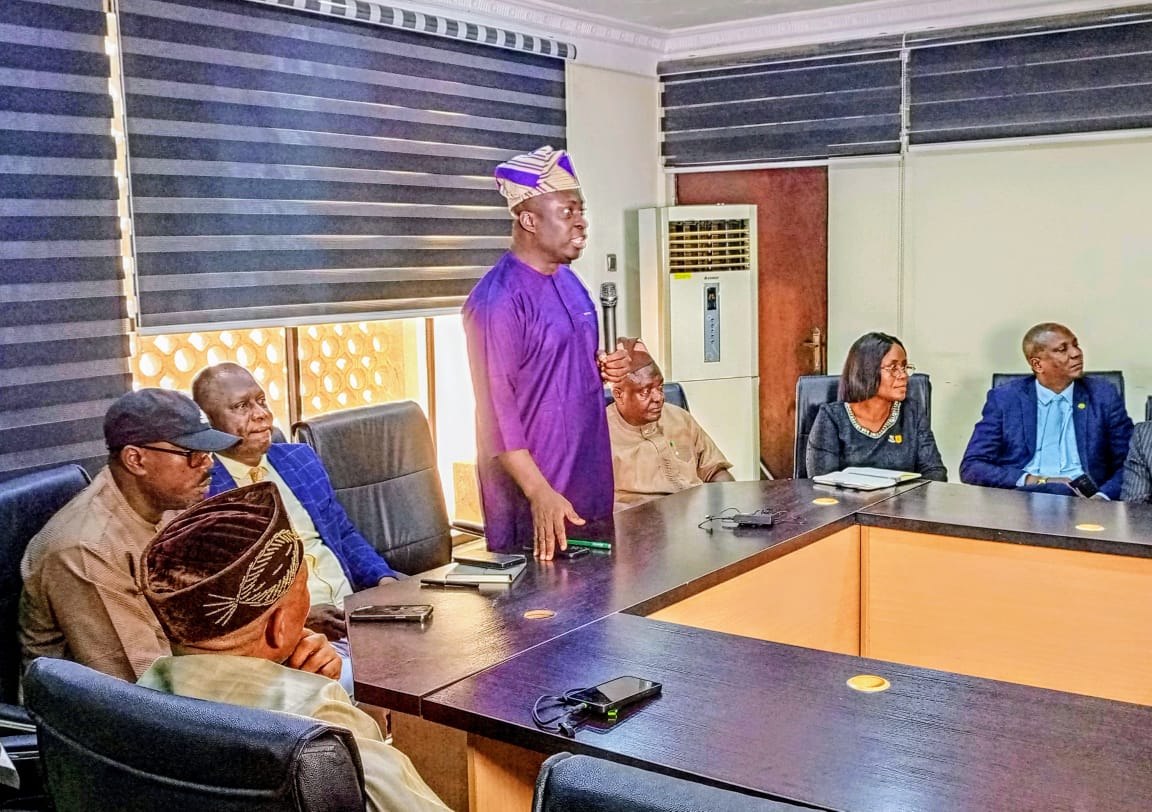
The budget breakdown session held on Tuesday at the Conference Room of the Ministry of Budget and Economic Planning.
Total capital expenditure accounts for ₦502.8bn representing 56.7 percent, while recurrent expenditure stands at ₦389.1bn (43.3 percent).
The Commissioner for Budget and Economic Planning, Professor Musibau Babatunde, explained that the proposal reflects the core needs of citizens across all zones of the state.
He described the budget as a guide that will continue to evolve rather than a rigid document.
He recalled how, in 2019, the administration had to trim the inherited budget by 25 percent because the state lacked the capacity to sustain it. That moment, he said, shaped a long-term principle that budgets must remain flexible and open to review.
The 2026 budget proposal, he added, was designed through broad collaboration involving the Ministry of Budget and Economic Planning, the Ministry of Finance, peer finance bodies, and other critical stakeholders.
“We take everything together at the end of every quarter and share the performance openly,” the commissioner. The second quarter review has already been concluded, with subsequent reviews to follow in the same manner,” Prof. Babatunde explained.
These engagements, he noted, allow citizens to raise concerns across education, security, agriculture, and health. Ministries and agencies are now required to state the exact location of each project, the target communities, and the facilities involved.
This level of specificity, he said, helps prevent vague proposals and reduces the risk of abandoned projects.
He said Oyo achieved over 70 percent budget in the outgoing 2025 fiscal year on the average of its projections on projected revenue and expected expenditure.
He said the state’s ongoing investment in security architecture has helped prevent major incidents despite its proximity to high-risk areas. On infrastructure, he acknowledged that residents often judge government performance through the condition of roads, adding that current rehabilitation efforts are part of broader plans already embedded in the 2026 budget.
The 2026 budget distributes a total of ₦891.98 billion across key sectors in the state. Education takes ₦155.21 billion, representing 17.40 percent of the entire provision, while Agriculture receives ₦19.99 billion, amounting to 2.24 percent.
The Health sector is allocated ₦70.85 billion, which accounts for 7.94 percent. Infrastructure attracts one of the largest portions with ₦210.03 billion, reflecting 23.55 percent. The remaining sectors grouped as Others collectively take ₦435.91 billion, making up 48.87 percent of the total budget.
The revenue projections for the 2026 fiscal year include ₦140.08bn from statutory allocation, ₦199.72bn from VAT, ₦51.18bn from other FAAC distributions, ₦322.54bn from capital receipts and loans, and ₦4.73bn from grants. Internally generated revenue accounts for ₦73.35bn, while special BIR revenue stands at ₦20.19bn.
He linked these allocations to ongoing flagship projects aimed at repositioning Oyo State for regional and global competitiveness.
These include the Oluyole Free Trade Zone, Special Agro-Processing Zones, the dry port and logistics hub, the upgrade of the Samuel Ladoke Akintola Airport, and the 110-kilometer Rashidi Ladoja Circular Road.
The commissioner noted that the state has increased its revenue without raising taxes, crediting automation and improved efficiency for the gains.
Professor Babatunde said the draft Oyo State 2026 budget has been prepared against the backdrop of continuing global and national economic challenges. He added that Oyo State is expected to sustain its growth momentum, provided broader
macroeconomic headwinds –such as inflation, exchange rate volatility, and high energy and input costs-remain contained.
“Hence, the need for a strategic shift from consumption-led growth to a robust
production-oriented economy, with strong emphasis on agriculture,
manufacturing, the digital economy, human capital development, and the
creative industries.
“The Budget of Economic Expansion reflects our commitment to deepening the State’s economic base, strengthening local enterprise, improving human capital outcomes, expanding critical infrastructure, and reinforcing social protection systems that support resilience and concluded,” the Commissioner added.
He noted that several flagship projects and ongoing investments now position Oyo State for a production-led
economy including African Continental Free Trade Area (AFCFTA) initiatives that will enable local producers to
access the continent’s integrated markets, Oluyole Free Trade Zone which was designed to attract manufacturing, assembly plants, and export-
oriented industries.
Others are Special Agro-Processing Zones (SAPZ), which will transform primary agricultural outputs into
higher-value products, reduce post-harvest losses, and boost agro-industrialisation, Dry Ports and Logistics Hubs, which will strengthen Oyo’s competitiveness in trade, reduce
transportation costs, and enhance supply chain efficiency as well as
upgrading of the Airport to an International Standard, positioning the State as a regional
logistics and investment hub.
He stated further that the Ibadan Circular Road which will strengthens regional connectivity and catalyse economic growth by linking key transport and commercial hubs along emerging urban and industrial zones.
“These projects represent a decisive policy shift toward industrial productivity, export competitiveness, and global market integration, justifying the term “Economic Expansion”, the Commissioner concluded.
Addressing concerns over when the investment of the state government on African Continental Free Trade Area (AfCFTA) would become visible, the Special Adviser, Ms Theodore Tlhaselo, clarified that while the concerns remain valid, the programs and initiatives of the institution would speak directly to the yearnings of the people.
She explained that Oyo state has been strategically positioned to leverage on its position as an agribusiness investment destination to create jobs and make life more meaningful for the people of the state.