

In Nigerian politics, relationships often feel temporary. Alliances shift when gratification is satisfying, loyalties bend on the alter of protected interests, and today’s ally can quickly become your tomorrow’s political rival.
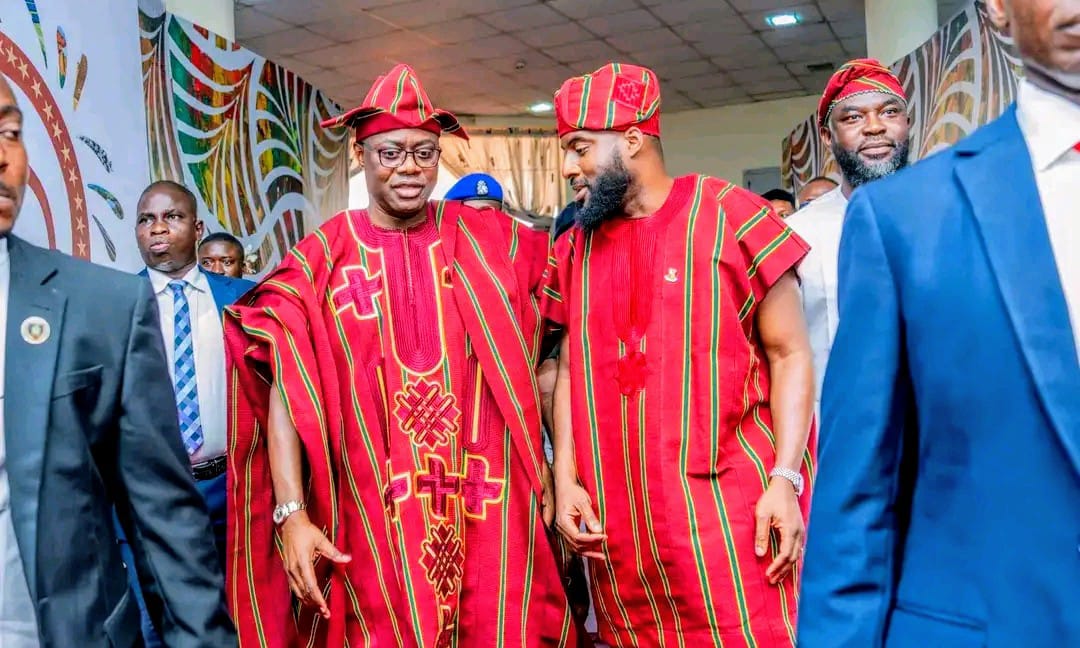
That is why the relationship between Governor Seyi Makinde and the Speaker of the Oyo State House of Assembly, Adebo Ogundoyin, readily draws attention in the ongoing build up to the forthcoming 2027 general elections.
It carries a certain steadiness that is not common, something that has survived intense pressure, ambition, and the tests that come with power, especially at a youthful age bracket.
At the heart of this whole political episode is unflinching trust, not the type that is yet to be tested. Not the kind that is declared in public statements, but the silent version that shows up in consistent behavior. Many, perhaps among those singing Makinde’s praises as loyal disciples today do so because their loyalty hasn’t been subjected to the kind of test that offers money, power, and political connections at a higher level.
That’s why the Makinde-Ogundoyin’s partnership, under the banner of the Peoples Democratic Party, has evolved into something more grounded than political convenience.
It feels deliberate actually built it is not assumed because fom the early days of Makinde’s administration, Ogundoyin did not try to carve out a separate power base or position himself.
Instead, he settled into a role that required balance and providing steady support without appearing subservient in the spirit of separation of power thereby, leading the legislature without turning it into a battleground.
It is indeed a very delicate line, and not many manage it for long, at least as evident in different other states.
In a political culture like Oyo state where popularity often drives decisions, Ogundoyin has leaned into something less visible but more durable because history has shown how political betrayals were recorded on the alter of the right offers.
Loyalty is not loud, and it rarely trends, but it carries weight where it matters most. Inside rooms where decisions are made, where doubts are raised, and where leaders decide who they can rely on when things become uncertain.
Makinde, by most accounts, is not a politician who moves on sentiment. He is measured and calculated, and that make his sustained confidence in the Speaker more evidently telling.
It suggests a relationship that has been tested enough to hold its ground against the expectations of the naysayers and that is where the conversation becomes more interesting.
Because beyond loyalty, Ogundoyin has had a front-row seat to how government actually works. Not from the outside, not from campaign platforms, but from within the system itself.
As Speaker, he has been part of the daily rhythm of governance. Budget negotiations, oversight functions, the quiet compromises that never make headlines but keep institutions running.
That kind of exposure changes how a politician thinks. It strips away the illusion that leadership is just about bold promises. It teaches patience. It forces an understanding of limits. Over time, it builds a kind of political maturity that cannot be rushed on account of public sentiments or sponsored media narratives.
You begin to see patterns. You know what works and what fails. Where pressure comes from. And how quickly things can fall apart if trust breaks down.
Ogundoyin’s experience did not stop at the state level. As immediate past Chairman of the Nigeria Conference of Speakers of State Legislatures, he moved into a wider circle.
One that exposed him to the complexities of national politics. Different states, different interests, different tensions, all intersecting in ways that demand negotiation and restraint.
It is one thing to lead within a familiar environment. It is another to coordinate across diverse political landscapes where alliances are not always aligned.
That experience tends to leave a mark.
It broadens perspective. It sharpens instincts. And perhaps most importantly, it builds relationships that stretch beyond state borders.
However, experience alone does not define a political path. In many cases, it fuels ambition in ways that disrupt existing structures. People begin to outgrow alliances. They test boundaries. They push for independence, sometimes too quickly.
Ogundoyin’s trajectory has taken a different route. His growing exposure has not translated into visible friction with the governor. If anything, it has deepened his alignment. There is a sense that he understands what is at stake, not just for himself, but for the system he is part of.
That restraint becomes even more significant when viewed against what has happened elsewhere.
The crisis in Rivers State did not begin as a full-blown conflict. It started gradually. Small disagreements. Competing loyalties. A breakdown of trust that widened over time until it became impossible to contain.
It is a reminder of how fragile political structures can be, and in that context, the Makinde-Ogundoyin relationship begins to look less like coincidence and more like intention. A conscious effort to avoid the cracks that often appear during succession periods.
As 2027 edges closer, talks about who succeeds Makinde are becoming harder to ignore. Names are being mentioned. Alignments are forming quietly and ambitions are taking shape.
Ogundoyin is part of that conversation, but in a way that already feels measured.
He has not rushed to define himself against his principal. He has not created distance to prove independence. Instead, he has stayed within the structure, reinforcing it rather than testing it.
That approach is not without risk. Politics often rewards visibility and bold positioning but it also punishes instability, and that is where Ogundoyin’s strength seems to lie.
There is a quiet confidence in consistency. In showing up the same way over time. In being predictable in the best sense of the word. Reliable. Steady. Difficult to doubt when it matters most.
Critics might call it over-cautious. Supporters would argue it is discipline.
Either way, it sets him apart because in the end, leadership transitions are not only about who is popular.
They are about who can be trusted to hold things together when the pressure shifts. Who understands the system well enough not to break it. And who has shown, over time, that loyalty is not just a strategy, but a principle.
That is the space Ogundoyin occupies today whether it ultimately carries him to the highest office in the state remains to be seen. But it has already defined how he is perceived within the political structure.
And in a system where trust is fragile and often short-lived, that may count for more than anything else and position him rightly as the most trust worthy and dependable successor to take over the baton of leadership of Oyo state come 2027, and most importantly, with an army of a youthful population ready to take the front seat in leadership roles.
Ibrahim Adekola, writes from Yemetu, Ibadan.