

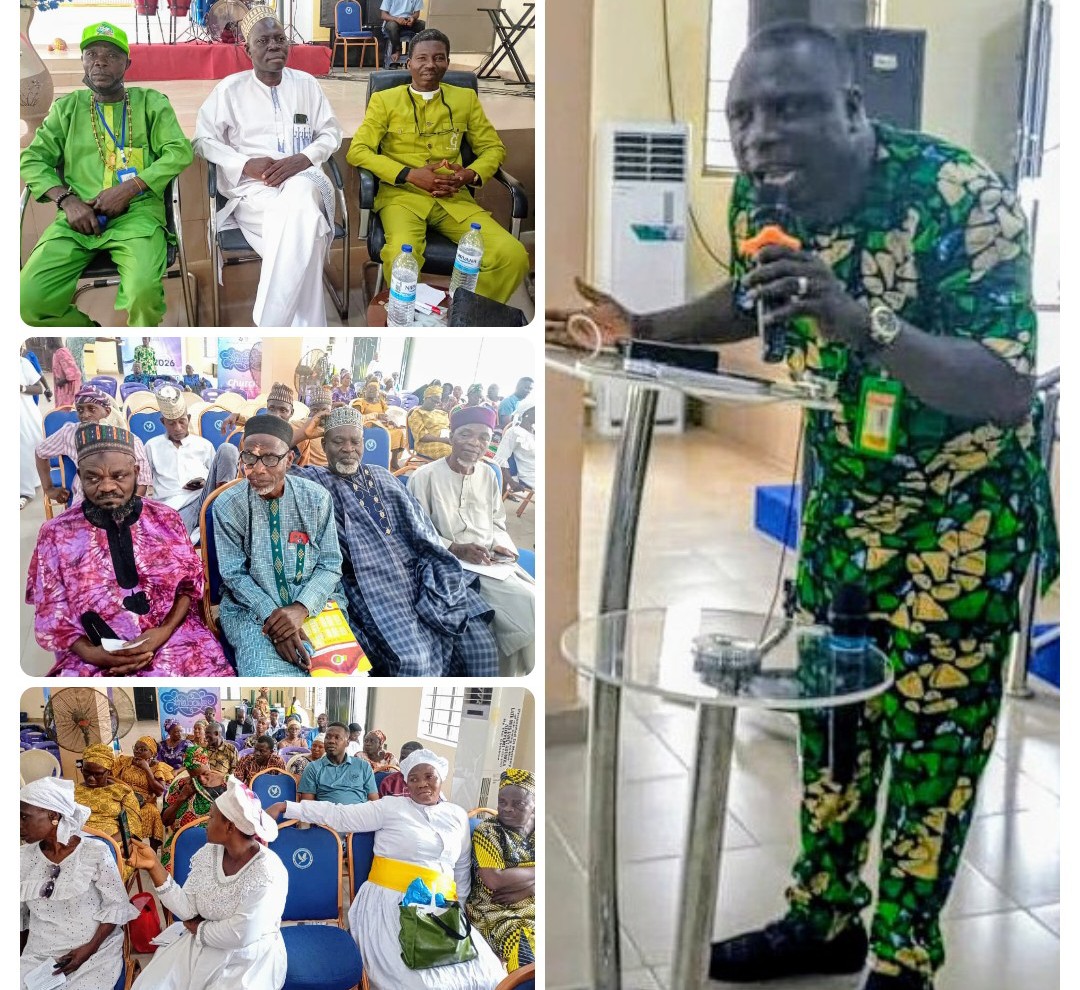
The Special Adviser to Oyo State Governor on Interfaith Affairs, Rev. Femi Ibikunle, has called on Christians, Muslims and adherents of traditional religion to strengthen mutual understanding, respect and cooperation in order to foster lasting peace and development in society.
Ibikunle made the appeal on Tuesday during an interfaith interactive session and prayer programme held in Ibadan, the Oyo State capital, where religious leaders and faithful from different faith backgrounds gathered to discuss practical ways of promoting harmony and peaceful coexistence.
Speaking at the event, the governor’s aide stressed that peaceful coexistence does not require uniformity of beliefs but rather a collective commitment to human dignity, justice, community development and peaceful conflict resolution.
According to him, while Christianity, Islam and traditional religion differ in theological doctrines, they share common values that can serve as a foundation for building stronger and more peaceful communities.
He identified the sanctity of human life, hospitality, care for the vulnerable, justice and the pursuit of peace as principles embraced across the three faith traditions.
“Peaceful coexistence does not mean everyone agrees on theology. It means we choose to honour human dignity, protect our communities and solve problems together,” he said.
Ibikunle urged religious leaders to focus on shared values and community interests rather than differences that often fuel division and mistrust.
He advocated the establishment of community-based interfaith councils where religious and traditional leaders, alongside government representatives, can jointly address local challenges and mediate disputes.
Drawing lessons from biblical teachings, he noted that ancient city gates served as centres where community elders met to resolve conflicts and promote justice, adding that a modern adaptation of such a system could enhance social cohesion.
The cleric outlined several areas where followers of different faiths could collaborate without compromising their religious convictions.
These include community development projects, conflict resolution initiatives, disaster response efforts, youth mentorship programmes and environmental protection campaigns.
He cited examples such as joint support for healthcare facilities, coordinated humanitarian interventions during emergencies, collaborative peace-building mechanisms and youth engagement programmes aimed at discouraging crime and drug abuse.
On environmental sustainability, Ibikunle encouraged faith communities to work together in tree planting, conservation efforts and the protection of natural resources, noting that stewardship of the environment is a value reflected in various religious traditions.
The governor’s aide also warned against actions capable of undermining interfaith harmony, including the ridicule of sacred beliefs and symbols, religious intolerance, forced conversion and the exploitation of religious sentiments for political gains.
He urged political actors to refrain from using religion as a tool for division, stressing that peace and stability remain critical to national development and democratic progress.
“Respect for one another’s beliefs and rights is essential. We must reject every attempt to use religion to create tension or disunity in our communities,” he said.
Ibikunle further highlighted successful examples of interfaith collaboration in parts of Nigeria, where religious and traditional leaders have worked together to reduce communal violence and promote peaceful dialogue.
He encouraged participants to become ambassadors of peace in their respective communities and to continue fostering relationships that transcend religious differences.
The session featured prayers for Nigeria, Oyo State and the nation’s leaders, as well as discussions on strategies for strengthening interfaith cooperation and preventing conflicts.
Participants at the event commended the initiative, describing dialogue and mutual engagement as vital tools for promoting tolerance, understanding and sustainable peace in the country.
The gathering concluded with a renewed commitment by religious leaders and stakeholders to support efforts aimed at building a more united, peaceful and prosperous society.