

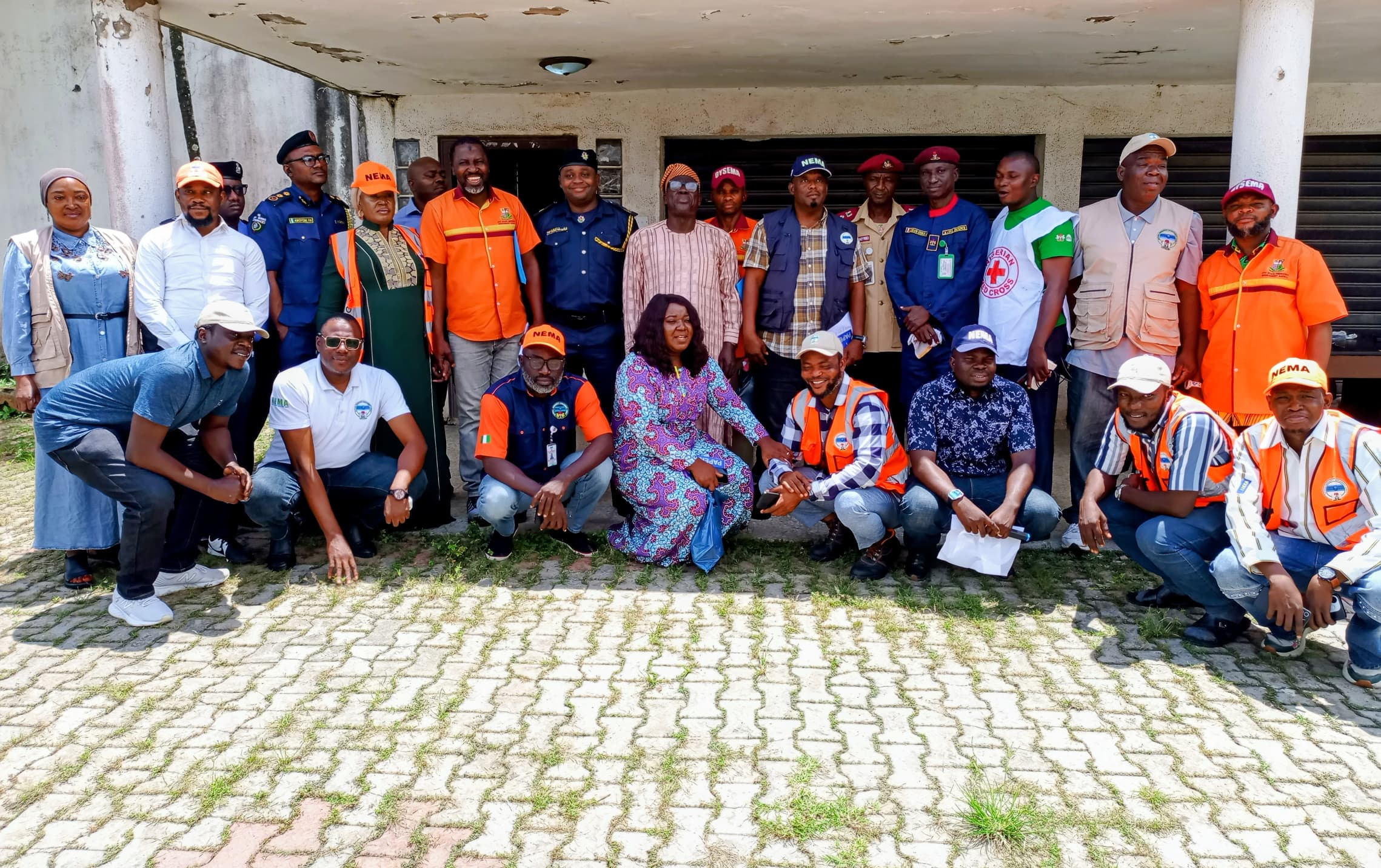
The National Emergency Management Agency (NEMA) has organised a one-day refresher training on Urban Search and Rescue (USAR) for its staff in Ibadan and critical stakeholders in Oyo State, with emphasis on strengthening emergency preparedness, flood response and inter-agency collaboration.
The one day training program which held in Ibadan on Wednesday, had in attendance, emergency management personnel and representatives of relevant agencies, with participants receiving updates on search and rescue procedures, evacuation planning and safety measures required during flood emergencies.
The training reviewed Search and Rescue Epidemic and Evacuation Plan (SAREEP), which provided participants with an opportunity to refresh their understanding of coordinated search, rescue and evacuation procedures.
Speaking at the programme, the South-West Zonal Director of NEMA, Dr Saheed Akiode, emphasised the importance of continuous capacity building for emergency responders, particularly in view of the risks associated with flooding and other disasters.
Akiode noted that refresher training remained essential to ensuring that personnel involved in emergency response were adequately prepared to act swiftly and safely when disasters occurred.
He stressed the need for effective coordination among agencies responsible for disaster management, security, firefighting, medical response and evacuation, noting that successful rescue operations often depended on the ability of different agencies to work together seamlessly.
Delivering his lecture, Akiode stressed the need for collaborating agencies to identify individual agency roles in the overall collective emergency management response.
Akiode, while responding to questions bothering on effective collaboration with Oyo State Emergency Management Agency (OYSEMA) lamented what he described as poor support from the state government.
He noted that OYSEMA has not received the necessary government attention it deserves to function optimally and called on the state government to urgently address the funding and personnel capacity building gaps.
He maintained that emergency response and disaster management are not exclusively the sole responsibility of NEMA, insisting that prevention of tragedy such as fire and flood disasters remain everybody’s business.
“We have to be able to evolve effectively in line with the emerging disaster management dynamics, and we must continue to deepen interagency collaboration because this is not just about NEMA alone, emergency management is everybody’s business.
“We believe that with all the information you have received today, you are better equipped on your roles and responsibility during rescue operations, Akiode said.
Speaking earlier, Mr Yinusa Deji, Head of the NEMA Ibadan Operations Office, emphasised the importance of continuous training and preparedness among emergency responders, particularly as flooding continues to pose significant risks to communities in different parts of the state.
He noted that the refresher training would help participants strengthen their knowledge of search and rescue procedures, evacuation planning and safety measures, while also equipping them to respond more effectively to emergencies.
Deji also stressed the need for stronger collaboration among agencies involved in disaster management, noting that effective emergency response requires timely communication, coordination and clearly defined responsibilities.
He urged the participating stakeholders to sustain the relationships established during the training and work together to improve preparedness, reduce response time and protect lives and property during flood and other emergencies.
The Head of Operations, Oyo State Fire Fighter Service, Ayodeji Omole, highlighted the safety challenges confronting responders during search and rescue operations, particularly in flood situations.
Omole focused on the need for emergency personnel to properly assess risks before embarking on rescue missions, stressing that responders must avoid exposing themselves unnecessarily to hazards while attempting to save victims.
He also drew attention to the importance of preparedness and adherence to established operational procedures in ensuring that rescue efforts did not result in additional casualties.
Participants were taken through general safety measures to be observed when evacuating flood victims through waterways, including the need for proper coordination and caution when using boats and other watercraft.
The Head of NEMA Search and Rescue Operations in Ibadan, Ayo Abolarin, also emphasised the importance of preparedness and effective search-and-rescue techniques in responding to emergencies.
Abolarin addressed issues relating to the practical management of search and rescue operations, stressing the need for responders to understand the environment in which they were operating and identify potential hazards before commencing rescue activities.
He also stressed the importance of effective communication and coordination among responders, particularly during complex emergencies involving several agencies.
The programme featured an interactive session in which participants and representatives of relevant agencies engaged in robust discussions on ways to deepen inter-agency collaboration in disaster management.
During the session, stakeholders examined existing operational challenges and explored strategies for improving information sharing, communication, joint response mechanisms and coordination during flood emergencies.
The stakeholders also stressed the need for agencies to maintain effective working relationships before disasters occur, rather than waiting until emergencies happen before attempting to coordinate their activities.
The training further reinforced the importance of protecting both victims and rescuers during emergency operations, with participants urged to apply the knowledge gained to improve preparedness and response within their respective areas of responsibility.
The programme according to NEMA, is expected to strengthen the capacity its personnel and other critical stakeholders to respond more effectively to flooding and other emergencies while improving coordination among agencies involved in search, rescue and evacuation operations.
If you provide even rough notes of what Akiode, Omole and Abolarin actually said, I can replace these paraphrases with strong, authentic direct quotes and make the report read like a full national-daily event story.