

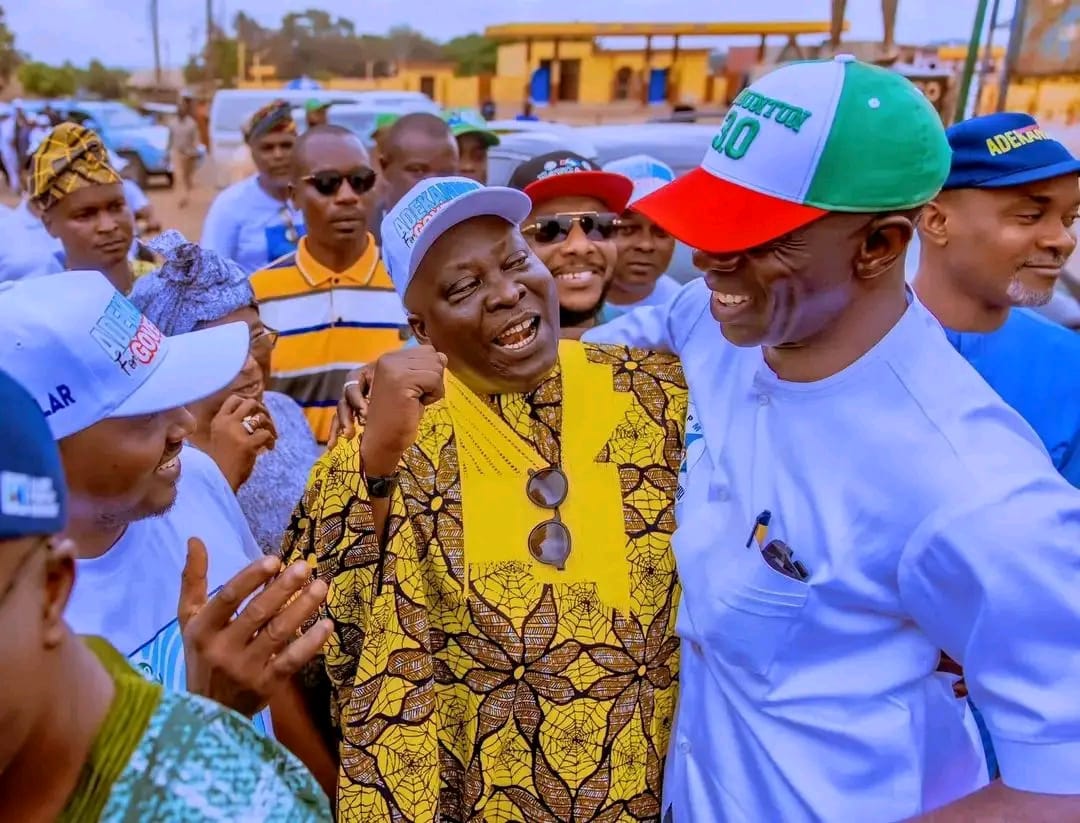
Concerned youths in Ibarapa Central Local Government Area of Oyo State have challenged Dr Olusola Ayandele, popularly known as Eruobodo, to prove his grassroots political influence in his immediate constituency before claiming the capacity to deliver Ibarapaland for the All Progressives Congress (APC) in the 2027 general elections.
The youths, who questioned Ayandele’s political standing in the area, urged him to stop making false claims about his electoral strength and comparing himself with the Oyo State Commissioner for Local Government and Chieftaincy Matters, Hon. Dr Ademola Obafemi Ojo, popularly known as Ijaya.
They argued that political relevance was not established through public declarations or ambitious electoral predictions but through verifiable grassroots support, credible electoral performance and sustained engagement with the electorate.
According to the group, anyone aspiring to be recognised as a political leader must first demonstrate a substantial level of acceptance within their immediate local government before making claims about their ability to influence voting patterns across an entire region.
The youths specifically challenged Ayandele to demonstrate his political strength in his ward and the wider Idere community, insisting that his promise to deliver Ibarapaland for the APC in 2027 should be backed by tangible evidence of an established political structure and genuine support among residents.
They maintained that predicting electoral victories without a demonstrable record of grassroots mobilisation amounted to empty political boasting, adding that the electorate, rather than individual political actors, would ultimately determine the outcome of the 2027 elections.
The group also questioned the basis for comparing Ayandele’s political standing with that of Ojo, whose career includes two terms as Executive Chairman of Ibarapa Central Local Government, service as Deputy Chief of Staff to the Oyo State Governor and his current position as commissioner in the state.
According to the youths, Ojo’s political journey reflects years of public service, grassroots mobilisation and involvement in the political development of Ibarapaland.
They described him as a political organiser whose influence had been built through sustained engagement with communities, relationships with political stakeholders and participation in governance, arguing that such a record could not be equated with unsubstantiated claims of electoral dominance.
“Before you promise to deliver Ibarapaland, show the people what you have delivered politically in your own backyard.
“You cannot substitute grand declarations for grassroots credibility, and you cannot establish your political stature simply by comparing yourself with another man,” the group said.
The youths added that building a formidable political structure required consistency, organisational capacity, loyalty among supporters and a demonstrable connection with the people, rather than the mere expression of confidence about future election results.
They further expressed concern that personal political ambition could overshadow broader community interests when political actors prioritised public claims of influence over tangible contributions to their constituencies.
According to them, anyone seeking to speak for an entire region should be prepared to explain what they have contributed to its development and how their political activities have strengthened the people they claim to represent.
The group stressed that political leadership was not conferred by self-proclamation, noting that genuine influence must be reflected in the confidence of the electorate, the strength of grassroots structures and a credible record of public engagement.
They therefore urged Ayandele to concentrate on demonstrating his acceptance among the people of his immediate constituency rather than making claims about the electoral fortunes of the APC across Ibarapaland.
The youths maintained that the 2027 elections would provide an opportunity for political actors to test their claims against the choices of voters, insisting that electoral strength could not be established by rhetoric alone.
The group maintained that the challenge before Ayandele was straightforward: to prove his political relevance at home before claiming the capacity to determine the electoral direction of an entire region.