

There is a timeless lesson in the old story popularised in a song by legendary musician, Chief Ebenezer Obey, about a man, his son and their horse.
The man and his son set out on a journey with their horse. When the man rode while his son walked, people criticised him for being insensitive to the boy.
When the son rode while the father walked, another group condemned the boy for disrespecting his father. When both rode the horse, the critics complained that they were overburdening the animal.
When both eventually walked beside the horse, the same people wondered why they had a horse if they were not going to ride it.
The lesson is not difficult to understand: if a man allows every opinion around him to dictate his direction, he may never reach his destination.
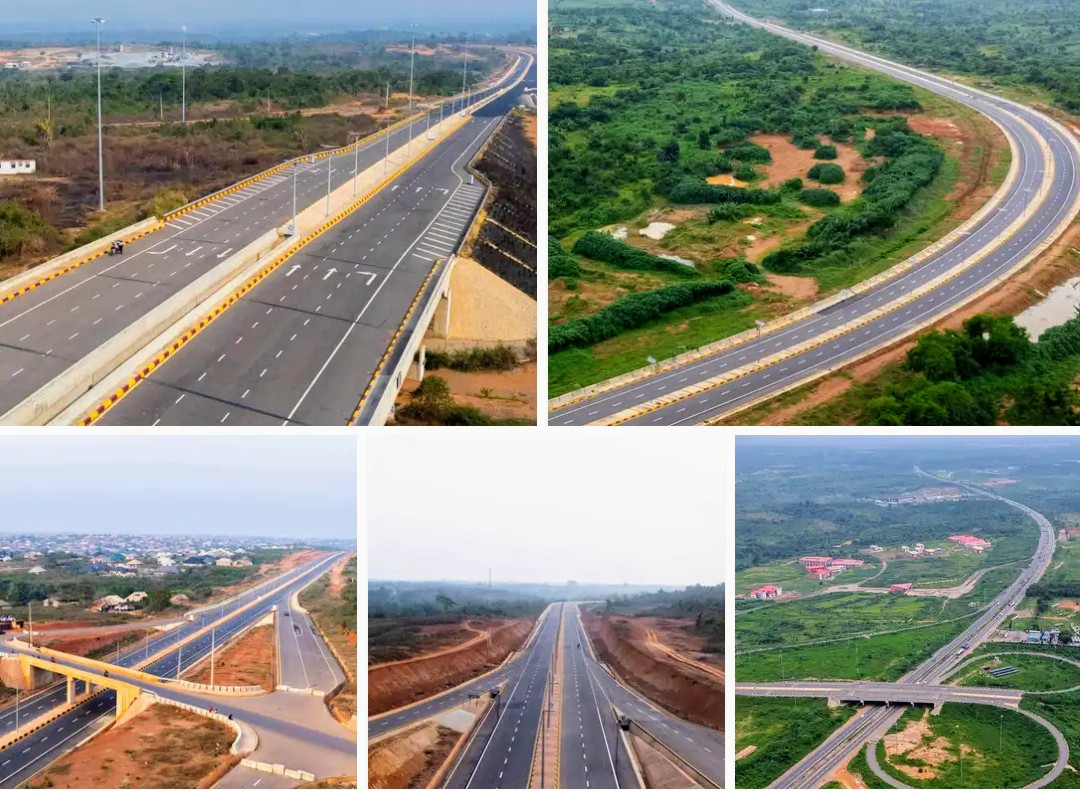
That old story provides an unusually fitting metaphor for the latest political controversy surrounding the Ibadan Circular Road, particularly the Memorandum of Understanding recently signed between gubernatorial candidate Oriyomi Hazmat and some victims and residents affected by the project and the proposed 1,000-metre corridor.
The agreement followed a town hall meeting on Saturday, August 8, 2026, during which affected residents presented nine demands covering compensation, right of way, access, community participation and other concerns.
There is nothing wrong with that.
Indeed, there is everything right with citizens demanding accountability from government.
But there is something deeply troubling when a legitimate citizens’ grievance is transformed into a political instrument for demonising an administration and mobilising electoral anger ahead of 2027.
That distinction deserves to be made clearly because the Circular Road is bigger than Governor Seyi Makinde himself.
It is bigger than the Peoples Democratic Party, the Allied People’s Movement and other political parties including opposition elements in the state combined together, and, most importantly, it is bigger than the 2027 election.
The victims deserve to be heard
Let us begin from that point that should never be controversial or be made a subject of controversy by anybody.
A person whose house has been demolished has a right to be angry, same as a farmer whose land has been acquired, he has a right to ask questions.
A business owner whose investment has been affected has a right to demand compensation.
A community whose traditional access route has been disrupted has a right to ask for alternative access, so also is a family that has spent decades building a home, such should not be expected to accept displacement with a shrug simply because government says the project is for public good.
Development must have a human face.
That is why the concerns raised at the town hall meeting deserve serious attention.
The demands reportedly include restoration of the original 75-metre Right of Way acquired during the administration of former Governor Rashidi Adewolu Ladoja in 2006, reversal of the proposed 1,000-metre corridor acquisition, payment of outstanding compensation, adequate entry and exit points, pedestrian bridges and protection of free movement across communities.
The residents also want structured representation in government agencies dealing with works, lands and new town development.
They further requested a reduction of the Right of Way in Ido Local Government from 150 metres to 60 metres.
These are not demands that should simply be laughed away. They should in fact be examined carefully and critically.
Where they are legally, technically and financially practicable, government should accommodate them.
Where they are not practicable, government owes the people a detailed explanation. That is responsible governance, but there is another question Nigerians should ask.
What happens when legitimate agitation is harvested for political purposes?
From citizens’ grievance to electoral weapon
The danger is not that politicians are talking to affected ciweapon becaus that is part of democracy. The danger is when politicians begin to suggest, directly or indirectly, that the existence of disputes surrounding a project automatically makes the entire project illegitimate.
That is where public discourse becomes dangerously simplistic. A road project can be necessary and still have people whose properties are affected.
A government can make mistakes and still undertake projects that are fundamentally beneficial to the state and its people.
A compensation process can have shortcomings without rendering an entire infrastructure programme useless and citizens can have legitimate complaints without their grievances becoming evidence that every action of a government is wicked.
Unfortunately, Nigerian politics, particularly in Oyo state, has perfected the art of reducing complicated public policy questions to emotionally attractive slogans.
“Government wants to seize your land.”
“Government wants to destroy your community.”
“Government does not care about the people.”
“Reverse everything.”
Such statements may generate applause at political gatherings but they do not answer the harder question of how does a rapidly growing city build the infrastructure it needs without creating inconvenience, displacement and difficult land-use decisions?
There is no serious urban planning model in which infrastructure is built without affecting somebody.
The challenge is to minimise the impact, compensate those legitimately affected and create a system in which public infrastructure produces greater social benefit than private cost.
What is the Circular Road actually designed to achieve? This is where the conversation must rise above the politics of demolition and compensation.
The Ibadan Circular Road is not simply a road from Point A to Point B. It is an attempt to reshape the movement pattern and future development of Ibadan.
Ibadan has grown tremendously, its population has expanded, commercial activities have spread widely, residential settlements have also moved outward while industrial and logistics activities increasingly require access to large portions of the metropolitan area.
Yet the city’s transportation structure remains heavily dependent on a number of major corridors.
Anyone who has travelled through Ibadan during peak periods understands the economic cost of congestion.
Time is lost, fuel is wasted, goods arrive late to their destinations, commercial vehicles spend hours on journeys that should take considerably less time, workers arrive late at work, students spend more time commuting, even businesses pay more for logistics while emergency response is slowed down.
This is why strategic road infrastructure is not merely about transportation. It is about productivity because a road can become an economic corridor when properly planned. A circular road does much more than carry vehicles. It creates an economic corridor such that once connectivity improves, businesses begin to follow.
Warehouses can emerge, shopping centres can develop, hotels and restaurants can appear, industrial facilities can locate closer to transport routes, farmers can move agricultural produce more efficiently, even developers can plan new residential communities, while logistics companies can expand.
Petrol stations, workshops, markets and service businesses can emerge around growing settlements and such new environment.
Land values can increase, employment opportunities can expand, taxable economic activity can increase, this is the multiplier effect that must be considered whenever a project of this scale is being discussed.
The real question is therefore not simply how many buildings are being affected today as being over amplified for political gains.
The bigger question is: What economic geography will this road create over the next 20, 30 or 50 years?
That is the conversation Oyo State needs not arguments lacking in long term visions and political will to lay the foundation for such future.
Ibadan cannot continue expanding indefinitely without corresponding transportation and land-use planning.
The city needs roads that connect communities rather than forcing every journey through the traditional urban core.
It needs alternative routes, it needs properly planned satellite communities, industrial corridors, logistics infrastructure, transportation integration, and land-use planning that anticipates where people will live and work in the future.
The Circular Road potentially provides an important backbone for achieving some of these objectives.
Its significance therefore goes beyond the current administration. Governor Seyi Makinde will not govern Oyo State forever, he obviously has less than 12 calendar months to leave office but infrastructure constructed today could influence the state’s development trajectory long after the current administration has left office.
That is precisely why reducing the project to a 2027 campaign issue is grossly shortsighted by any politician or people.
The 1,000-metre corridor controversy is perhaps the most sensitive aspect of the current debate affected communities that are opposed to the proposed 1,000-metre corridor acquisition, and are seeking a return to what they describe as the original 75-metre Right of Way.
This is a matter that deserves rigorous technical, legal and planning scrutiny.
Why is a 1,000-metre corridor considered necessary?
What portion will actually be required for the road itself, what is the government’s long-term urban development plan for the corridor, what percentage of the affected land will be needed immediately, what percentage is intended for future infrastructure or planned development?
How will affected owners also get compensation, what happens to existing communities, will access roads be provided, how will schools, markets, and religious centres, farms and businesses be protected?
These questions should be answered openly but the existence of these questions should not automatically lead to the conclusion that the entire project is a conspiracy against the people like Makinde’s critics have continued to project it.
Serious public policy requires evidence, not merely suspicion.
The decision by Oriyomi Hazmat to engage the affected residents and sign an MOU deserves to be viewed through a balanced lens.
He has chosen to make the concerns of the residents part of his political proposition. Now, that is legitimate.
The affected citizens are also entitled to seek commitments from anyone seeking their votes, that too is very legitimate.
Interestingly, Hazmat did not accept every demand presented to him.
He reportedly declined to endorse the proposed reduction of the Right of Way in Ido from 150 metres to 60 metres and also rejected the demand that all agreed actions should automatically become first tasks within his first 100 days in office, describing those aspects as insufficiently practicable or viable.
The two contentious demands were subsequently suspended to allow the parties to reach an agreement.
This aspect of the engagement is important.
It demonstrates that even in politics, not every demand has to be accepted simply because it is popular.
But it also raises a larger question.
If Hazmat were to become governor, would the remaining eight demands automatically become government policy?
Would they survive engineering assessments, legal scrutiny, environmental impact considerations,
Would they be financially sustainable, and also compatible with the state’s long-term urban development plan?
Those are the questions that must eventually be answered.
An MOU signed during a campaign is not the same thing as a fully costed government policy.
The endless attempts to demonize governor Seyi Makinde is exactly where the 2027 politics becomes particularly interesting with the circular road controversy.
Governor Seyi Makinde has become the principal political target of those seeking to use the Circular Road controversy as an electoral issue.
That is understandable because he is the incumbent, politically influential, and as well associated with many of the state’s major infrastructure initiatives.
And, as 2027 approaches, every controversial policy decision provides ammunition for his opponents.
But Oyo people should be extremely careful because there is a difference between criticising Makinde’s handling of a project and portraying Makinde as the embodiment of everything wrong with the project.
The former is democratic accountability while the latter can become political demonisation.
If there are property owners who have not been compensated, compensate them, if valuation was wrong, review it, if some properties were wrongly captured, correct the records, if access roads were poorly designed, redesign them, if the corridor is unnecessarily wide, let the relevant technical authorities explain why, and if officials have acted improperly, investigate them.
These are concrete solutions but telling people simply that “Makinde wants to take your land” may be politically effective while doing very little to solve the underlying problem and inadvertently creating a bigger future problem via unrealistic expectations in the minds of affected persons.
There is a darker side to electoral politics that Nigerians often overlook, and that is the fact that politicians understand that pain mobilises people, anger mobilises people, and fear mobilises people.
A man who has lost his house is understandably angry, a farmer who has lost productive land is understandably worried, a community facing displacement is understandably anxious.
Such people can become the emotional centre of an election campaign. Their photographs can appear on posters.
Their stories can become campaign speeches. Even their grievances can become hashtags for trends on social media. Their anger can be converted into votes but once the election is over, what happens next?
That is the question citizens should ask.
Will the politician who stood beside the displaced property owner still stand beside him without excuses when the cameras disappear?
Will the politician still fight for compensation when there is no election to be won, will the promised reforms survive the campaign, will the technical implications of the proposed alternatives be properly studied, will the state still have the resources to execute the project, and will another administration be able to sustain the economic benefits?
These are not partisan questions, they are questions of governance at its core and this is exactly why it is critically important for the electorate to understand that Oyo must not sacrifice tomorrow for 2027.
The danger of politicising every infrastructure project is that the state begins to make long-term decisions based on short-term electoral calculations, and over time, the same people question why the state is not moving forward alongside its counterparts.
Imagine that a project is suspended because politicians successfully convince citizens that every acquisition associated with it is wicked then, years later, congestion worsens, transport costs rise, businesses move elsewhere, and land-use planning becomes more chaotic.
The same politicians who campaigned against the project may then discover that the public desperately needs the infrastructure.
By then, the opportunity may have become more expensive because development has a cost but so also underdevelopment also has a cost too.
Sometimes the cost of doing nothing is greater than the cost of doing something imperfectly.
The answer is not to choose between development and the people. The answer is actually to develop with the people because human being must remain at the centre of all government actions.
This is where the government must also accept its own responsibility.
The argument that “the project is for the public good” cannot become an excuse for insensitive governance.
A poor man does not experience public infrastructure as a macroeconomic statistic. He experiences it through his home.
A farmer experiences it through his farmland, a shop owner experiences it through his business, a landlord experiences it through his property, a community experiences it through access to schools, markets, hospitals, farms and places of worship.
Government must therefore communicate better and do much better with its public relations.
The opposition should not be demonised merely because it criticises government.
Indeed, the opposition has an important role to play.
If an opposition politician says the road is unnecessary, let him or her present an alternative transportation plan in line with population expansion and the human needs associated with such expansion.
If he rejects the corridor, let him explain the engineering alternative. If he wants the original 75-metre Right of Way restored, let him explain how future urban expansion will be accommodated.
If he promises compensation, let him disclose the projected financial cost.
If he promises to reverse a policy, let him explain the legal implications. That is the level of politics Oyo deserves not just shouting, chanting political slogans, or exploiting people’s legitimate concerns for unmerited political grains.
The Circular Road should become an Oyo project, perhaps, the most mature position is for Oyo’s political class to stop treating the Circular Road as Governor Makinde’s personal property because it is not.
It is public infrastructure. If Makinde’s administration gets it right, Oyo people will benefit and if it gets aspects of it wrong, the people will suffer.
If a future administration improves it, that administration deserves credit too.
If another governor completes a component, he or she should be celebrated. This is how mature societies build.
Projects should not be destroyed simply because the politician who started them is no longer in power. After all, the airport does not belong to the governor who upgraded it.
A university does not belong to the governor who established it, and a major road does not belong to the governor who constructed it. They belong to the people. That principle should guide the 2027 debate.
Back to Ebenezer Obey’s horse
This is where the old song comes alive again.
The man has a horse.
His son is with him.
People are shouting from every direction.
“Ride it.”
“Don’t ride it.”
“Let your son ride.”
“Don’t let your son ride.”
“You are stressing the horse.”
“Why own a horse if you won’t ride it?”
At some point, the man must stop and ask:
Where exactly are we going?
That question is appropriate if not best for Oyo politics today. Where exactly are we going?
Are we building a modern Ibadan capable of supporting a growing population, are we creating transportation infrastructure that will serve future generations, are we protecting citizens whose properties are affected, are we paying legitimate compensation, are we ensuring fair access, are we planning new communities properly, are we creating economic corridors, are we building an Oyo State that can compete economically with other Nigerian states?
Or are we simply preparing for another election?
Because if the entire debate is reduced to who can use the Circular Road to score political points in 2027, then everyone loses in the end.
Eventually, the campaigns will disappear but Ibadan will remain. Its population will continue growing, traffic will continue increasing, industries will continue searching for efficient transportation routes, young people will continue searching for jobs, farmers will continue looking for markets, and businesses will continue demanding better infrastructure.
And the Circular Road; or whatever form the state’s long-term transportation plan ultimately takes, will still be there.
That is why today’s political class or elites must be careful not to mortgage tomorrow’s development for today’s applause.
And whoever eventually seeks to govern Oyo State must explain not only what he intends to reverse, but what he intends to build because leadership is not simply about saying “no.”
Leadership is about knowing what should replace the thing you oppose.
The Circular Road debate should therefore become a national example of how public infrastructure disputes ought to be handled.
That’s why Ebenezer Obey’s old song teaches us, there will always be people shouting from the destinations.
For Oyo State, that destination should not be the Government House in 2027.
It should be an economically stronger, better connected, better planned and more prosperous Oyo State in 2030, 2040 and beyond.
That is the horse worth protecting.
And that is the journey worth having if truly all those criticizing governor Makinde over the laudable project do so with genuineness of purpose and the utmost sincerity of the hearts other than to harvest legitimate concerns for political gains.
Ibrahim Adekola writes from Yemetu, Ibadan.