

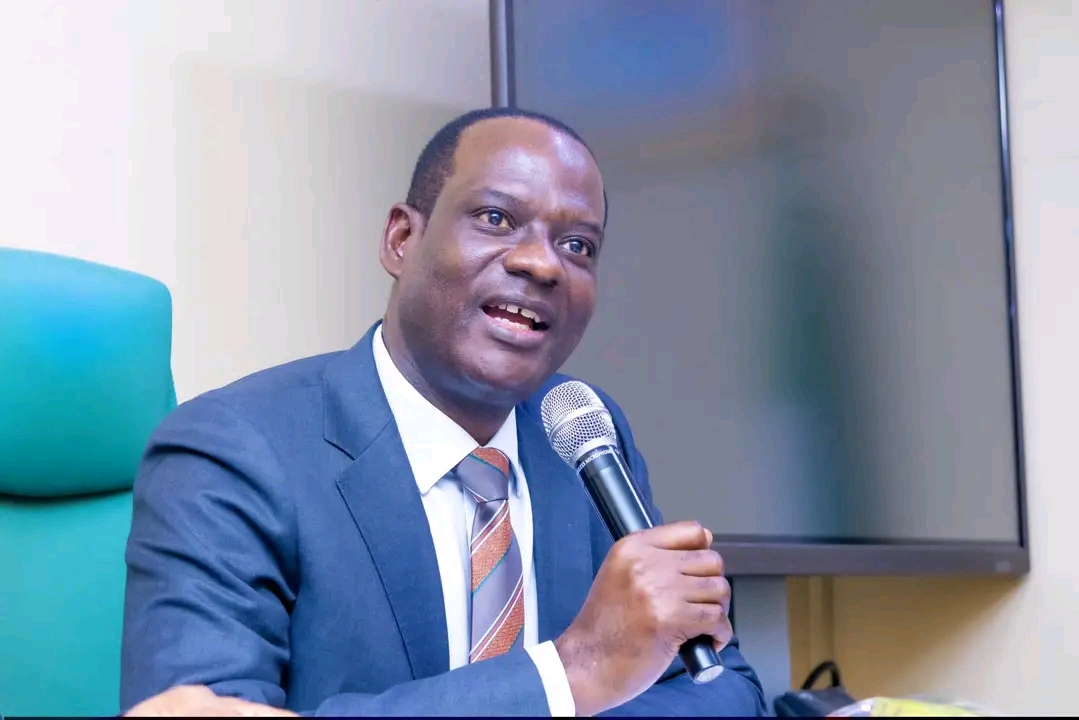
The Federal Government has said it will introduce taxes on petroleum products when the economy stabilises and Nigerians’ income levels improve sufficiently to absorb the additional costs.
The Minister of Finance and Coordinating Minister of the Economy, Taiwo Oyedele, disclosed this during an exclusive interview with ARISE News on the sidelines of the 2026 International Monetary Fund and World Bank Annual Meetings in Bangkok, Thailand.
Oyedele said the government’s immediate priority was to complete ongoing economic reforms, stabilise the economy and restore growth before considering the introduction of fuel taxes.
He argued that imposing additional taxes shortly after the removal of the petrol subsidy would worsen the financial burden on Nigerians, who are still grappling with the effects of rising living costs.
“You remove subsidy, you can’t immediately impose taxes. That would be insensitive. You push the people to the wall,” the minister said.
Oyedele noted that fuel taxes were commonplace in several countries, including across Africa, where petroleum products were subjected to multiple levies.
According to him, taxes account for between 20 and 80 per cent of fuel prices in different countries, while several African nations impose between six and 10 separate taxes on petroleum products.
He, however, maintained that Nigeria must first achieve economic stability and improve household incomes before adopting a similar approach.
The minister said the government’s economic strategy was focused on increasing Nigerians’ purchasing power rather than attempting to keep prices artificially low.
He explained that the affordability of goods and services should be assessed in relation to income levels, arguing that economic prosperity depended more on how quickly earnings grew relative to prices than on the nominal cost of goods.
Oyedele said: “What is really important is not the price of what you’re buying. It is how much income you are earning.
“The objective should be that whatever, instead of trying to suppress prices, which hasn’t worked for us, it hasn’t worked for any country in the world, but not one, instead of trying to suppress prices, think about how to grow income faster than prices rise.
“Prosperity and grow the middle class, and that’s exactly what we are doing as led by Mr President himself.”
He stressed that the proposed taxes would only be introduced when economic conditions improved enough for Nigerians to accommodate the additional financial burden.
“So, at the appropriate time, when the economy has stabilised, and income level would be able to accommodate it, then those taxes will come,” he said.
The minister explained that the proposed levies would be earmarked for critical infrastructure, particularly road development, as well as the establishment of fuel reserves to help the country manage future disruptions in petroleum supply and price volatility.
According to him, the revenue would not merely serve as an additional source of government income but would also provide a financial buffer to cushion the effects of external shocks in the petroleum market.
“Not because we want to impose taxes, it will be because those amounts of taxes will be dedicated into road infrastructure, they’ll be dedicated into building our fuel reserve, that can help us moderate prices of fuel products, if anything happens,” Oyedele said.
He added that the proposed tax framework could give the government the flexibility to temporarily suspend the levies during periods of market disruption, allowing it to respond more effectively to sudden increases in fuel prices.
Oyedele noted that more than 50 countries had used tax reductions to mitigate the impact of petroleum market shocks, while Nigeria lacked a comparable mechanism because it had not previously imposed the taxes under consideration.
“But those things will always happen, right? And then, it will become as a buffer, so that should there be anything next time, you can waive the taxes for that period to bring the stock up,” he said.
The minister also assured Nigerians that any decision to introduce fuel taxes would follow the prescribed legal procedures, dismissing concerns that the government could implement the measure without public knowledge.
He explained that the law required the relevant order to be published in the official gazette before the taxes could take effect.
“The good thing is that the law says that tax cannot come into effect until there’s a gazette. There has to be an order published in the gazette by the finance minister, which means we can’t do it in secret,” he said.
Oyedele added that the government had no intention of introducing the taxes secretly, insisting that the rationale for the policy and its expected benefits would be made clear to Nigerians before implementation.
“Plus, we have no intention of doing stuff in secret, and at the appropriate time, it should be clear to everyone why it needed to be done, and the benefits should be clear also to every Nigerian,” he concluded.c