

Ahead of the forthcoming 2027 general election in Oyo state, geography has once again auditioned for the lead role in a movie that is already undergoing casting.
The funniest part is that those in charge of the auditioning like movie directors and producers are the political elites with quality education from different parts of the world, understand the consequences that follow choosing geographical location over competence and capacity.
Of course, the arguments that politics is a game of numbers and those with the numeric strength always hold sway but where is the role of equity? if truly, all the geopolitical zones are one and equals in Oyo state?
If going by the raw posture of politics in this part of the world, where you can exist as an equal in a geopolitical location and also be a second class citizen at the same time, on account of your place of birth within the geographical area, then, the whole concept of equality in modern time requires further clarity and definition, at least for education purpose.
As 2027 beckons fast, maps are already being studied like sacred texts in Oyo state, as though leadership were tucked neatly between longitude and latitude.
From whispered caucus meetings to crowded elites gathering, the suggestion lingers that competence must first seek permission from birthplace.
Yet history, with its quiet irony, often reminds us that the brightest lamps rarely ask where they are allowed to shine.
Every election season brings with it a familiar ritual. Certainly not of manifestos or measured debates, but of sentimental arithmetic aimed at favoritism.
This time, the compass is being dusted off and waved like a sceptre, as though the destiny of the Pacesetter State were a matter of postal codes.
It is a curious spectacle indeed. For while some argue that power must bow to provincial pride, others still insist, with equal conviction, that leadership is not inherited by geography but earned through service.
In the developing political story of Oyo state, the conversation about who succeeds Governor Seyi Makinde in 2027 is gradually gathering weight.
Different names are being whispered in political circles, weighed in public discourse, and tested against the expectations of the people based on unprecedented sectoral achievements of governor Makinde, as well as who can truly sustain the recorded legacies without allowing a part of the Rivers state version of leadership tussle with all the executive powers of a governor.
The situation in Rivers state between a political godfather and his supposed godson is not strange within the Oyo state political landscape. And wherever such development unfolds, the ordinary citizens are usually the ones who pay the price for political grandstanding.
Why Lagos state seems to have evolved into what now appears as a benchmark for political succession in Nigeria is not a matter of divine order, it’s simply a reflection of aspirants alignment with the leadership of the party.
The path to power in Lagos State has never been left to chance. Since 2007, the emergence of each successive governor as party candidate has reflected a careful blend of strategy, influence, and institutional continuity.
It is a political tradition that rewards loyalty, competence, and alignment with the ruling party’s core leadership. To understand Lagos politics is to understand a system where succession is rarely accidental and almost always deliberate.
It begins with Babatunde Raji Fashola, whose emergence in 2007 ushered in a defining moment in the state’s democratic evolution. Then Chief of Staff to his predecessor, Bola Ahmed Tinubu, Fashola was an unexpected yet calculated choice.
While many political heavyweights nursed ambitions, Tinubu’s endorsement tilted the scales. Critics questioned the process, but Fashola’s sterling performance in office transformed skepticism into admiration.
His tenure not only validated the decision but also established a template that blended technocratic governance with political continuity.
By 2015, the baton passed to Akinwunmi Ambode. A former Accountant-General of the state, Ambode emerged as the candidate of the All Progressives Congress (APC), again with the backing of Tinubu and the party establishment.
His selection reinforced Lagos’ preference for seasoned administrators who understood the machinery of government as against political sentiments. It was widely perceived as meritocratic, yet it also affirmed the enduring influence of party leadership in determining who flies the flag.
Babajide Sanwo-Olu’s emergence in 2019 reaffirmed the supremacy of internal party consensus and discipline in the state’s political order.
By 2023, Sanwo-Olu secured his re-election ticket unopposed, reflecting both party unity and institutional stability. His seamless renomination illustrated a familiar Lagos pattern: when governance aligns with party expectations, continuity becomes inevitable.
The process spoke less of political drama and more of consolidation and reward for loyalty. This is a system lacking in most political arena in different states across Nigeria.
Across these transitions, certain themes stand out. Foremost is the enduring influence of Tinubu, widely regarded as the architect of modern Lagos politics.
His political network has ensured ideological consistency and strategic succession within the ruling party.
Above all, the supremacy of party structure has remained a defining feature, proving that in Lagos, political survival depends as much on loyalty as on performance.
Overall, the emergence of Lagos State governors since 2007 tells a story of continuity shaped by design rather than coincidence. It is a narrative of influence, order, and strategic foresight—one that continues to reward unfettered loyalty, confidence, and entrenched trust in the succession order.
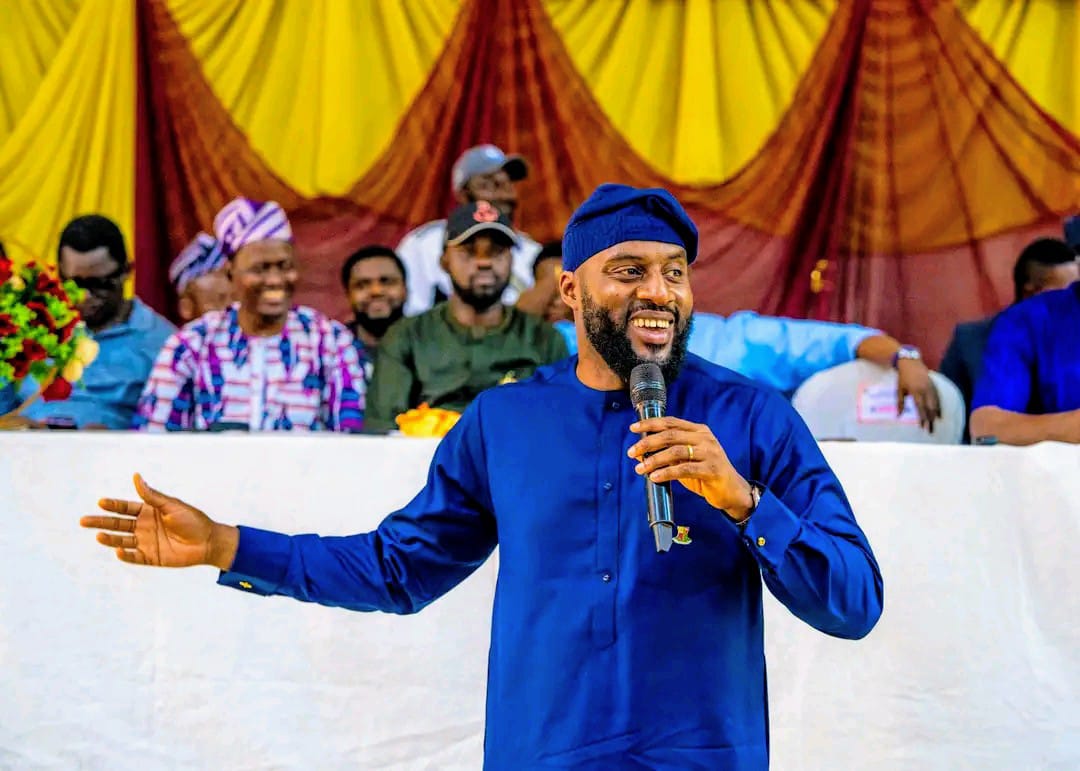
Now back to Oyo state politics, among the leading names already on the table as prospective successor in 2027, one that commands attention, is Adebo Ogundoyin, the Speaker of the State House of Assembly.
His emergence as a leading contender has triggered a mix of admiration and scepticism in some quarters and unease in others, particularly among those who insist on viewing leadership through the narrow lens of regional sentiment as against competence.
Born in Eruwa, the headquarters of Ibarapa East Local Government Area, Ogundoyin’s story is one of steady rise and well measured ambition grounded in consistency and determination.
He comes from the renowned Ogundoyin family, yet his political journey has been shaped more by performance than pedigree.
At just 32, he made history as the youngest Speaker of the Oyo State House of Assembly, which symbolizes a generational shift toward youthful leadership in line with the #Not2Young2Lead mantra.
His re-election in 2023 and return as Speaker for a second consecutive term further already reinforced public confidence in his ability to lead, marking him as a stabilizing force within the state’s legislative arm.
His influence has equally not been confined to Oyo State. As the youngest Chairman of the Conference of Speakers of the 36 State Legislatures of Nigeria, Ogundoyin left an indelible mark on legislative governance nationwide.
During his two years single term tenure, he championed reforms, prompted international partnerships, and deepened capacity-building initiatives that enhanced the effectiveness of state legislatures across Nigeria.
These accomplishments elevated the stature of the conference and projected a progressive image of subnational governance on the global stage.
His engagements with committees of both red and green chambers of the National Assembly further established his intellectual depth and commitment to national development.
Yet, as his governorship ambition gains traction and statewide endorsements, familiar political fault lines have begun to re-emerge.
Some critics have sought to frame the contest within the context of Ibadan’s historical dominance, subtly questioning whether power should rotate beyond the ancient city.
Such arguments, though not new, risk reducing a democratic process to a regional entitlement. The bias of proponents of these arguments is easily revealed when they speak different tones on same or similar situation at the national level.
They overlook the essence of modern governance, where competence, vision, and character should outweigh geography.
Ibadan’s contributions to the political and economic evolution of Oyo State remain undeniable and worthy of respect forever.
However, the strength of the state lies in its diversity, spanning Ibarapa, Ogbomoso, Oyo, and Oke-Ogun.
Leadership in a democratic society is neither inherited nor monopolized; it is earned through service and entrusted by the people.
To insist otherwise is to undermine the ideals of fairness, inclusivity, and unity that sustain democratic progress.
Ogundoyin’s appeal cuts across demographics.
His reputation for accessibility and consensus-building has resonated with vast number of traders, artisans, and youth groups, particularly within the Peoples Democratic Party in the state.
As Speaker, he has demonstrated a capacity to manage divergent interests while maintaining harmony between the legislative and executive arms of government.
This balancing act has contributed significantly to political stability in Oyo State under the present administration and strengthened governance.
At least those familiar with the history of Oyo state’s politics and legislature, would fully appreciate the stability and balance the Ogundoyin era has brought to governance in the state.
At 39, he represents a blend of experience and youthful dynamism, a rare combination in Nigeria’s evolving political landscape. One that can easily suffice as a bridge that connects today to tomorrow.
The endorsements trailing his ambition clearly reflect a growing belief among supporters that leadership should be defined by merit and vision rather than place of origin.
For many political stakeholders and watchers in the state, his trajectory mirrors the aspirations of a new generation eager to see inclusive and forward-thinking governance take root.
As Governor Makinde continues wide-ranging consultations in search of a worthy successor, the focus remains on continuity, competence, and credibility.
The coming months will test political alliances and shape the direction of the state’s future. At the least, governor Makinde must provide direction for party leadership ahead of 2027.
Oyo can not at any stage attempt to compare itself with Lagos state in terms of governance and development, and also desirous of being like it while shying away from the political order that has consistently produced such admirable result.
However, it it noteworthy to state that attempts to inflame sectional sentiments in Oyo state risk distracting from meaningful discussions about development, economic growth, and social welfare.
History offers a simple lesson: societies flourish when unity prevails over division. Oyo State stands strongest when its people rally behind shared aspirations rather than regional loyalties.
The debate ahead of 2027 should therefore centre not on where a candidate comes from, but on what he stands for and what he can deliver.
In all of these analysis, the governorship of Oyo State is not the inheritance of any city or zone. It is a mandate bestowed by the people.
And as the race continues to gather momentum, the defining question should remain clear and compelling, which is who possesses the vision, unfettered loyalty, youthful vigor, bipartisan network, competence, and integrity to lead the Pacesetter state into its next chapter of Sustainable Development Agenda which governor Makinde has carried and implemented with pride in the last almost seven years.
Ibrahim Adekola writes from Yemetu, Ibadan.