

Digital technology is increasingly transforming Nigeria’s agricultural sector by improving farmers’ access to information, markets, financial services and modern production practices, stakeholders have said.
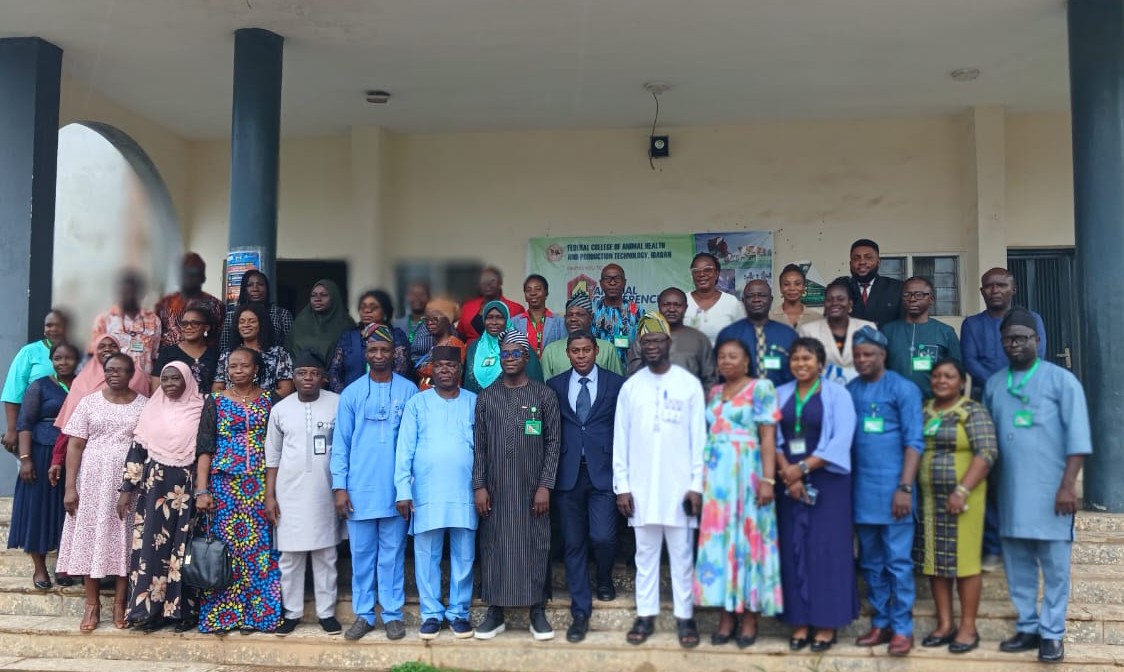
The stakeholders spoke on Monday at the 4th Annual Conference of the Federal College of Animal Health and Production Technology, Ibadan, held under the theme, “Innovating for the Future: Integrating Science, Smart Agriculture and Emerging Technologies for Sustainability and Global Prosperity.”
Delivering the keynote address, Prof. Babasola Olugasa, Dean, Faculty of Veterinary Medicine, University of Ibadan (UI), said internet connectivity was becoming an important tool for farmers seeking timely agricultural information and services.
Olugasa said digital platforms were increasingly connecting farmers to markets, financial services, extension advice and other livelihood opportunities.
According to him, digital technologies have improved the generation, exchange and use of agricultural information globally, enabling farmers to access information on weather conditions, input availability, market prices, production techniques and potential buyers.
He said digital farming could also improve household welfare by reducing information gaps around input sourcing, production practices and market opportunities, while promoting financial inclusion, innovation and other income-generating activities.
Citing findings from an analysis of Nigeria General Household Survey data, Olugasa said internet use among farming households was associated with improvements in both farm and non-farm income, although the effect on farm income was relatively modest.
He said the welfare effects were more significant, noting that internet usage reduced the likelihood of household poverty by between 12.4 and 17 per cent, reduced subjective food insecurity by between 7.5 and 10 per cent and improved dietary diversity by between 14.9 and 22.39 per cent.
“Overall, the findings suggest that digital farming can contribute to poverty reduction and broader household welfare improvement in Nigeria,” he said.
However, Olugasa identified limited internet connectivity, affordability and inadequate digital literacy as major barriers to the widespread adoption and effective use of digital technologies in rural communities.
He noted that although mobile communication had expanded rapidly in Nigeria and become increasingly important to rural livelihoods, much of the existing literature had focused on mobile-phone ownership and general information and communication technology use rather than internet usage specifically.
Also speaking, the lead paper presenter, Prof. Kayode Salman of the University of Ibadan, said digital farming was no longer a concept reserved for the future but a reality already transforming agricultural production.
“If digital farming is the destination, internet usage is one of the critical roads that takes farmers there,” Salman said.
He cited Hello Tractor, a digital platform that connects farmers with agricultural machinery, as an example of technology already being used to address practical challenges confronting Nigerian farmers.
Earlier, the Provost of the Federal College of Animal Health and Production Technology, Dr Moshood Popoola, said agriculture and animal production were undergoing rapid transformation globally.
Popoola said the challenges confronting food and agricultural systems were multidimensional, ranging from climate change and population growth to food insecurity, emerging and re-emerging animal diseases, dwindling natural resources, rising production costs and changing consumer preferences.
He said these challenges had created an urgent need for more efficient, resilient and sustainable production systems.
At the same time, he noted, rapid advances in technology were changing the way agricultural production was conceived and practised.
“Artificial Intelligence, machine learning, precision agriculture, biotechnology, genomics, drones, remote sensing, robotics, Internet of Things devices, digital agriculture, data analytics, smart farm management systems and other emerging technologies are transforming the way agricultural production is conceived and practised,” Popoola said.
According to him, the question is no longer whether technology will influence agriculture, because that transformation is already underway.
“The critical question is how do we ensure that our institutions, researchers, farmers, entrepreneurs and young people are adequately prepared to harness these technologies for sustainable agricultural development?” he asked.
Popoola said institutions such as the Federal College of Animal Health and Production Technology had a critical responsibility to prepare graduates for the changing agricultural landscape.
He said graduates must possess not only technical knowledge in animal health, animal production and agriculture, but also digital literacy, innovative and entrepreneurial skills and the capacity to develop solutions to real-world problems.
He further challenged researchers to focus more on the practical impact of their work rather than publications alone.
“Our research must also move beyond publications alone. We must increasingly ask ourselves: What problem are we solving? Who will benefit from our research? How can the innovation be commercialised? How can it improve farmers’ livelihoods, and how can it contribute to food security and economic development?” he said.
In her remarks, the Chairman of the Local Organising Committee, Dr Mutiat Salawu, said the current state of agriculture in Nigeria required urgent and coordinated intervention.
She said the conference provided an opportunity for scholars and other stakeholders to confront challenges including climate change, food insecurity, technological disruption and the pursuit of sustainable prosperity.
“It’s a call for us to confront the defining challenges of our time: climate change, food insecurity, technological disruption, and the quest for sustainable prosperity.
“We gather here, not only to exchange knowledge, but to shape the trajectory of our collective future,” Salawu said.
She said papers presented at the conference covered a wide range of disciplines, including artificial intelligence, aquaculture, veterinary medicine, molecular sciences, policy analysis and entrepreneurship.
According to her, the multidisciplinary approach was deliberate because the complex challenges confronting agricultural sustainability could not be adequately addressed by a single discipline.
Salawu urged scholars to avoid working in intellectual silos, noting that developments in agriculture were increasingly shaped by the interaction between technology, science, economics, environment and human welfare.
“The farmer’s field is influenced by algorithms as much as by rainfall,” she said.
She added that livestock health was closely linked to human and ecosystem health, while the economics of aquaculture were influenced by molecular biology and global trade.
Salawu described the conference as a platform where ideas from different disciplines could interact, challenge existing approaches and contribute to practical solutions for the future of agriculture.