

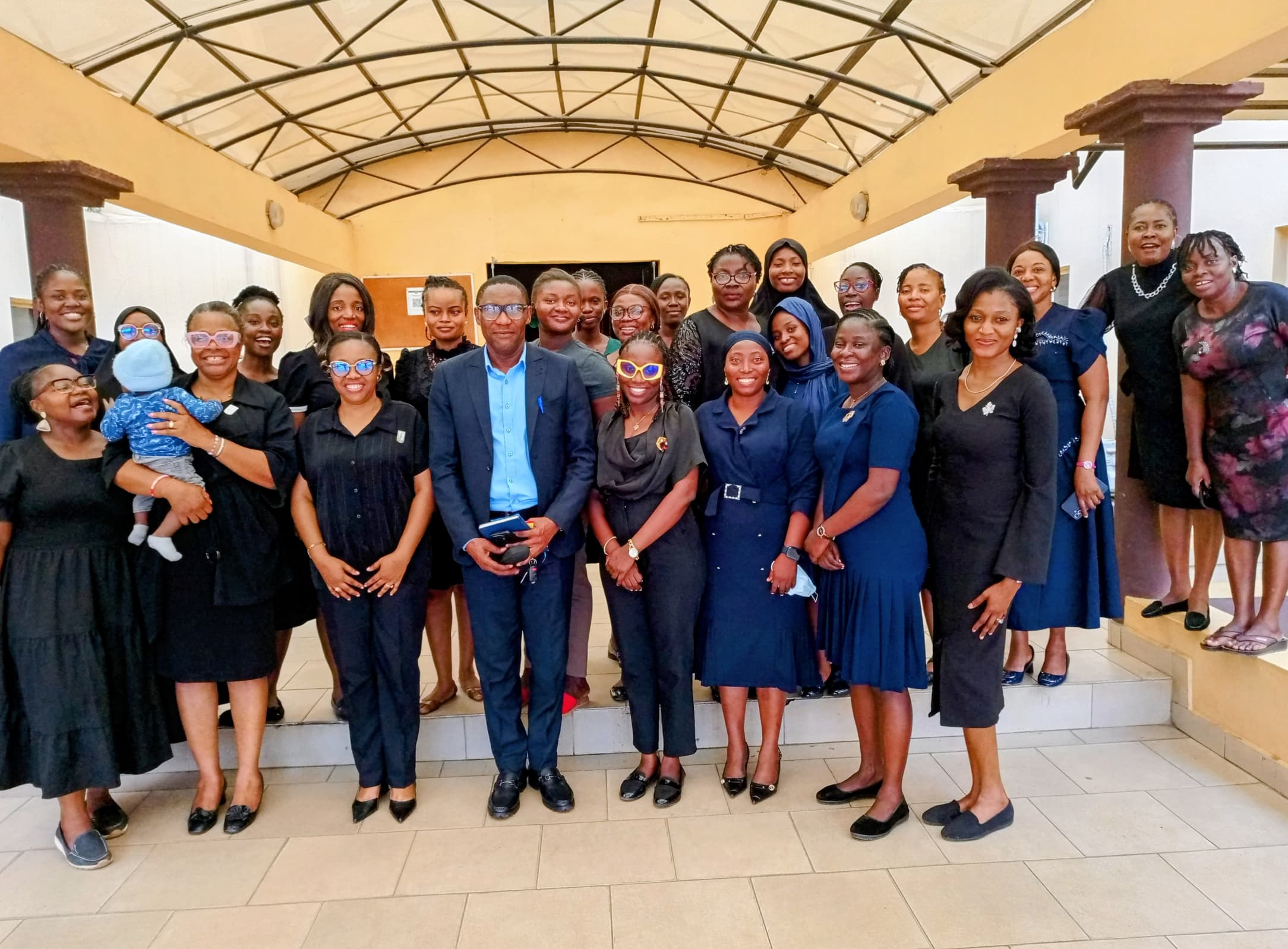
Nigeria has remained one of the frontline African countries on Tier 2 of the global anti human trafficking ranking, while Oyo State continues to serve as both a source, transit and destination for survivors of trans border trafficking, the National Agency for the Prohibition of Trafficking in Persons (NAPTIP) has said.
The Oyo State Commander, National Agency for the Prohibition of Trafficking in Person (NAPTIP, Mr Kayode Alfred, who was a guest speaker at the monthly general meeting of the International Federation of Women Lawyers (FIDA), Oyo state branch, disclosed this on Thursday during a knowledge sharing session at the Aare Afe Babalola Bar, opposite the old NTC, Iyaganku, Ibadan.
The session, themed: “Combating Modern Slavery: Establishment, Mandate and Functions of NAPTIP,” highlighted government efforts, success recorded and challenges still confronting the agency as well as ways of collective collaboration to combat the crisis.
Alfred, who spoke extensively on the evolution of modern slavery, the legal framework against trafficking and the institutional responsibilities of NAPTIP, said human trafficking remained a modern manifestation of colonial slavery despite the abolition of the traditional slave trade.
He said, “Years ago, Europeans came and enslaved our people. They put chains on their hands, their legs and their mouths. But slavery has evolved. It is no longer in that form, but we still have it in a modernised form. That is human trafficking, or trafficking in persons.”
According to him, Nigeria is currently the only African country on Tier 2 of the global human trafficking rating, just one tier below the likes of USA, Britain, Canada, France, Germany and the other developed nations.
He emphasized the need for sustained and collective efforts by government institutions, lawyers, civil society organisations and the general public to combat the menace.
He identified Oyo State as one of the areas affected by human trafficking, noting that the state functions as both a source and transit route in trafficking activities.
Alfred said trafficking was a transnational organised crime, explaining that it often involved structured networks in which different individuals performed specific roles across locations and, in some cases, different countries.
He traced the international response to trafficking to the United Nations Convention Against Transnational Organized Crime adopted in Palermo, Italy, in 2000.
According to him, the convention produced three major protocols addressing illegal firearms, migrant smuggling and trafficking in persons, particularly women and children.
He explained that the Protocol to Prevent, Suppress and Punish Trafficking in Persons, Especially Women and Children, provided an international framework for countries to establish mechanisms for combating trafficking.
He said Nigeria subsequently moved to establish a dedicated institution to investigate and prosecute trafficking offences, rescue victims and provide protection and rehabilitation for survivors.
Alfred said this culminated in the establishment of NAPTIP on July 14, 2003, under the Trafficking in Persons Prohibition, Enforcement and Administration Act, 2003.
He said the agency’s mandate went beyond the arrest and prosecution of traffickers, stressing that it also included prevention, public enlightenment, victim rescue, protection, counselling, rehabilitation, reintegration and empowerment.
According to him, NAPTIP also works with government agencies, state institutions, civil society organisations, non-governmental organisations, community-based organisations, faith-based groups and other stakeholders in tackling trafficking.
He said lawyers had an important role to play in the fight against trafficking, particularly in the prosecution of suspected traffickers and protection of victims’ rights.
Alfred further explained that trafficking could occur through different means and for different forms of exploitation.
“Deception is particularly common in trafficking cases today. Victims may be deceived with promises of employment, education, marriage, travel opportunities or a better life,” he said.
He warned Nigerians to be cautious about seemingly attractive overseas employment, travel and educational opportunities, particularly where proper documentation and verification were absent.
According to him, trafficking networks sometimes exploit travel agencies, recruitment arrangements, overseas employment opportunities, cultural events, sporting activities, musical competitions and school excursions to facilitate the movement and exploitation of victims.
He said NAPTIP had therefore developed regulatory framework to monitor activities and organisations that could potentially be used as channels for trafficking.
Alfred also raised concern over the trafficking of Nigerians to destinations including Libya, Egypt and some Middle Eastern countries, where victims could subsequently be subjected to exploitation.
He added that trafficking could also involve the illegal removal and sale of human organs and tissues.
The speaker urged individuals and organisations involved in facilitating overseas employment or travel to comply with relevant procedures and obtain appropriate clearance where required.
He stressed that the objective was to ensure that Nigerians were not deceived or moved under false pretences only to become victims of exploitation.
Alfred also urged members of the public to report suspected cases of human trafficking to NAPTIP, noting that the agency maintained channels across various social media platforms through which members of the public could provide information and seek assistance.
He encouraged Nigerians not to remain silent when they encounter suspected cases, stressing that early reporting could assist authorities in rescuing victims and disrupting trafficking networks.
While fielding questions from the female lawyers, Mr Alfred emphasized that combating modern slavery required collective action involving law enforcement agencies, lawyers, civil society organisations, communities, families and individuals.
Westernmirror.com.ng reports that the FIDA knowledge-sharing session provided an opportunity for lawyers and other participants to deepen their understanding of the legal and institutional framework for combating trafficking, as well as the responsibilities of different stakeholders in protecting victims and prosecuting offenders.
Earlier in her opening remarks, Ademubowale Adelabu Esq. the
Chairperson, FIDA Nigeria, Oyo State Branch, commended NAPTIP for its efforts to over the years to end sex and gender-based violence as well as human trafficking in Nigeria.
She particularly lauded the Oyo state Commander, Mr Alfred, for manning the agency with passion and experience needed for success on the job and urged the female legal practitioners to pay rapt attention to the lectures as it is aimed at keeping members abreast with related trends while handling such cases.