

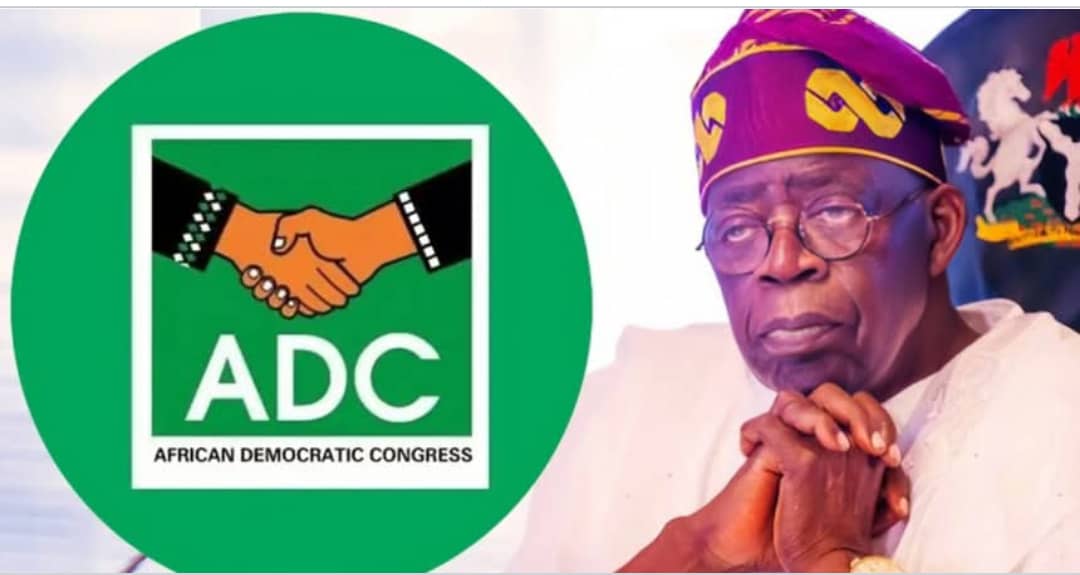
President Bola Ahmed Tinubu’s administration has come under fresh criticism from the African Democratic Congress (ADC), which says recent reports indicating a sharp rise in Nigeria’s poverty rate reflect the consequences of the Federal Government’s economic policies.
In a statement issued on Thursday, the party described reports suggesting that the country’s poverty rate has climbed to about 63 per cent following the removal of petrol subsidy as a “damning verdict” on the administration’s policy direction.
The statement, signed by the ADC National Publicity Secretary, Bolaji Abdullahi, said the development represents worsening economic hardship across the country, with rising fuel and transportation costs pushing up the general cost of living for millions of Nigerians.
According to the party, the figures represent the “real scorecard” of the current administration and what it described as ill-defined neoliberal economic policies that have adversely affected the welfare of ordinary citizens.
The ADC noted that the report aligns with earlier surveys showing growing public dissatisfaction with the economic direction of the country under the ruling All Progressives Congress (APC).
The party stressed that the true test of any economic policy lies in whether it improves the living conditions of the majority and protects the most vulnerable in society.
“On this score, the APC government has failed,” the statement said.
The party added that the latest findings only confirmed what many Nigerians were already experiencing in their daily lives.
“Millions of Nigerians already know from their daily experience that the cost of living is rising rapidly, purchasing power is collapsing, and families across the country are being pushed deeper into hardship,” the statement read.
It further cited a report presented at a policy dialogue in Abuja, which indicated that poverty levels rose sharply from about 50 per cent before the removal of the fuel subsidy to 63 per cent afterwards.
According to the ADC, higher fuel and transportation costs have spread across the economy, increasing the prices of food, transport, and other basic necessities.
The party argued that the outcome reflects the consequences of what it described as a hasty removal of the petrol subsidy without adequate consideration of the impact on citizens’ livelihoods.
While the Federal Government has repeatedly justified the policy on the need to free up resources for critical sectors such as health and education, the ADC maintained that Nigerians have yet to see tangible improvements in those areas.
“Three years on, none of these sectors has been funded any better, and citizens have not seen the benefits of subsidy removal,” the statement added.
The party also referenced independent surveys which it said showed that a significant majority of Nigerians believe the country is moving in the wrong direction, with many describing the national economy and their personal living conditions as poor.
“These are not abstract statistics,” the statement noted. “They are the voices of a population under intense economic pressure.”
According to the ADC, there is growing evidence of widespread deprivation, with many Nigerians reporting that they had gone without basic necessities such as food, clean water, medical care, cooking fuel, and even cash income at various times within the past year.
“For millions of households, economic hardship is no longer a temporary difficulty; it has become a daily reality,” the party said, adding that such conditions arise when governments prioritise external validation over the well-being of their citizens.