

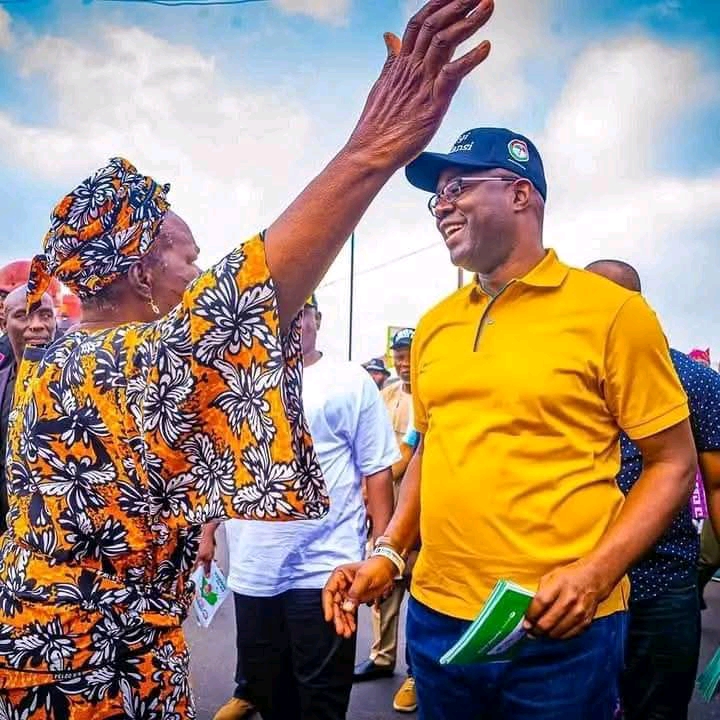
As Oyo State begins to gradually gravitate towards the 2027 elections in terms of political activities, the air is thick with speculation and quiet maneuvering.
Beneath the usual buzz of endorsements and alignments here and there, something deeper is at stake and that is the question of what kind of leadership the state truly deserves after Governor Seyi Makinde.
Makinde’s tenure has, in many ways, redefined expectations: a blend of technocratic pragmatism, infrastructural boldness, and an attempt, however imperfect, to make governance feel like a shared responsibility again.
But as this chapter nears its end in the political books, the old virus of entitlement politics and grandstanding on the sensibility of the electorates are threatening another comeback.
Everywhere you turn, from the bustling streets of Ibadan to the emerging corridors of Ogbomoso, Oyo town, and Ibarapa, the political conversations have begun to sound familiar. You hear whispers of ‘awa lo kan’ (It’s our turn), “Oh he’s paid his dues,” or “Our zone deserves it.”
The argument is rarely about competence and engagement anymore. It’s about inheritance, about who has waited the longest, or who was next in line when the music stopped. That mindset, this quiet but corrosive sense of ownership over public office is precisely what Oyo must resist with every atom of their might come 2027.
This is because leadership, at its core, is not a reward. It’s a responsibility. It’s not earned by proximity to power, but by a proven capacity to serve the very people who gave out their mandate in trust.
Governor Makinde’s time in office has not been without its flaws no doubt, but it undeniably shifted the tone of politics in the state. His style of governance often emphasized merit over patronage regardless of political affiliation, and progress over politicking.
The focus on infrastructure, education, and internal accountability, even when contested, sent a clear message: that governance could be about outcomes, not just optics driven by media rhetoric.
Makinde may not have pleased everyone no doubt about that, but he reminded Oyo that leadership is supposed to work for the people, not for powerful individuals with vested selfish interests with unquenchable thirst for power control.
As Oyo stands on the edge of a post-Makinde era, the real battle is not between parties or personalities, it’s between two value systems. On one side is the politics of entitlement, which sees leadership as a crown to be claimed. On the other is the politics of service, which treats power as a trust to be earned and justified every single day.
Entitlement politics doesn’t just stall progress anywhere in the world; it poisons the culture of governance. It creates leaders who believe the people owe them something, rather than the other way around.
That’s how mediocrity becomes institutionalized in the fabrics of our political landscape especially when public office becomes compensation for loyalty rather than a mission of purpose.
We’ve seen what that looks like in times past, projects half-completed but over-celebrated, promises stretched thin across election cycles, and policies that sound good on paper but die quietly in execution.
What the state needs now is a generation of young minded and pragmatic leaders who are restless for the right reasons, those who wake up thinking about how to expand the local economy in Oke Ogun, how to support small businesses in Ibadan, how to make public schools in Ibarapa as competitive as private ones, and how to make the state’s agricultural potential something more than campaign rhetoric. Leaders who understand that governance isn’t about newspapers headlines, but about households.
For the electorate, this is the moment to reclaim discernment. The 2027 election should not be a coronation for political heirs; it should be an audit of character, empathy, and competence.
Oyo’s people have the rare advantage of perspective: they have seen both the turbulence of entitlement and the steadiness of reform. They can tell the difference between ambition and service, between those who talk about the people and those who actually work for them.
But beyond competence and empathy lies another crucial need; the need for continuity. Oyo cannot afford to lose the Makinde’s momentum or dare to start from zero again. After all, changes are only necessary to a defective plan or path.
The progress made in infrastructure, fiscal responsibility, education, and investment attraction over the past years must not be sacrificed on the altar of political differences. The next leader must be one who sees the Makinde administration’s achievements not as a threat to his or her identity, but as a foundation to build upon.
Too often in Nigerian politics, the arrival of a new administration is treated as an opportunity to erase what came before, to abandon ongoing projects, rewrite policies, and introduce new economic blueprints that may sound fresh but end up derailing years of steady progress. That cycle of discontinuity has cost states dearly. Oyo cannot fall into that trap again or it will be a grave mistake to regret for a very long time.
Continuity does not mean blind loyalty; it means institutional memory. It means a deliberate commitment to consolidate on what works and improve where necessary. It means aligning governance with a shared vision of growth, not resetting the clock every four years.
The successor Oyo deserves in 2027 is one who understands that progress is cumulative and that true leadership is measured not by how differently one starts, but by how wisely one sustains the gains of past labor.
The truth is, Oyo’s greatest strength has never come from its politicians. It has always come from its people. The market women who keep the economy alive, the teachers who shape futures quietly, the artisans and farmers whose hands hold the pulse of the state.
They have carried Oyo through every season even in the face of clueless governments and they deserve a government that doesn’t take their resilience for granted.
As the clock ticks toward 2027, the question facing Oyo is not just who will succeed Seyi Makinde, it’s what kind of leadership legacy the state wants to sustain.
Will it choose those who want power for its comfort, or those who want it for its purpose? Will it choose continuity of progress, or the chaos of political reinvention?
That choice will determine not only the political story of Oyo’s next decade but also the moral compass of its democracy.
History may not remember every road or bridge constructed, but it will remember whether Oyo had the courage to choose leaders who deserved its people, who protected its progress, and who understood that the truest measure of power lies in leadership and continuity of purpose, not in the thrill of starting afresh.