

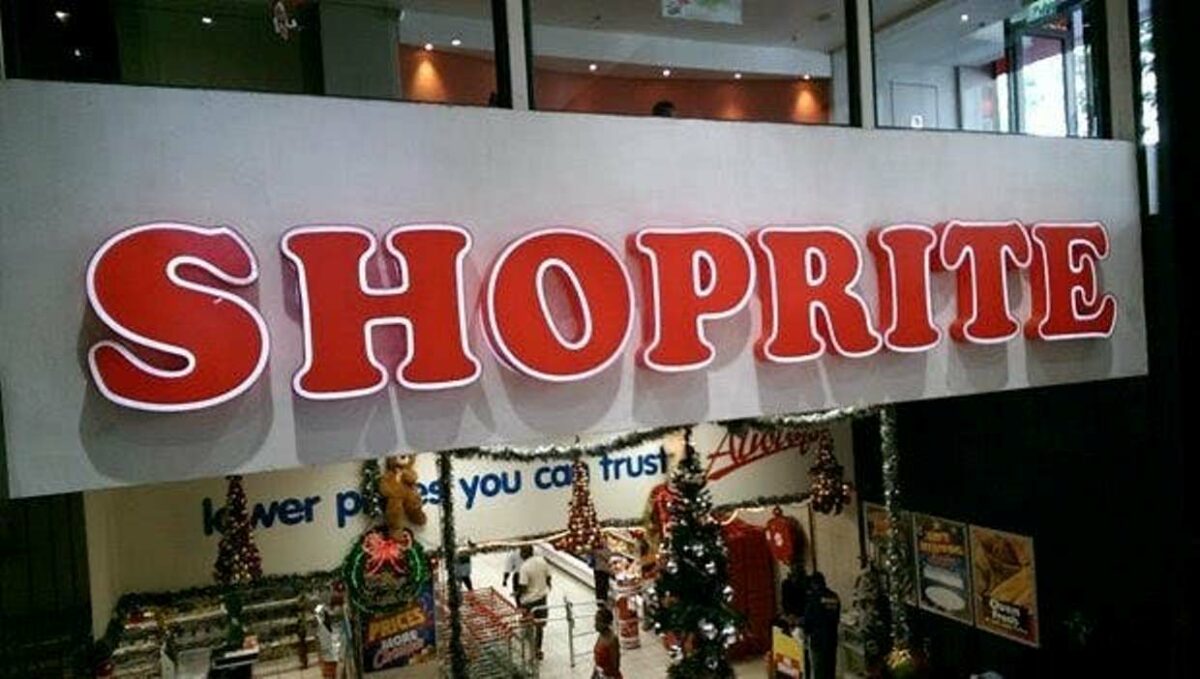
Nigeria’s organised retail sector has been dealt a major blow following the final shutdown of Shoprite outlets across the country after two decades of operation, a development industry analysts say could wipe out as much as N1.4 trillion in economic activity within the nation’s estimated N2.5 trillion mall economy.
The collapse of the supermarket chain’s Nigerian operations has triggered widespread economic ripples, affecting thousands of employees, suppliers and ancillary businesses that depended on the retail giant’s daily operations.
Investigations across multiple cities show deserted mall spaces, declining foot traffic and struggling small businesses that once thrived on the steady stream of customers drawn by the brand’s presence.
For many operators, the closure marks the end of an era that reshaped modern grocery and household shopping in Nigeria.
From retail powerhouse to empty aisles
Shoprite first entered Nigeria in 2005, introducing a large-scale supermarket model that quickly gained popularity among consumers seeking convenience and variety under one roof.
Over time, the retailer expanded to roughly 25 outlets across 13 states, becoming a central attraction in major shopping malls and a major buyer of food products, beverages, household items and locally manufactured goods.
But economic headwinds gradually tightened around the business.
Industry analysts cite the combined impact of the COVID-19 pandemic, border closures, foreign exchange scarcity, rising import tariffs and soaring logistics costs as factors that strained the company’s operations.
In 2021, the South African parent company, Shoprite Holdings, sold its Nigerian stake to Ketron Investment Limited, a consortium led by Persianas Investment Limited, owners of major retail properties including The Palms Shopping Mall.
The transition was expected to stabilise the business under local ownership, with Retail Supermarkets Nigeria Limited continuing to operate the stores through a franchise arrangement with the South African brand.
Initial optimism followed the takeover. During festive seasons, the stores regained some momentum as shoppers returned and gift vouchers circulated widely.
However, the recovery proved short-lived.
Slow decline before final closure
By 2024, customers in several locations began noticing a troubling pattern. Shelves once filled with groceries and household goods were increasingly bare.
In some outlets, basic items such as tissue paper and staple foods became difficult to find, leaving shelves stocked mainly with wine, detergents or toys.
By late 2025, several outlets in Lagos and other cities quietly shut their doors.
Visits to former store locations now reveal silent corridors where crowds once gathered daily.
For years, the supermarket served as an anchor tenant, drawing heavy customer traffic that sustained smaller outlets such as boutiques, pharmacies, eateries and cinemas.
Without the steady flow of shoppers, many of these businesses now face declining sales and uncertain futures.
A fashion retailer at Apapa Mall said sales dropped drastically after the supermarket shut down in 2025.
“There are days we don’t sell anything, and that never used to happen,” the trader said. “People came to Shoprite for groceries and then walked around to buy other things.”
Kano closure signalled early trouble
One of the earliest signs of trouble appeared in Ado Bayero Mall, where the outlet shut down in January 2024.
In a letter announcing the closure, the Chief Executive Officer of Retail Supermarkets Nigeria Limited, Hubertus Rick, said the decision followed a careful review of the store’s financial performance and prevailing economic conditions.
“I regret to inform you that our store in Ado Bayero Mall, Kano, will be closing its doors on January 14, 2024,” he wrote to employees.
“This decision was not made lightly… but after careful evaluation of the financial situation of the store and the current business climate, we believe it is the best course of action.”
Residents in the area also pointed to growing competition from emerging indigenous supermarkets around the mall as another factor that may have contributed to declining patronage.
The shutdown process gradually spread to Lagos, where outlets in locations such as Apapa and Lekki scaled down operations throughout 2025 before eventually closing.
A shop owner selling phone accessories at a Lekki mall said the disappearance of the supermarket significantly altered customer movement patterns.
“Customers now go straight to the new supermarket that replaced it and ignore our wing of the mall,” he said.
Workers and suppliers hit hardest
Beyond the retail floors, the shutdown has created significant hardship for employees and suppliers who relied on the chain for steady income.
Former sales attendant Fatima Ogundari, who worked at the Akure outlet, said she was forced to start a small mobile money business after losing her job.
“Since the mall closed down, I had no choice but to start a POS business just to survive,” she said. “Many of us worked there for years and built our lives around that job.”
Local suppliers say the loss of a major bulk buyer has also disrupted distribution networks.
One food supplier explained that the supermarket previously purchased goods in large volumes and paid within agreed timelines.
“Now we have to rely on smaller retailers, and it has affected our turnover seriously,” the supplier said.
Ibadan malls feel the ripple effect
In Ibadan, outlets at Dugbe and Ring Road have remained largely inactive, leaving surrounding businesses struggling with reduced patronage.
Former employees say the closures came after months of reduced staffing and limited operations.
“We were first placed on skeletal duties before the store eventually shut down,” said a former supervisor at the Ring Road branch. “Many of us depended entirely on that job to support our families.”
Abuja malls searching for replacements
In Abuja, several malls are already seeking new anchor tenants to fill the massive retail spaces left behind.
At Silverbird Mall, management confirmed that the supermarket stopped operating in September 2025, leaving a significant commercial gap.
Similarly, at Novare Central Mall, operators say a new tenant, SPAR, is expected to occupy the space previously held by Shoprite, raising hopes of a gradual recovery in customer traffic.
Company insists it is a “reset”
Despite the closures, Retail Supermarkets Nigeria Limited maintains that the company is not permanently exiting Nigeria.
Chief Strategy Officer Bunmi Cynthia Adeleye said the decision represents a “comprehensive business model reset” designed to reposition the brand amid tough economic conditions.
According to her, the restructuring aims to ensure long-term sustainability.
For many affected businesses and workers, however, the timeline for any comeback remains uncertain.
Credit: Vanguard