

Governance in Oyo State is no longer a race run on promises or advancement or rhetorics or false propaganda; it is now a political marathon measured by performance.
Over the last seven years, the state’s political landscape has undergone a profound transformation, raising the expectations of citizens and redefining what leadership should look like.
This is pertinent and specifically noteworthy considering the political environment we have found ourselves in this part of the world where it appears as though, the oppressed have continued to fight themselves dirty defending their oppressors for crumbs.
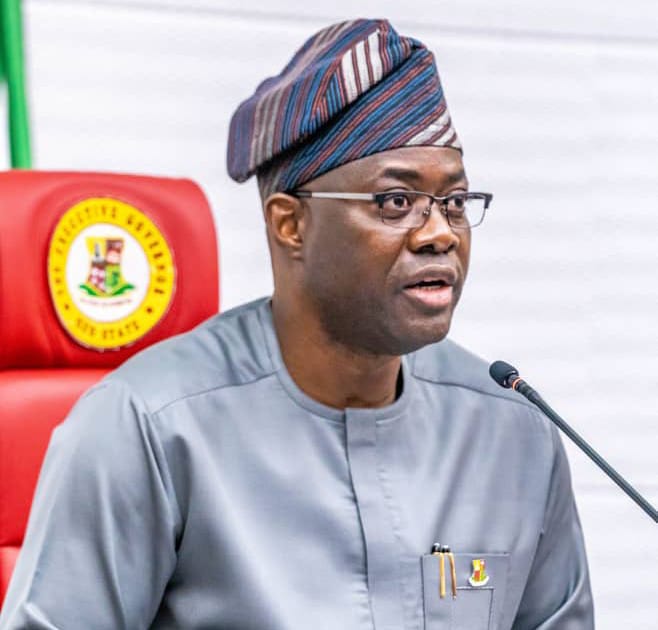
Like a high jumper who has steadily raised the bar with every successful leap, Governor Seyi Makinde is leaving behind a benchmark that his successor cannot casually lower.
Whoever emerges as governor in 2027 will inherit not only the keys to the Agodi Government House but also the weight of expectations from millions of residents who have become accustomed to visible development, improved infrastructure, prompt salary payments, and a government that appears responsive to public needs.
While many states imposed extensive lockdowns, Oyo adopted a more calibrated approach, allowing essential economic activities and agriculture to continue under health regulations. This approach was later credited with helping economic activity recover faster.
Leadership is often measured not by what a government achieves in times of comfort, but by how it responds when crisis knocks at the door.
For Governor Seyi Makinde, some of the defining moments of his administration came barely a year after taking office, when the COVID-19 pandemic brought economies across the world to a standstill.
While many governments struggled to balance lives and livelihoods, Makinde chose a path that sought to protect both.
Rather than allowing Oyo State’s economy to grind to a halt in a bandwagon approach like other states did, his administration carefully and strategically managed the health emergency while keeping critical sectors running.
Markets remained active under regulations, schools remained open and staggered, farmers stayed on their farms, businesses continued operating within safety guidelines, and government maintained constant communication with residents, and even when civil servants were required to work from home, their salary kept arrivinon their Bank accounts on or before 25th of every month until normalcy gradually returned to public life.
At a time of fear and uncertainty, Oyo state under governor Makinde has largely remained resilient, consistent and focused.
The challenges did not end with COVID-19. As Nigeria grappled with inflation, foreign exchange pressures, rising food costs and economic uncertainties ahead of the 2023 general elections, Oyo State continued to push ahead with road construction, agricultural expansion, healthcare improvements and educational investments.
Despite shrinking resources and mounting national economic pressures, the administration sustained its developmental agenda, crossing over 65 percent as the lowest budget performance amid turbulent seasons.
Perhaps the greatest test came after the removal of fuel subsidy and the floating of the naira.
As transportation costs soared, food prices climbed and households struggled with rising living expenses, the Makinde administration moved to cushion the effects through worker-friendly policies, support programmes and continued investment in infrastructure and food production.
Throughout these difficult years, one thing remained constant: the government’s commitment to workers’ welfare, regular salary payments and social stability.
While many states battled economic disruptions, Oyo maintained a level of fiscal discipline and developmental consistency that helped keep the state on course.
According to figures cited from the National Bureau of Statistics (NBS), Oyo State generated N38.04 billion in IGR in 2020, representing a 42.23 per cent increase over the previous year despite the pandemic-induced recession.
Governor Makinde reported that despite COVID-19 disruptions, the state recorded N25.6 billion IGR by September 2020, reflecting a 26.4 per cent year-on-year increase and bringing the state close to its N3 billion monthly IGR target.
To preserve workers’ salaries during the pandemic, the government reduced the salaries of senior political appointees by 50 per cent and lawmakers by 30 per cent, rather than transferring the burden to civil servants.
By June 2020, Oyo State disclosed that it had spent approximately N2.78 billion combating COVID-19, including:
About N900 million on palliatives and support for farmers.
About N370 million on the Infectious Disease Centre at Olodo, N453 million on security and border control measures, N156 million in allowances for health workers and volunteers.
Faced with declining federal allocations and oil revenue, the government revised its 2020 budget downward from N208.8 billion to N169.97 billion, helping maintain fiscal discipline during the crisis.
Infrastructure spending continued despite economic headwinds
Even amid inflationary pressures, foreign exchange shortages and post-pandemic recovery challenges, the administration continued major road projects across Ibadan, Ogbomoso, Oyo, Iseyin and other zones while sustaining investments in healthcare, education and agriculture.
The administration reported budget performance above 50 per cent, a significant improvement compared to earlier years and a reflection of stronger fiscal management.
The removal of fuel subsidy in May 2023 and subsequent exchange-rate liberalisation triggered sharp increases in transport fares, food prices and business costs nationwide.
Oyo State’s response was the Sustainable Action for Economic Recovery (SAfER) programme.
Key SAfER Facts and Figures
N8.6 billion palliative package
The state launched a N8.63 billion SAfER intervention package, with approximately:
N6 billion contributed by the state government.
N2.64 billion contributed by local governments.
Food support for 200,000 households
The programme targeted 200,000 vulnerable households with food packages containing rice, garri, beans, yam flour and vegetable oil.
Health insurance for vulnerable residents
The government provided one-year health insurance coverage for 100,000 vulnerable households under the SAfER framework.
N1 billion support for agribusiness and SMEs
The administration earmarked N1 billion for youth agropreneurs and small businesses while separately disbursing a N1 billion agricultural support loan to farmers across the state.
Support for 10,000 smallholder farmers
Additional farm inputs were provided to 10,000 small-scale farmers to boost food production and moderate food inflation.
Transport Subsidy Under SAfER
Transport was one of the hardest-hit sectors after subsidy removal.
Half-price transport fares
The government expanded the Pacesetter Transport scheme, enabling thousands of residents to travel at subsidised rates.
Over 17,000 commuters benefited daily
By early 2024, approximately 17,000 residents daily were benefiting from reduced transport fares under the scheme.
More than 30,000 daily beneficiaries by 2025
The programme later expanded to over 30,000 daily commuters, with students, civil servants, senior citizens and persons living with disabilities receiving free or heavily subsidised transportation.
N2.1 billion spent on transport subsidy
Between January and July 2025, Oyo State reported spending N2.1 billion on transport subsidies, benefiting 5.88 million passengers.
Bottom Line
Three measurable indicators frequently cited by supporters of the Makinde administration are:
42.23% growth in IGR during the COVID-19 year of 2020.
Approximately N2.78 billion spent on COVID-19 response while maintaining salary payments and government operations.
An N8.63 billion SAfER programme supporting 200,000 households, 100,000 vulnerable families through health insurance, 10,000 farmers, and millions of transport users after fuel subsidy removal.
Going by the foregoing information, Oyo state has earned its place to become a political classroom where citizens have learned to distinguish between rhetoric and results.
Roads are no longer mere campaign promises; they are tangible projects connecting communities.
Workers’ welfare is no longer an abstract policy discussion; it is reflected in livelihoods sustained through regular salaries and pensions. Visible development has moved from political slogans to physical realities across sectors.
This reality presents a unique challenge for whoever succeeds Makinde, whether from the APC, APM, ADC, Labour Party, Accord, or any other political platform.
The next governor may discover that the greatest opposition is not seated across the aisle of a legislative chamber or on the campaign trail, but in the minds of citizens whose expectations have risen considerably high.
To aptly capture this posture, the presidents of Nigerian Union of Local Government Employees (NULGE), Oyo state chapter; Comrade Ayobami Adeogun, Nigerian Union of Pensioners; Comrade Segun Abatan, and the umbrella body of labor unions in the state, the Nigerian Labor Congress (NLC) under the leadership of Comrade Kayode Martins, in their separate remarks at different fora, reportedly declared, that the bodies will not accept anything below the Makinde standard for governance.
Like a driver taking over a fast-moving vehicle on a busy highway, the incoming administration will no doubt have little room for hesitation or excuses which is why it becomes not only expedient but obligatory on governorship candidates coveting Makinde’s seat to think twice.
Any attempt to slow the pace of governance, seek prolonged indulgence from the public, or drift below the current standard may provoke widespread dissatisfaction and civil unrest.
The reason is simple: once people have experienced a higher quality of governance, they rarely accept a return to mediocrity.
This is because against predictions of failure by critics and political opponents, the Makinde administration has continued to demonstrate economic resilience despite national economic headwinds, inflationary pressures, and fiscal uncertainties.
Rather than collapse under the weight of these challenges, the government has largely maintained developmental momentum, creating a governance model that future administrations will inevitably be measured against.
Historically, Nigerian electorates have often been compelled to lower expectations due to poor governance records and limited accountability mechanisms.
However, Oyo State appears to be witnessing a gradual shift under the Makinde regime. Over the last several years, governance performance has increasingly become a major factor in political conversations across the state.
As talks intensify and gradually shift towards the future beyond 2027, Governor Seyi Makinde’s legacy is increasingly defined not only by the roads he built or the projects he commissioned, but by his ability to steer Oyo State through some of the most difficult economic and social challenges in recent Nigerian history.
Makinde’s administration demonstrated that even in the midst of storms, purposeful leadership can keep a state moving forward, and that is what the people have grown accustomed to, and more reason any potential successor will most likely not have any reason for excuses for failure or to drift standard of governance below what is currently obtainable in the state.
Ibrahim Adekola writes from Yemetu, Ibadan.